
Your Request is under process, Please wait.

.png)
Learn why free sheet music remains a valuable resource for experienced musicians, from testing repertoire and comparing editions to teaching and sight-reading.
You'd think once a musician reaches a certain level, they'd stop bothering with anything free. Bought editions, private teachers, a personal library built up over years. And if you wander into any practice room or professional rehearsal at a conservatory, you are sure to find stacks of free sheet music on the stand next to the paid stuff. There's a reason for that, and it's not simply about cutting costs.
Professionals are asked to sight-read new material all the time, for auditions, to fill in for a gig, or a student who wants to dabble in something not on their regular list. Nobody wants to shell out money for a full edition only to discover in the first two minutes that a work is not really worth pursuing. There’s nothing wrong with checking out a free score first. If the work makes it into a long-term repertoire, a proper edition can follow.
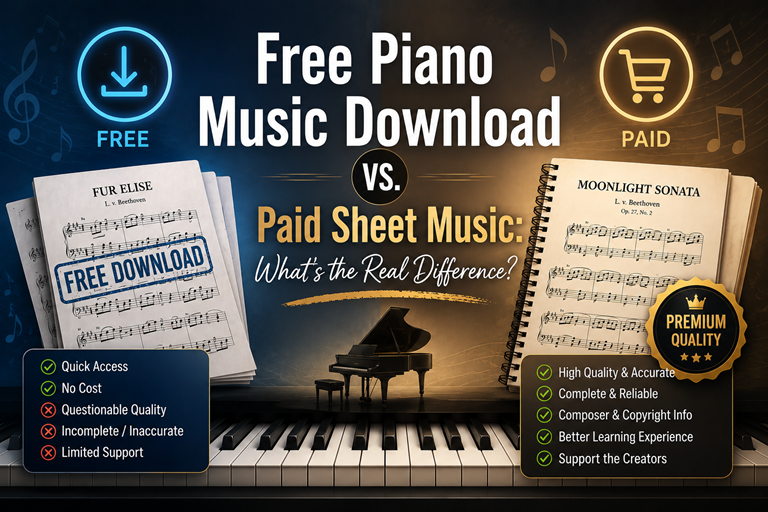
It is common with works such as Fur Elise Sheet Music even veteran pianists get a free copy just to jog their memory on a passage before a lesson or concert, short of purchasing a full annotated version for an item they already are intimately familiar with.
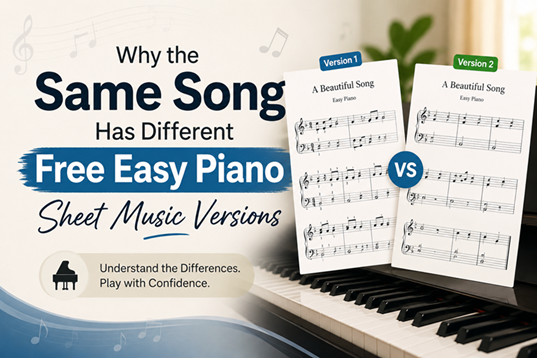
Experienced musicians don't consider sheet music to be throwaway. They treat it as a document to be consulted, particularly when a phrase sounds wrong. Pulling several free versions of the same piece side by side is a habit a lot of working musicians never grow out of.
A few things seasoned players check when comparing editions:
● Whether the Piano Notes match across two or three sources
● Where editorial additions diverge from the composer's own markings
● Whether fingering reflects an older tradition or a more modern approach
● Whether dynamics were added by an editor rather than the composer
That habit of cross-checking is why a lot of professionals keep a folder of free scores even after buying a proper copy. One free edition can catch something the paid one glossed over, or the other way around.
Anyone who teaches knows a single edition rarely fits every student. A beginner working through Classical piano sheet music easy enough for their level needs something different from what an advanced student would use for the same piece. Teachers end up building a small library of options just so they can hand a student whatever version matches where they are right now.
● A simplified version for a beginner starting the piece
● A fuller edition for an advanced student
● At least one no-cost score on hand for a last-minute change
● A reference copy used mainly for checking notation
This is one of the biggest reasons experienced musicians hang onto free resources long after building their own paid collection. It's not about cost at that point. It's about having options ready for whatever a lesson needs that week.
Professional musicians are always experimenting with works they might not perform in public. Purchasing a full score for every work they look at soon accumulates, and most of that repertoire never gets played. Free sheet music allows skilled musicians to go on a broad search without having to buy every curiosity.
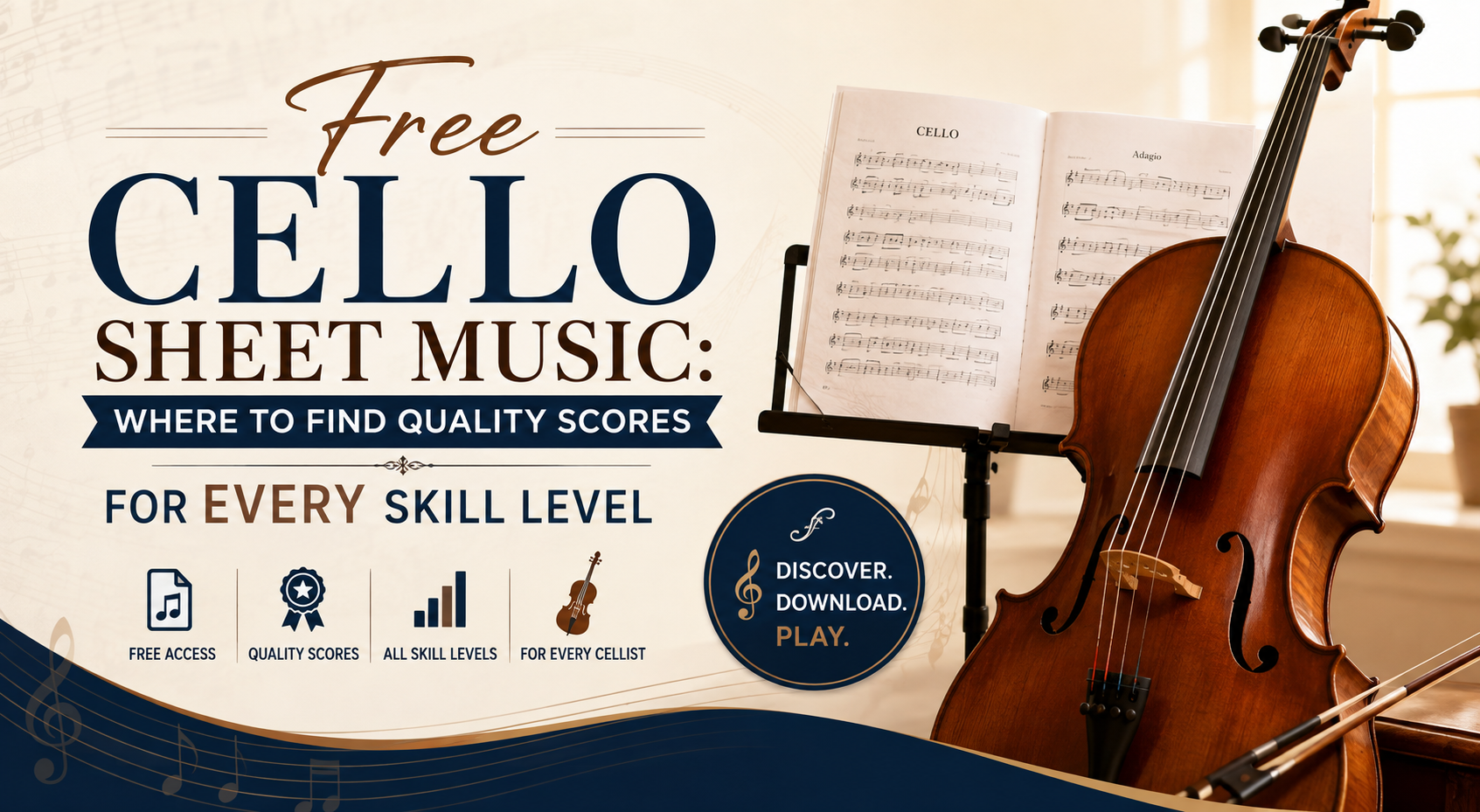
This matters outside piano repertoire too. A violinist deciding whether to add a new concerto to their season, or a cellist weighing a new piece against their usual list, goes through the same process before spending real money on a printed edition.
Sight-reading doesn't improve by revisiting the same five pieces forever. Working musicians seek out unfamiliar scores just to keep that skill from going soft, and free repertoire is the easiest way to do that without a stack of purchases sitting unused after one read-through.
Musicians don't grow out of free resources with experience. If anything, it makes them better at navigating resource options and dueling competing offerings: comparing editions, spotting errors, and knowing when a free score is enough and when it's worth paying for something more polished.
For that reason, Sheet Music International displays the free and premium editions together, so musicians can consider on any level whatever suits the moment.
It's often faster for testing new repertoire, comparing editions, and building a wider library without overcommitting to every piece.
Yes, especially when something in the notation looks off. Comparing versions helps catch editorial additions that weren't part of the original score.
Even well-known pieces benefit from a quick refresher copy before a lesson, without needing a full annotated edition every time.
Teachers need multiple versions on hand since no single edition suits every student's level, so free resources help fill those gaps affordably.
Yes. Small differences in dynamics or fingering can reflect different editorial traditions, and advanced players often want to know which version they're playing from.
Sep 13, 2026
.png)
Aug 05, 2026
Follow us : 


Sheet Music International - Copyright 2026 all rights reserved
| English: Sheet Music (PDF) | Free Scores | French: Sheet Music (PDF) | Free Scores | Greek: Sheet Music (PDF) | Free Scores |
| German: Sheet Music (PDF) | Free Scores | Spanish: Sheet Music (PDF) | Free Scores | Portuguese: Sheet Music (PDF) | Free Scores |
| Italian: Sheet Music (PDF) | Free Scores | Russian: Sheet Music (PDF) | Free Scores | Norwegian: Sheet Music (PDF) | Free Scores |
| Ukrainian: Sheet Music (PDF) | Free Scores | Polish: Sheet Music (PDF) | Free Scores | Dutch: Sheet Music (PDF) | Free Scores |

