
Your Request is under process, Please wait.

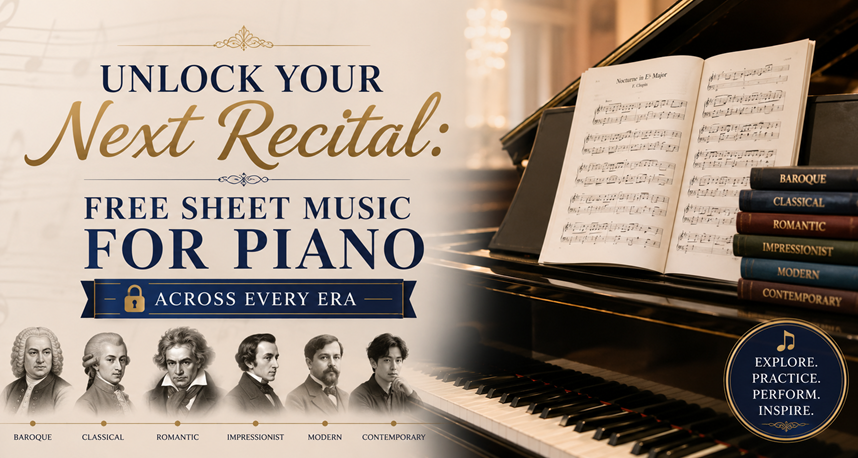
Ever sat down at the piano with zero idea what to play next? That moment happens to almost everyone, even people who've been playing for years. There's just so much music out there that picking feels like its own project. The good news is that you can find free sheet music that piano enthusiasts genuinely enjoy playing, without spending money on expensive subscriptions or printed collections.
Whether you're preparing for your first recital, practicing for an exam, or simply looking for new repertoire, finding quality free sheet music piano resources can save both time and money. From Bach to Debussy, there's an incredible range of music available at no cost.
Ever sat down at the piano with zero idea what to play next? That moment happens to almost everyone, even people who've been playing for years. There's just so much music out there that picking feels like its own project. The good news is that you can find free sheet music that piano enthusiasts genuinely enjoy playing, without spending money on expensive subscriptions or printed collections.
Let's walk through what's worth exploring, era by era.
Pretty much every pianist ends up back at Bach eventually. It's almost a rite of passage. The Well-Tempered Clavier, the little keyboard inventions, these pieces aren't flashy, but they teach your hands and ears things that show up in everything you play afterward. Independence between fingers. Real phrasing instead of just hitting notes in order.
If you're newer to piano, Baroque pieces can feel a little dense at first, but that's normal. There are simplified versions out there that keep the character of the piece without throwing every ornament at you on day one.
Then the Classical era shows up and everything gets, well, tidier. Mozart and Haydn built pieces around balance and symmetry, and honestly, this is why so many teachers assign Classical repertoire for auditions. It shows exactly where a player stands technically.
This is also a solid stretch to look for free piano sheet music for beginners, since the difficulty range is huge. You can start with a simple minuet and work your way toward a full sonata movement without ever feeling like you jumped too far ahead.
If Classical is about control, Romantic is about feeling. Chopin's nocturnes, his preludes, that kind of thing hooks people. Liszt goes the opposite direction and just pushes technique as far as it'll go. Brahms sits somewhere in between, dense and thoughtful, rewarding anyone patient enough to sit with it.
A lot of pianists point to this era as the moment they actually fell in love with performing, not just practicing. There's room to make a piece your own here in a way that earlier eras don't always allow.
Debussy and the composers around him basically threw out the rulebook on tonal centers. It's less about resolving a chord progression and more about color, mood, and texture. If you've only played traditional classical repertoire, this stuff will ask something different of your hands and your ears. Worth it though, especially if you're looking to round out a recital with something that doesn't sound like everything else on the program.
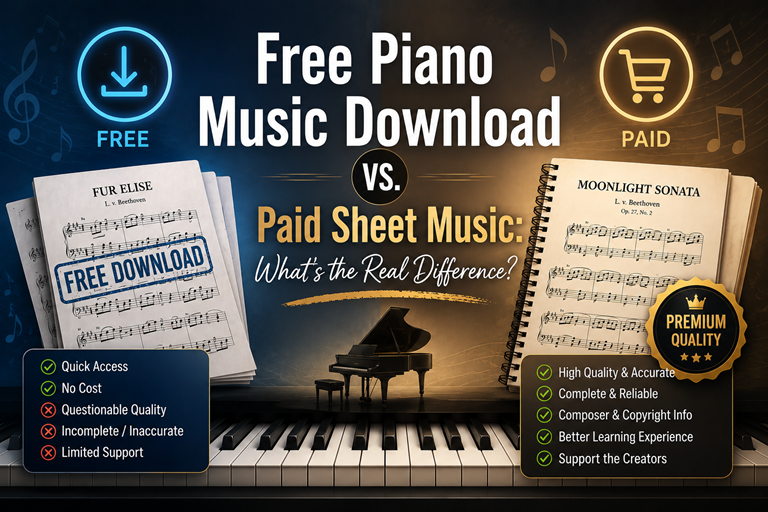
Here's the good part. You genuinely don't need to spend much, or anything, to build a program that covers all four of these eras. A quick free piano music download from a decent public domain library can hand you everything from a beginner minuet to a full Chopin ballade. Good libraries throw in printable scores, some historical background, and often a recording so you know what you're aiming for before you even sit down to practice.
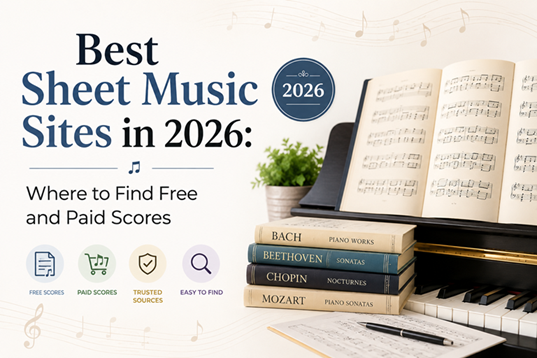
Some of the most trusted public-domain resources include IMSLP (International Music Score Library Project) and the Mutopia Project. These libraries offer thousands of legal, printable scores by composers such as Bach, Mozart, Beethoven, Chopin, and Debussy, making it easy to find repertoire for every skill level.
That means your next recital doesn't have to be one era on repeat. Mix Bach with Chopin. Pair a Haydn sonata with a Debussy prelude. Showing range across periods says a lot about you as a player, and it keeps your own practice sessions from getting stale too.
Whether you're just beginning or preparing for an advanced recital, exploring free sheet music piano collections is one of the easiest ways to expand your repertoire. With thousands of public-domain scores available, you can discover timeless music from every era while building your technique and confidence at the keyboard.
Stick to well-known public domain libraries. They're the safest bet for reliable, print-ready classical scores at no cost.
Yes, especially from the Classical era, where a lot of pieces come in simplified arrangements built for exactly this.
Not always. Some sites let you download instantly, others ask for a free login so you can save pieces for later.
Most teachers lean toward Classical era pieces for a first recital since they highlight control without overwhelming a newer player.
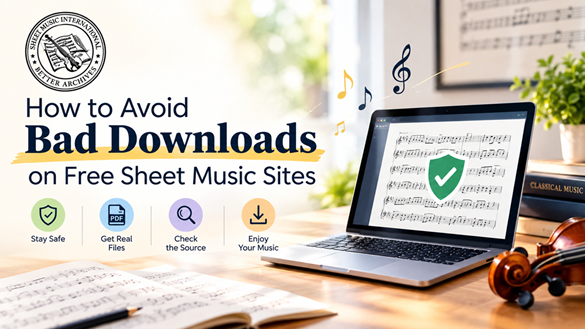
If it's public domain, meaning the copyright has expired, yes. Just double check the source before you download anything.
Sep 13, 2026
.png)
Aug 05, 2026
Follow us : 


Sheet Music International - Copyright 2026 all rights reserved
| English: Sheet Music (PDF) | Free Scores | French: Sheet Music (PDF) | Free Scores | Greek: Sheet Music (PDF) | Free Scores |
| German: Sheet Music (PDF) | Free Scores | Spanish: Sheet Music (PDF) | Free Scores | Portuguese: Sheet Music (PDF) | Free Scores |
| Italian: Sheet Music (PDF) | Free Scores | Russian: Sheet Music (PDF) | Free Scores | Norwegian: Sheet Music (PDF) | Free Scores |
| Ukrainian: Sheet Music (PDF) | Free Scores | Polish: Sheet Music (PDF) | Free Scores | Dutch: Sheet Music (PDF) | Free Scores |

