
Your Request is under process, Please wait.

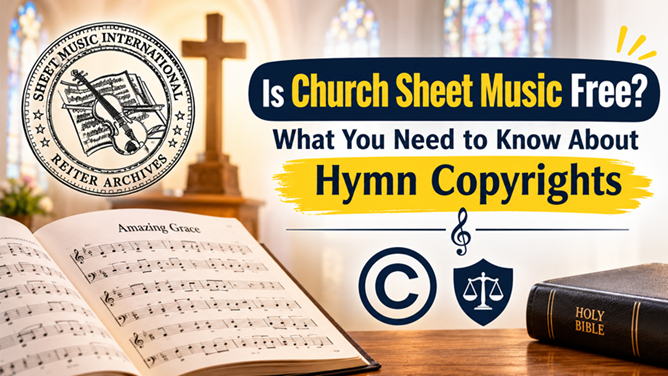
The worship leader emails the volunteer pianist on Thursday. Sunday’s service will feature two songs: a much-loved old hymn and a new release that everyone has been hearing on the radio. “Could you print copies for the choir?” seems like a simple request. But from a copyright perspective, these two songs raise very different questions.
The worship leader emails the volunteer pianist on Thursday. Sunday’s service will feature two songs: a much-loved old hymn and a new release that everyone has been hearing on the radio. “Could you print copies for the choir?” seems like a simple request. But from a copyright perspective, these two songs raise very different questions.
So, is church sheet music free to use? The answer isn't always straightforward. It depends on the song, its copyright status, and whether you have permission to reproduce it.
Most traditional hymns were written centuries ago. Amazing Grace, Holy, Holy, Holy, and Come Thou Fount all belong to the public domain, which means their copyrights have expired. You can print, copy, perform, and share the original melodies and lyrics without asking permission or paying fees.
That’s a gift for churches with tight budgets. A choir can build a full repertoire of classic hymns without spending anything on licensing.
Contemporary worship songs are almost always under copyright. A song written in the last few decades is protected, even if it’s sung in thousands of churches every week. Printing lyrics, projecting them on a screen, or photocopying a score can all require a license.
Many churches handle this through a blanket license, such as CCLI, which covers reproduction and projection of a large catalog of worship songs. It’s worth checking whether your church already has one before you copy anything.
This is where things can get confusing. A hymn may be in the public domain, but a particular arrangement of it may still be protected by copyright. For example, a composer or publisher might create a new choral arrangement of an old hymn. While the original melody is free to use, the new harmonies and musical arrangement can carry separate copyright protection.
So, before photocopying a hymnal page for the entire choir, check who arranged it and whether the arrangement is still protected. The original tune may be free, but the version in front of you may not be.
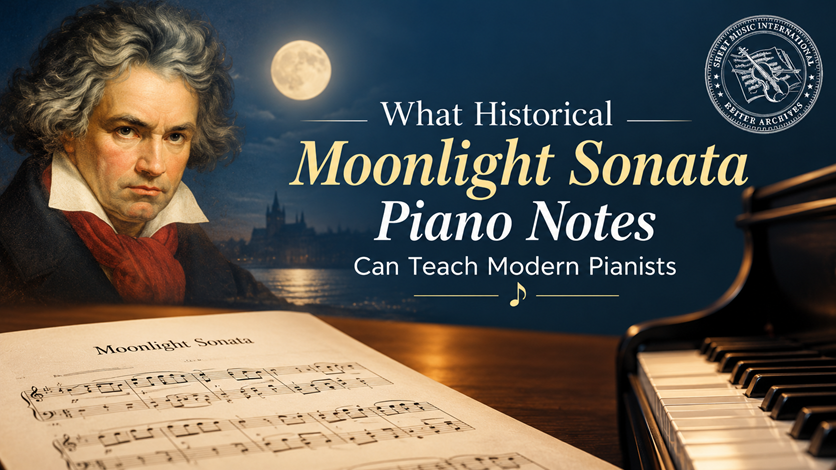
Classical music offers a simple way to understand the difference. Take Beethoven’s Für Elise sheet music. Beethoven died in 1827, so the original composition is in the public domain. You can download and print sheet music from a clearly labelled public domain edition without needing permission to use the composition.
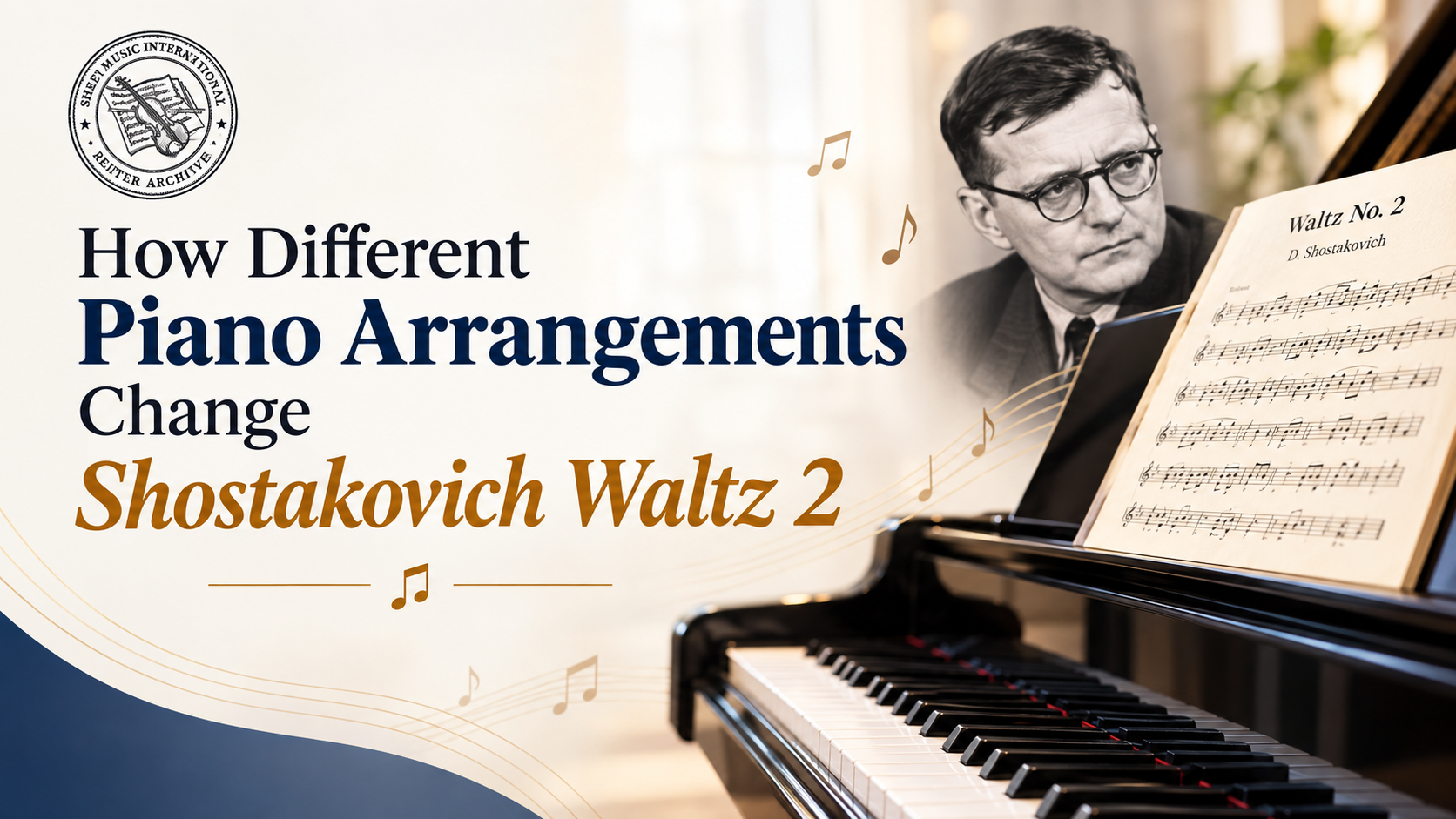
Now consider Shostakovich’s Waltz 2, one of the best-known waltzes of the 20th century. Shostakovich died in 1975, which means his compositions are still protected by copyright in many countries. Even if you find a score online and can download it easily, that doesn't automatically give you the right to print multiple copies or share it.
The same principle applies to church music. Older compositions are more likely to be in the public domain, while newer works generally require permission or an appropriate licence. The important thing is to check the copyright status of the composition and the specific sheet music edition you're using.
You don’t need a law degree to sort this out. A few simple checks go a long way.
Look up the composer’s death date. If it’s more than 70 years ago, the original composition is almost certainly free in most countries. Check the arranger, since new arrangements can have separate protection. And look for a copyright notice at the bottom of the page. If you see one with a recent year, treat the score as protected.
When you’re unsure, ask the publisher or your church’s licensing provider. A quick email is far better than guessing.
Stick to sources that clearly label the edition and its copyright status. Public-domain hymnals, well-organized sheet music libraries, and publishers with clear licensing terms are good starting points. Avoid random PDFs with no source information, since you can’t tell who made them or whether they’re legal to share.
Quality matters too. A blurry scan is hard to read in a dim sanctuary. Choose clean, well-formatted files so your musicians can focus on the music instead of squinting at it.
Copyright rules can feel like paperwork, but they exist to support the people who write the music. Respecting them keeps good songwriters creating new worship music, and it protects your church from awkward surprises. It also takes less effort than most people expect, once you know what to check.
Sheet Music International offers free, clearly labeled public domain scores for piano, cello, clarinet, and more, so your choir and musicians can download, print, and play right away. Visit Sheet Music International today and build your church music library the easy way.
No. Old hymns are usually in the public domain, but modern worship songs and new arrangements are typically copyrighted.
You can copy public domain hymns. For copyrighted songs or arrangements, you generally need a license or permission.
It’s a blanket license, like CCLI, that lets a church reproduce and project lyrics for a large catalog of worship songs.
Yes. Beethoven’s composition is in the public domain, though some editions are copyrighted, so choose one labeled public domain.
Usually not. Shostakovich died in 1975, so his works are generally still protected in many countries.

.png)
Sep 13, 2026
Follow us : 


Sheet Music International - Copyright 2026 all rights reserved
| English: Sheet Music (PDF) | Free Scores | French: Sheet Music (PDF) | Free Scores | Greek: Sheet Music (PDF) | Free Scores |
| German: Sheet Music (PDF) | Free Scores | Spanish: Sheet Music (PDF) | Free Scores | Portuguese: Sheet Music (PDF) | Free Scores |
| Italian: Sheet Music (PDF) | Free Scores | Russian: Sheet Music (PDF) | Free Scores | Norwegian: Sheet Music (PDF) | Free Scores |
| Ukrainian: Sheet Music (PDF) | Free Scores | Polish: Sheet Music (PDF) | Free Scores | Dutch: Sheet Music (PDF) | Free Scores |

