
Your Request is under process, Please wait.

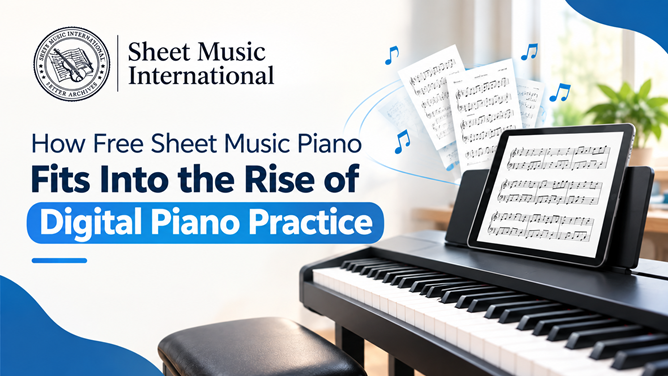
Walk into a practice room today, and there's a decent chance the music stand is holding a tablet instead of paper. Nobody really announced this shift. It just happened gradually, one downloaded PDF at a time, until screens became a normal part of how people practice rather than a novelty.
Walk into a practice room today, and there's a decent chance the music stand is holding a tablet instead of paper. Nobody really announced this shift. It just happened gradually, one downloaded PDF at a time, until screens became a normal part of how people practice rather than a novelty.
Free sheet music piano downloads had a lot to do with making that shift feel effortless instead of like a big adjustment.
A few years ago, switching to digital practice meant buying scanned collections or paying for subscription libraries just to have anything worth reading on a screen. That cost barrier kept a lot of players on paper longer than they might have preferred.
Once quality free scores became easy to find and easy to organize, the switch stopped requiring any real investment. You could load a tablet with a season's worth of repertoire in an afternoon, without spending anything beyond your time.
That's really the whole story behind why digital practice caught on as fast as it did. The tools existed already. What was missing was affordable material, and free scores filled that gap almost overnight.
Paper has real problems that most musicians just learned to live with. Pages fall off the stand mid-performance. Marking up a copy means committing to that exact edition forever. Carrying enough repertoire for a full lesson or rehearsal means a stack of folders nobody enjoys hauling around.
Digital practice solved most of that without anyone needing to change how they actually play. A few things it fixed almost immediately:
This shift shows up well beyond keyboard players. Church musicians have leaned into it just as hard, since church sheet music used to mean binders full of hymnals that needed constant reprinting and reorganizing every time a service schedule changed. A tablet solves that instantly, letting a musician swap between arrangements without touching a single sheet of paper.
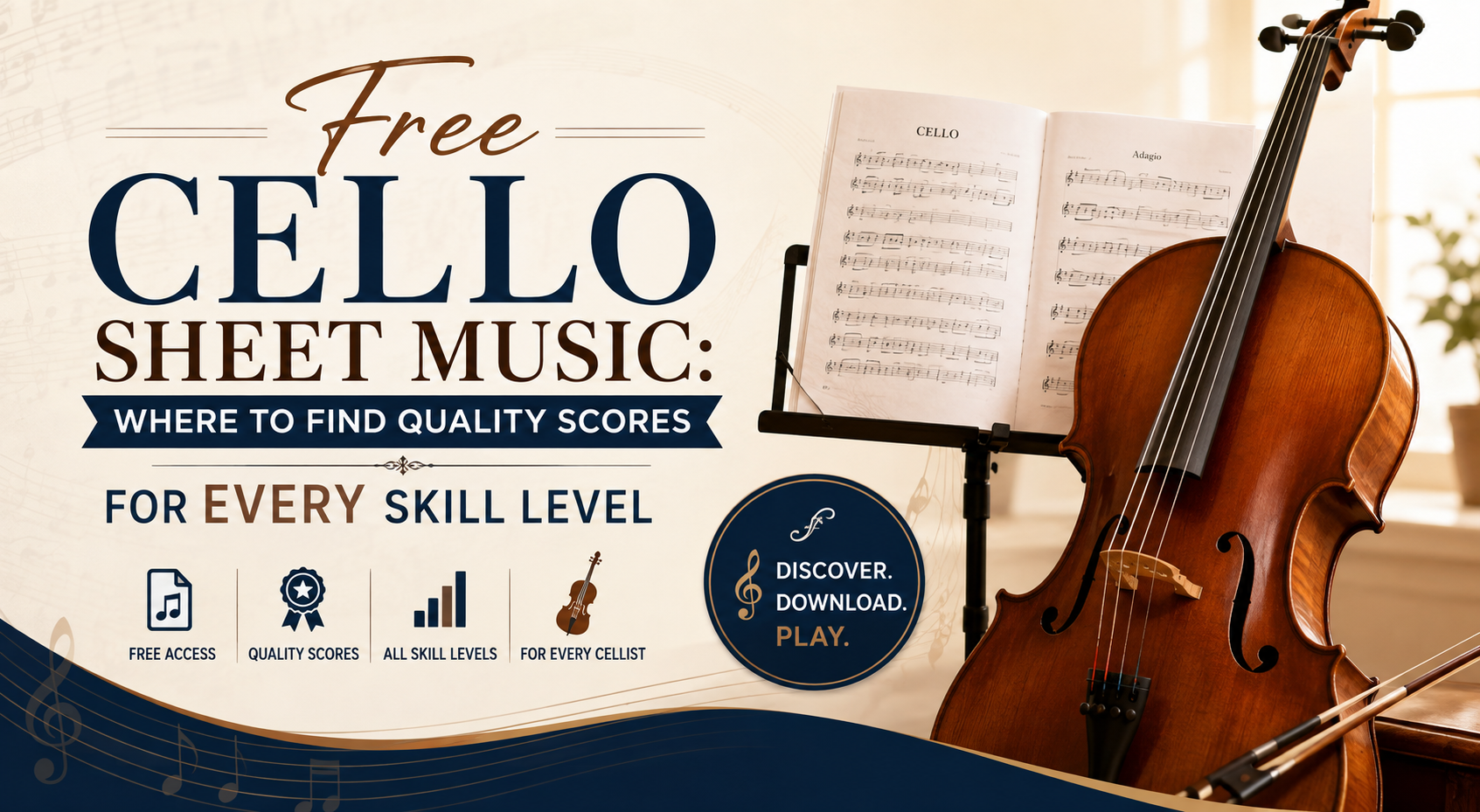
String players have followed the same pattern. Anyone building out a Cello Repertoire List for lessons or performances runs into the exact same organizational headache pianists do, and digital practice solves it the same way, by replacing a growing stack of physical folders with something searchable and portable.
Not everyone who tries digital practice keeps it up. The ones who stick with it usually build a few habits early on that make the whole thing feel effortless rather than like extra work.
Paper hasn't disappeared, and it probably won't anytime soon. Plenty of players still prefer the feel of a real page, and that's a completely reasonable preference. But the option to go fully digital, built almost entirely on the back of accessible free sheet music piano resources, has changed what "normal" practice looks like for a whole generation of musicians who never had to make the switch deliberately.
It was just already there when they started. Sheet Music International has kept pace with that shift by making a wide range of downloadable editions available for exactly this kind of practice.
They removed the cost barrier that used to keep most players on paper, making it affordable to build a full digital library quickly.
Yes, many churches have moved away from printed binders toward tablets, since swapping arrangements digitally is far easier than reprinting hymnals.
It solves the same organizational problem pianists face, replacing physical folders with something searchable and easy to update.
Some do, and that's a valid preference. Digital practice is an added option, not a replacement that's forced on everyone.
Start small with a few pieces you already know, get comfortable organizing and annotating them, then expand from there.

Sep 13, 2026

.png)
Aug 05, 2026

Follow us : 


Sheet Music International - Copyright 2026 all rights reserved
| English: Sheet Music (PDF) | Free Scores | French: Sheet Music (PDF) | Free Scores | Greek: Sheet Music (PDF) | Free Scores |
| German: Sheet Music (PDF) | Free Scores | Spanish: Sheet Music (PDF) | Free Scores | Portuguese: Sheet Music (PDF) | Free Scores |
| Italian: Sheet Music (PDF) | Free Scores | Russian: Sheet Music (PDF) | Free Scores | Norwegian: Sheet Music (PDF) | Free Scores |
| Ukrainian: Sheet Music (PDF) | Free Scores | Polish: Sheet Music (PDF) | Free Scores | Dutch: Sheet Music (PDF) | Free Scores |

