
Your Request is under process, Please wait.

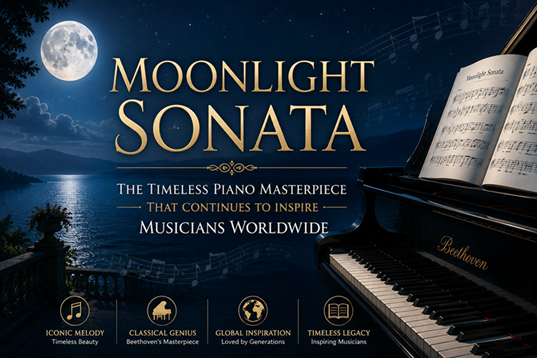
Few classical compositions have captured the imagination of musicians and music lovers quite like the Moonlight Sonata. Officially known as Piano Sonata No. 14 in C-sharp minor, Op. 27 No. 2, this masterpiece by Ludwig van Beethoven remains one of the most recognizable and frequently performed works in classical music history.
Few classical compositions have captured the imagination of musicians and music lovers quite like the Moonlight Sonata. Officially known as Piano Sonata No. 14 in C-sharp minor, Op. 27 No. 2, this masterpiece by Ludwig van Beethoven remains one of the most recognizable and frequently performed works in classical music history.
Whether you are searching for Piano Notes, exploring sheet music cello arrangements, studying viola sheet music, or looking for reliable sources of public domain music, Moonlight Sonata continues to be an essential piece for every musician's repertoire.
In today's digital era, musicians can easily access versions through resources such as Musicnotes public library, public domain archives, and educational sheet music collections. This article explores the history, significance, benefits, and modern applications of Moonlight Sonata while helping musicians discover valuable learning resources.
Moonlight Sonata is a piano sonata composed by Beethoven in 1801 and published in 1802. The nickname "Moonlight Sonata" was not given by Beethoven himself. Instead, it originated years later when a music critic described the first movement as resembling moonlight shining across a tranquil lake.
1. Adagio sostenuto
2. Allegretto
3. Presto agitato
The first movement is especially famous for its emotional depth and haunting beauty. It is often one of the first advanced classical pieces aspiring pianists aim to learn.
The composition communicates deep emotion without relying on words. Listeners often associate it with reflection, sadness, peace, and contemplation.
The opening movement contains one of the most recognizable melodies in classical music, making it accessible even to people unfamiliar with classical compositions.
Music teachers frequently use Moonlight Sonata to teach:
• Dynamics
• Expression
• Timing
• Pedal techniques
• Musical interpretation
From concert halls to films and online performances, Moonlight Sonata continues to influence musicians worldwide.
One reason musicians love studying Moonlight Sonata is the beautiful structure of its Piano Notes.
• Flowing triplet patterns
• Sustained melody lines
• Rich harmonic textures
• Emotional phrasing
Learning these Piano Notes helps pianists improve:
• Finger independence
• Rhythm control
• Pedaling accuracy
• Musical expression
• Dynamic balance
Many beginner and intermediate arrangements simplify the original score, allowing students to gradually master the composition.
Although originally written for piano, Moonlight Sonata has been adapted for numerous instruments.
Many musicians seek sheet music cello versions of Moonlight Sonata because the cello's warm and expressive tone closely matches the emotional character of the piece.
• Developing lyrical playing
• Improving bow control
• Strengthening vibrato techniques
• Enhancing emotional interpretation
Cellists often perform Moonlight Sonata as a solo piece or with piano accompaniment.
Viola sheet music arrangements have also become increasingly popular.
The viola's rich middle register allows performers to capture the sonata's melancholy atmosphere beautifully.
Advantages of studying Moonlight Sonata using viola sheet music include:
• Improved tone production
• Better phrasing skills
• Enhanced dynamic control
• Greater emotional expression
Many music educators recommend Moonlight Sonata adaptations for intermediate and advanced viola students.
One of the biggest advantages for classical musicians today is access to public domain music.
Because Beethoven's works are centuries old, the original compositions belong to the public domain in many countries. This allows musicians to:
• Access scores legally
• Download sheet music for free
• Study historical editions
• Create educational arrangements
• Perform without additional licensing concerns
Public domain music plays a vital role in preserving classical masterpieces like Moonlight Sonata for future generations.
Many musicians search for reliable sheet music platforms. Resources similar to a Musicnotes public library provide access to educational arrangements and performance editions.
Benefits include:
Musicians receive clear notation and professionally edited scores.
Beginners can start with simplified versions, while advanced performers can study original editions.
Sheet music can be viewed instantly on tablets, laptops, and smartphones.
Digital scores often include playback tools and practice aids that support efficient learning.
These resources make classical music more accessible than ever before.
Another growing trend among musicians is arranging classical masterpieces into violin duets sheet music.
Moonlight Sonata's lyrical themes translate beautifully into duet performances.
Benefits of studying violin duet arrangements include:
Players learn:
• Synchronization
• Listening skills
• Balance
• Musical communication
Duets are ideal for:
• Student recitals
• Music competitions
• Chamber concerts
• Educational workshops
Performing alongside another musician develops deeper awareness of harmony and structure.
Many educators use violin duets sheet music based on Moonlight Sonata to introduce students to chamber music.
Educational Benefits of Learning Moonlight Sonata
Moonlight Sonata helps musicians develop:
• Finger strength
• Hand coordination
• Rhythm accuracy
• Dynamic control
The emotional depth of the sonata encourages musicians to think beyond technical accuracy and focus on artistic expression.
Studying Beethoven provides insight into the transition between Classical and Romantic musical styles.
Successfully mastering parts of Moonlight Sonata builds confidence for tackling more advanced repertoire.
Music instructors worldwide consistently include Moonlight Sonata in lesson plans because it teaches multiple musical concepts simultaneously.
Students learn:
• Musical storytelling
• Expression techniques
• Technical discipline
• Historical appreciation
• Performance preparation
Few compositions offer such a complete educational experience.
Moonlight Sonata remains relevant more than two centuries after its creation.
The piece frequently appears in:
• Films
• Television shows
• Advertisements
• Video games
• Online music tutorials
Its timeless appeal continues introducing new generations to classical music.
Many viral performances on social media platforms feature Moonlight Sonata interpretations, helping younger audiences discover Beethoven's genius.
If you're interested in studying Moonlight Sonata, follow these steps:
Select a score suitable for your skill level.
Focus on accuracy before increasing speed.
Observe phrasing and interpretation techniques.
Short daily practice sessions are more effective than occasional long sessions.
Try:
• Sheet music cello versions
• Viola sheet music adaptations
• Violin duets sheet music arrangements
SEO Benefits of Using Public Domain Music Resources
For music educators, bloggers, and website owners, public domain music offers additional advantages.
You can create:
• Tutorials
• Educational articles
• Practice guides
• Performance analyses
Audience Growth
Popular works like Moonlight Sonata attract consistent search traffic from musicians and students.
Publishing high-quality content around classical music helps establish expertise and trust.
More than 200 years after its composition, Moonlight Sonata remains one of the most beloved works in classical music.
Its universal emotional appeal transcends language, culture, and geography. Whether performed on piano, adapted into sheet music cello arrangements, explored through viola sheet music, or transformed into violin duets sheet music, the composition continues inspiring musicians around the world.
Combined with the accessibility of public domain music and modern digital libraries, Moonlight Sonata is more available today than ever before.
For students, teachers, performers, and classical music enthusiasts, this extraordinary masterpiece remains an essential part of musical education and artistic expression.
Moonlight Sonata is Beethoven's Piano Sonata No. 14 in C-sharp minor, Op. 27 No. 2, composed in 1801.
Its emotional beauty, memorable melody, and historical significance make it one of the world's most recognized classical compositions.
The complete sonata is challenging, but simplified versions are available for beginner and intermediate students.
You can find Piano Notes through educational music platforms, public domain archives, and sheet music libraries.
Yes, many publishers offer sheet music cello adaptations for solo and accompanied performances.
Absolutely. Numerous viola sheet music arrangements are available for students and professional performers.
Yes, Beethoven's original composition is considered public domain music in many countries.
It improves technique, expression, rhythm control, interpretation, and overall musical understanding.
Yes, many arrangers have created violin duets sheet music adaptations for educational and performance purposes.
Its emotional depth, universal appeal, and continued presence in media and music education keep it popular worldwide.


Sep 13, 2026

.png)
Aug 05, 2026
Follow us : 


Sheet Music International - Copyright 2026 all rights reserved
| English: Sheet Music (PDF) | Free Scores | French: Sheet Music (PDF) | Free Scores | Greek: Sheet Music (PDF) | Free Scores |
| German: Sheet Music (PDF) | Free Scores | Spanish: Sheet Music (PDF) | Free Scores | Portuguese: Sheet Music (PDF) | Free Scores |
| Italian: Sheet Music (PDF) | Free Scores | Russian: Sheet Music (PDF) | Free Scores | Norwegian: Sheet Music (PDF) | Free Scores |
| Ukrainian: Sheet Music (PDF) | Free Scores | Polish: Sheet Music (PDF) | Free Scores | Dutch: Sheet Music (PDF) | Free Scores |

