
Your Request is under process, Please wait.

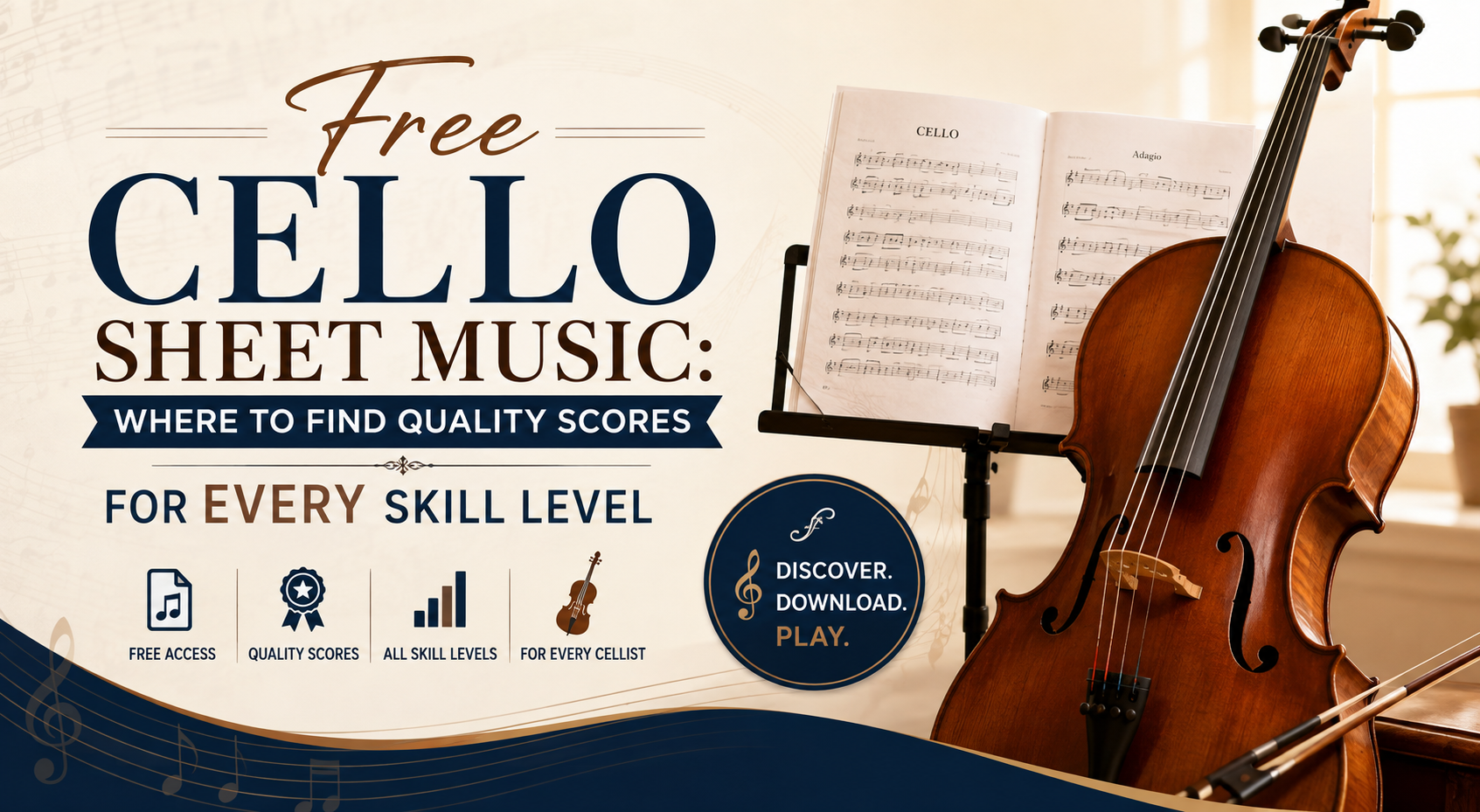
Finding music to play should be one of the enjoyable parts of learning the cello. Yet, if you've ever spent time searching for a particular piece online, you know how quickly that enjoyment can turn into frustration. One website has a blurry scan, another has a version that is far too difficult, and somewhere else you find a score that looks promising but is missing important markings.
Finding music to play should be one of the enjoyable parts of learning the cello. Yet, if you've ever spent time searching for a particular piece online, you know how quickly that enjoyment can turn into frustration. One website has a blurry scan, another has a version that is far too difficult, and somewhere else you find a score that looks promising but is missing important markings.
The good news is that there is plenty of free cello sheet music available online. The trick is knowing what makes a score worth using and choosing music that actually suits the way you play.
You don't need a large collection of expensive scores when you're still figuring out what you enjoy playing.
Free music gives you the chance to try different composers, styles and difficulty levels without buying a new book every time you want to learn something different. One week you might feel like working on a classical piece, while the next you may want something simpler that helps you practise sight-reading.
It can also be useful for teachers and students who need additional practice material. Having a few extra pieces on hand means you can move on when a particular piece isn't working for you.
That said, "free" doesn't automatically mean "good". A poorly scanned page or inaccurate transcription can make practice unnecessarily difficult.
The first thing to consider is your playing level.
If you're still getting comfortable with the cello, look for music with straightforward rhythms and relatively simple finger positions. You don't want to spend your entire practice session wondering whether you're struggling with the music or simply tackling a piece that's beyond your current skill level.
Intermediate and advanced players have more options. At that stage, you can start looking for scores that introduce more demanding shifts, varied bowing patterns and greater changes in dynamics.
There's nothing wrong with choosing a piece simply because you love it. Enjoying the music can make practice feel more rewarding and keep you motivated to stick with it. Just make sure you're aware of the technical demands before taking on an arrangement that's beyond your current level.
Searching for cello music doesn't mean you have to ignore music written for other instruments.
Musicians often come across new pieces while searching for music written for entirely different instruments. For instance, someone searching for moonlight sonata notes may discover Beethoven's famous Piano Sonata No. 14, while moonlight sonata piano notes are a natural search for pianists learning the piece. Even though it was originally composed for piano, its familiar melody can also encourage players of other instruments to explore different arrangements.
You may also come across easy moonlight sonata sheet music, which can be useful when you're interested in a piece but aren't ready for the original level of difficulty. Simplified versions aren't a replacement for the full score, but they can be a sensible starting point.
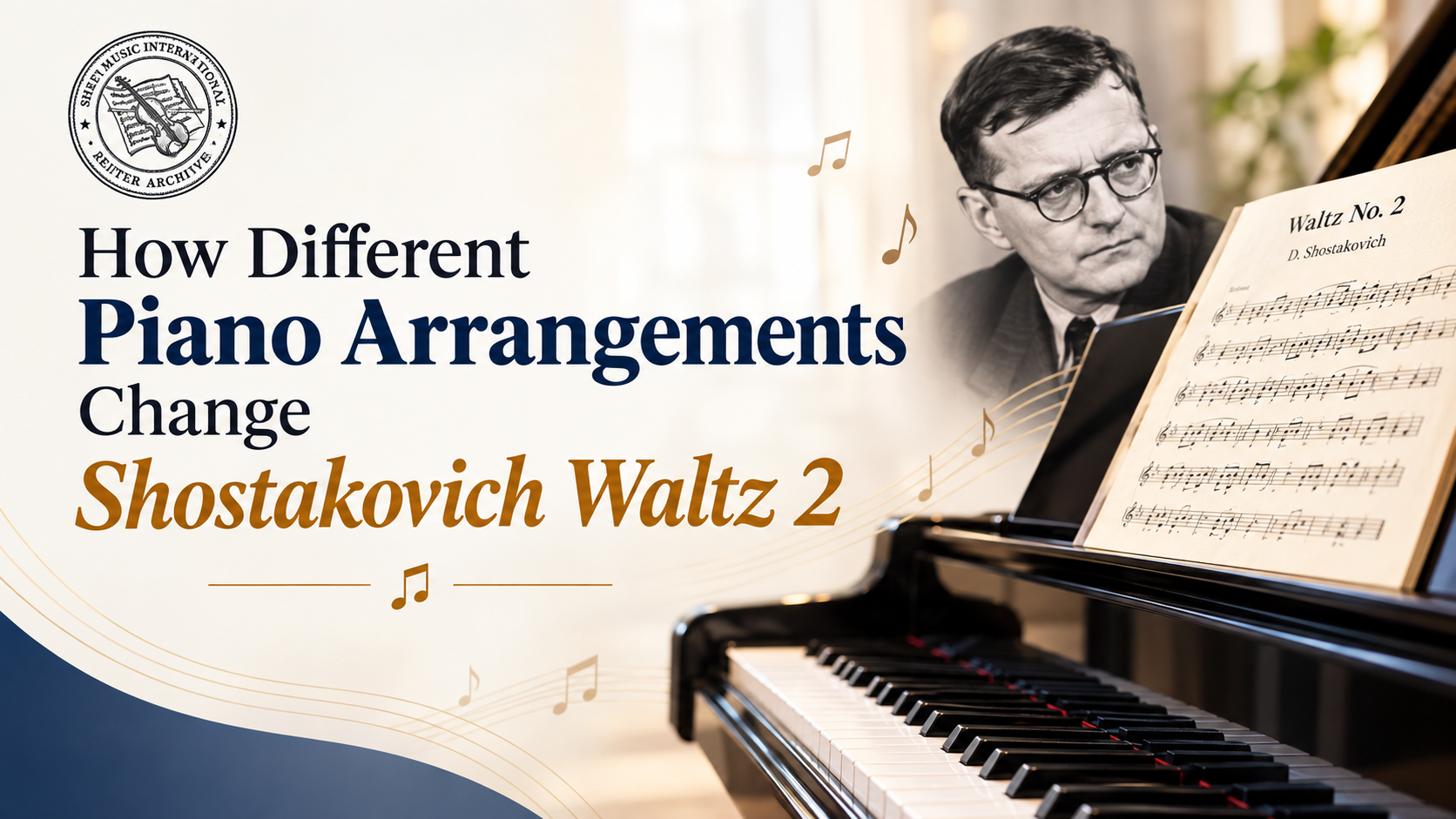
The same applies to other well-known works. Someone searching for a shostakovich waltz 2 piano sheet may be exploring the Waltz No. 2 from Shostakovich's Suite for Variety Orchestra. Although the original arrangement is not written for cello, exploring music like this can help you discover pieces that you might later find in a cello arrangement.
A quick check before downloading can save you a surprising amount of trouble.
Start by looking at the quality of the notation. Can you read the notes comfortably? Are the dynamics and other markings visible? If the page is a scan, is it clear enough to print?
Then check whether the arrangement is actually intended for cello. A piece written for piano isn't automatically playable on cello without modification. The range, chords, and accompanying parts may need to be adapted.
It's also worth checking where the score comes from. Older compositions may be in the public domain, but that doesn't necessarily mean every modern arrangement or edition is free to use. Copyright can apply to the arrangement even when the original composition is no longer protected.
Once you've found a suitable piece, don't feel that you have to play through it from beginning to end every time you practise.
Start with the sections you find most challenging rather than playing the entire piece from beginning to end. If a particular shift feels awkward or a rhythm keeps catching you out, isolate those few bars and practise them slowly. Once they feel more comfortable, gradually work them back into the surrounding passage and then into the full piece.
It's a much less frustrating approach than repeatedly starting at the beginning and stopping at the same difficult section.
Keeping a small folder of free cello sheet music can also be useful. You can have one or two pieces for sight-reading, something you're actively learning, and another easier piece that you can play when you want a break from demanding practice.
The best sheet music isn't necessarily the most famous piece or the most difficult one. It's the music that gives you something to work on without making you want to put your cello away after ten minutes.
Whether you're a complete beginner or already comfortable with more advanced repertoire, take some time to explore free cello sheet music from reliable sources. Try different styles, compare arrangements, and don't be afraid to move on from a piece that simply isn't right for you.
The goal is to build a collection of music that makes you want to pick up your cello and play.
Ready to find your next piece? Explore Sheet Music International and discover scores that fit your playing level and musical interests.
There are several online sheet music libraries offering free scores, particularly for public-domain compositions. Always check the website's terms and the copyright status of an arrangement before downloading or sharing it.
Yes. Beginners can find simplified arrangements and easier pieces online. Look for scores that match your current ability rather than choosing a piece simply because it is familiar.
Some piano melodies can be adapted for cello, but piano scores cannot always be played as written. Chords, range and accompaniment often need to be changed for the cello.
Choose clear notation, a suitable difficulty level, and an arrangement that fits the cello's range. Most importantly, pick music you enjoy playing.
Yes. Many older classical compositions are in the public domain. However, check the copyright status of the particular edition or arrangement, as newer arrangements may still be protected.
.png)

Sep 13, 2026

Follow us : 


Sheet Music International - Copyright 2026 all rights reserved
| English: Sheet Music (PDF) | Free Scores | French: Sheet Music (PDF) | Free Scores | Greek: Sheet Music (PDF) | Free Scores |
| German: Sheet Music (PDF) | Free Scores | Spanish: Sheet Music (PDF) | Free Scores | Portuguese: Sheet Music (PDF) | Free Scores |
| Italian: Sheet Music (PDF) | Free Scores | Russian: Sheet Music (PDF) | Free Scores | Norwegian: Sheet Music (PDF) | Free Scores |
| Ukrainian: Sheet Music (PDF) | Free Scores | Polish: Sheet Music (PDF) | Free Scores | Dutch: Sheet Music (PDF) | Free Scores |

