
Your Request is under process, Please wait.

.png)
Learning to read piano notes is an essential step for anyone who wants to become musically fluent. The ability to read musical notation provides essential skills for beginners who start playing keyboards and for advanced musicians who want to enhance their performance abilities. Modern learners have access to a vast library of scores spanning classical, romantic, and contemporary periods.
Learning to read piano notes is an essential step for anyone who wants to become musically fluent. The ability to read musical notation provides essential skills for beginners who start playing keyboards and for advanced musicians who want to enhance their performance abilities. Modern learners have access to a vast library of scores spanning classical, romantic, and contemporary periods.
Musicians can discover appropriate pieces because their access to musical works has improved, which helps them develop their sight-reading abilities. The ability to read musical notation enables musicians to access new musical pieces, which help them build their technical skills and artistic self-assurance.
The performer establishes a direct connection to the composer through his reading notation. The written symbols express all aspects of music through their dynamic, articulation, rhythm and phrasing elements. Musicians who lack a solid understanding of piano notes must depend on imitation for their musical skills because they cannot comprehend music.
The ability to read music enables musicians to learn more quickly while practicing for less time and enables them to play unknown music with better self-sufficiency. Many advanced students eventually progress to Beethoven piano sheet music, where technical control meets powerful musical expression.
The grand staff combines treble and bass clefs, mapping the keyboard visually. Recognizing intervals instead of individual letters helps musicians read more efficiently and anticipate movement.
Note values, rests, and time signatures determine structure. Accurate rhythm ensures the piece maintains coherence and supports ensemble coordination. The growth of online libraries has made free public domain music easier than ever for students and teachers to obtain.
Markings such as crescendos, accents, and tempo indications transform written material into musical storytelling. These details are essential for mature performance.
While availability is widespread, accuracy varies. Clear engraving, complete markings, and trustworthy editions are critical. Poorly prepared copies may contain missing dynamics or incorrect notes, leading to confusion during practice.
This is where Sheet Music International supports musicians worldwide. The platform provides carefully curated materials, making it easier to locate dependable editions suitable for study, teaching, and performance.
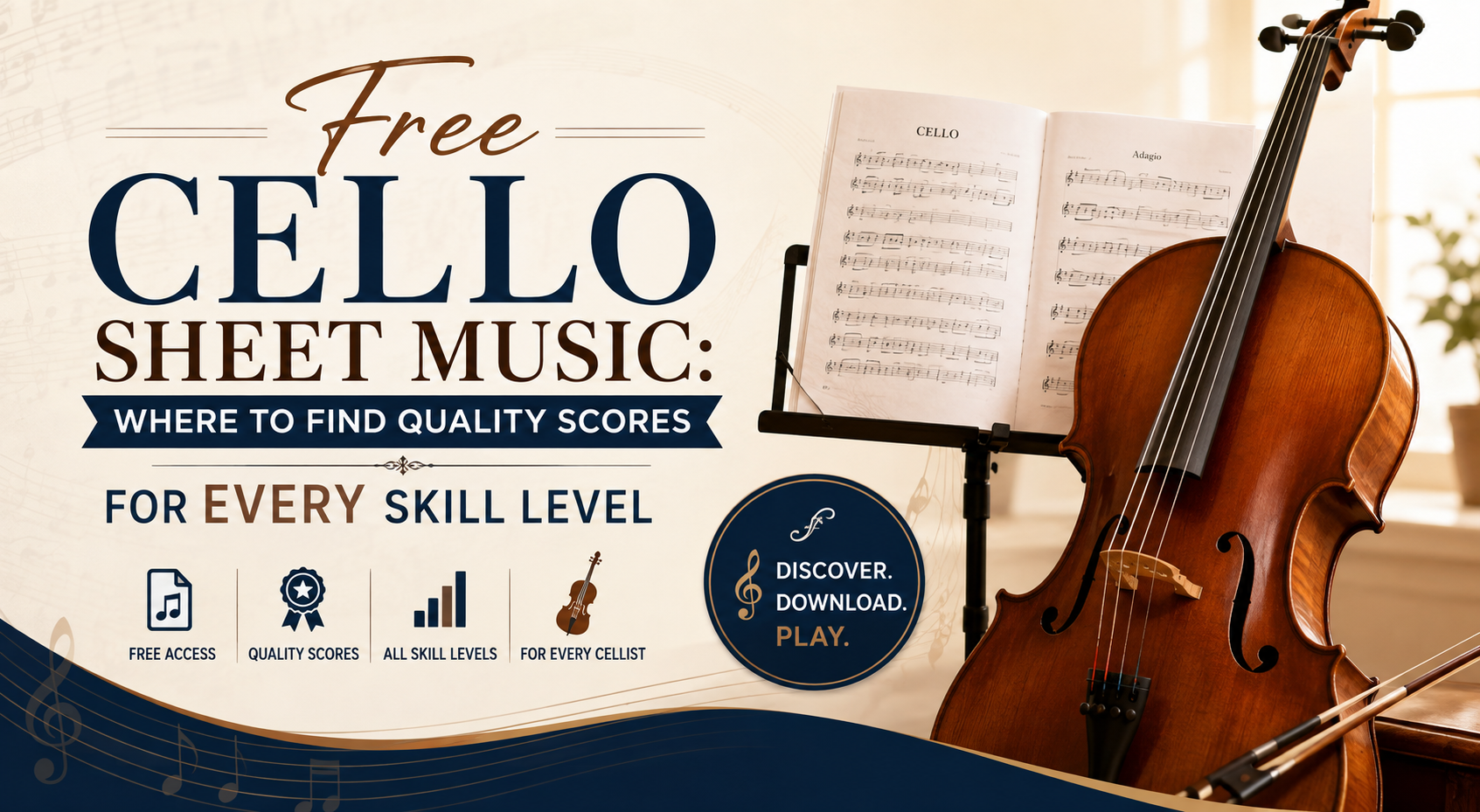
Musicians often expand their understanding by studying arrangements for additional instruments. Reviewing sheet music cello parts, for example, can reveal how composers distribute harmony and melody across ensembles.
This broader perspective enhances phrasing decisions at the piano and deepens appreciation for orchestration.
As players become comfortable with piano notes, the next step is repertoire exploration. Classical compositions remain central to training because they develop both technique and interpretation. Many students begin with simplified arrangements before progressing to original manuscripts.
A common milestone is approaching Beethoven piano sheet music, where clarity in notation meets emotional depth. Studying these works challenges musicians to balance precision with expression.
A significant advantage for learners today is the availability of free public domain music. Historic compositions whose copyrights have expired can be legally downloaded and studied without restriction. This access supports experimentation, comparison of editions, and broader repertoire familiarity.
For teachers and institutions, public domain libraries reduce cost barriers while encouraging students to engage with masterworks.
The needs of students, educators and professionals are understood by Sheet Music International. The catalogue includes basic training materials, performance pieces, ensemble compositions, and full orchestra music. The system provides users with structured search capabilities and standardized design elements, and access to famous composers.
The process stays simple and dependable for users who want to improve their piano skills or study historical musical documents. Sheet music cello study enables pianists to learn how different melody lines work together in group performances.
Progress at the keyboard depends on repetition guided by accurate information. When musicians trust the material in front of them, they practice more efficiently and interpret with assurance. Reliable scores remove uncertainty and let creativity emerge.
The journey toward musical fluency begins with understanding piano notes, but it expands through exploration, interpretation, and access to dependable resources. Sheet Music International offers musicians access to editions which support their learning needs and performance requirements and their artistic development. The right materials enable practice sessions to function as steps which lead to mastery.

Sep 13, 2026


.png)
Aug 05, 2026
Follow us : 


Sheet Music International - Copyright 2026 all rights reserved
| English: Sheet Music (PDF) | Free Scores | French: Sheet Music (PDF) | Free Scores | Greek: Sheet Music (PDF) | Free Scores |
| German: Sheet Music (PDF) | Free Scores | Spanish: Sheet Music (PDF) | Free Scores | Portuguese: Sheet Music (PDF) | Free Scores |
| Italian: Sheet Music (PDF) | Free Scores | Russian: Sheet Music (PDF) | Free Scores | Norwegian: Sheet Music (PDF) | Free Scores |
| Ukrainian: Sheet Music (PDF) | Free Scores | Polish: Sheet Music (PDF) | Free Scores | Dutch: Sheet Music (PDF) | Free Scores |

