
Your Request is under process, Please wait.


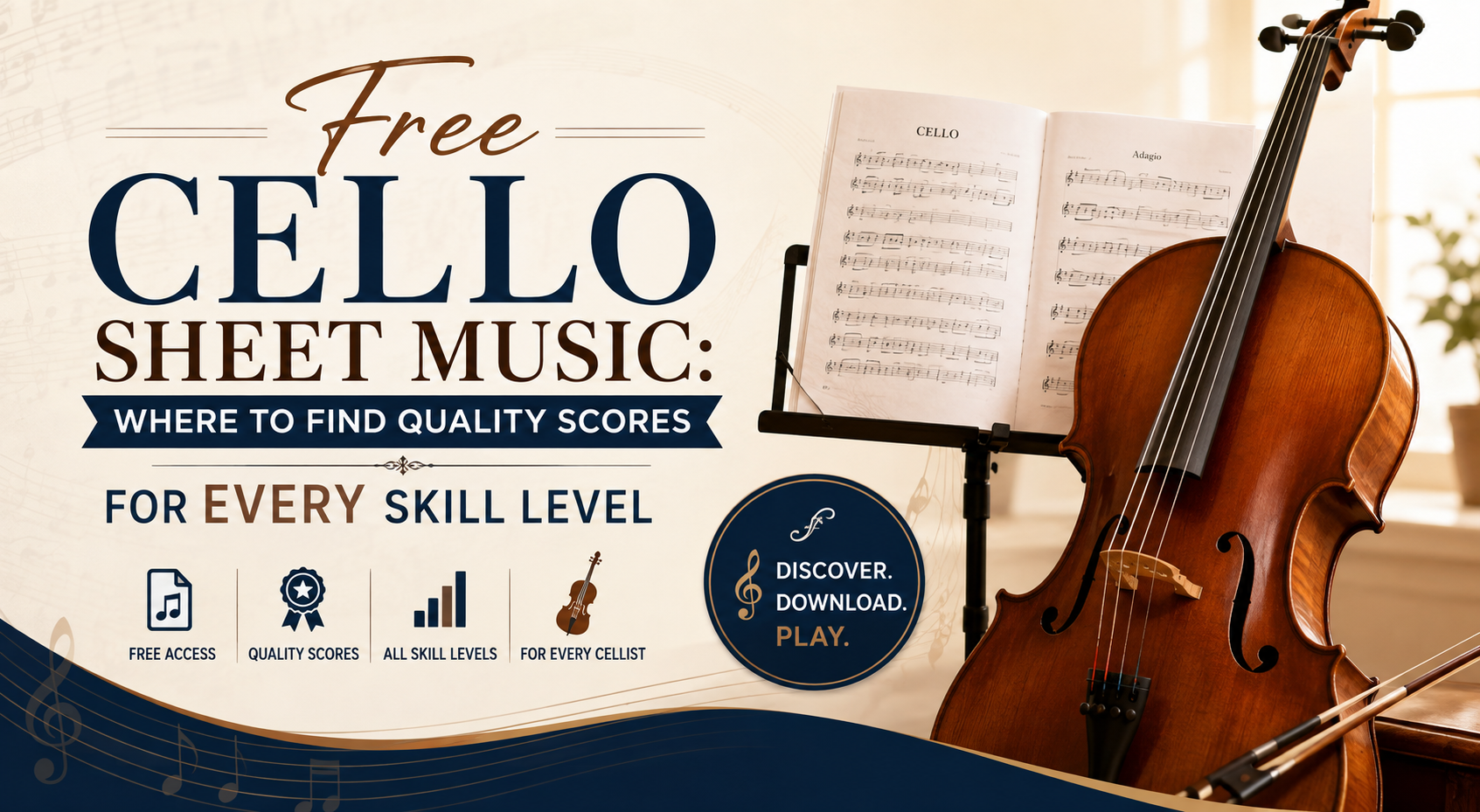
The selection of trustworthy cello sheet music editions serves as an essential practical choice for dedicated performers to develop their technical skills, interpretive abilities, and rehearsal methods. The details of slur direction, articulation hierarchy, and dynamic balance, as well as editorial suggestions, create the foundation for musical expression.
The selection of trustworthy cello sheet music editions serves as an essential practical choice for dedicated performers to develop their technical skills, interpretive abilities, and rehearsal methods. The details of slur direction, articulation hierarchy, and dynamic balance, as well as editorial suggestions, create the foundation for musical expression.
The musicians need to spend their time fixing errors because the performance elements have become both unclear and inconsistent. The world of music repertoire has experienced extensive expansion through internet access, which now enables musicians to discover new music from home.
The entire collection of libraries that people needed to visit or buy to access is now available to them through online access within a few minutes. The organization faces major opportunities, but it must choose materials that provide genuine professional support.
The growing number of public domain music platforms now provides access to essential cello literature that previously remained limited to institutional libraries. The students face no difficulties when they access études, sonatas, orchestral parts, and chamber scores.
The teachers receive advantages from this system. Studio assignments can expand beyond a narrow set of commercially printed volumes, which enables students to explore different musical styles through listening activities.
Because many repositories host multiple historical prints, performers gain insight into how editors across generations have approached phrasing, tempo relationships, and technical practicality. Examining differences can clarify what is original, what is traditional, and what might be open to reinterpretation.
The International Music Score Library Project remains one of the most recognized entry points for digital score research. Its catalogue spans centuries and includes both original publications and later revisions, often for the same work.
Yet size alone does not guarantee suitability. Many performers begin their repertoire hunt with searches related to IMSLP Beethoven, using it as a gateway into multiple historical editions and archival prints.
Whenever possible, determine who prepared the edition. Was it a first publication, a pedagogical revision, or a modern scholarly reconstruction? Understanding context helps performers decide how much interpretive authority to assign to the markings.
A beautiful historical facsimile may still be difficult to read under rehearsal pressure. Page turns, density of notation, and print clarity matter. Musicians frequently print several options before settling on the one that best supports performance logistics.
Transcriptions differ widely. Range adjustments, redistributed harmonies, and added fingerings can change the character of a piece. Reviewing alternatives prevents accidental commitment to an approach that may not fit artistic or technical aims.
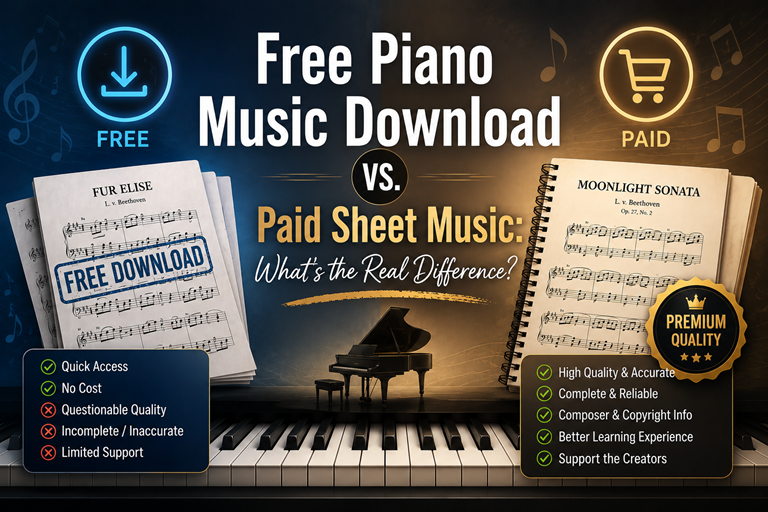
Few compositions illustrate the richness of adaptation better than Moonlight Sonata. Although conceived for piano, it appears in numerous cello arrangements within public domain collections. While the volume of IMSLP Beethoven material is impressive, musicians often need additional guidance to determine which versions are most practical for real rehearsal conditions.
Some editions prioritize vocal lyricism, encouraging sustained bow strokes and cantabile phrasing. Others translate pianistic textures into virtuosic display, demanding agile shifts and projection across registers. The differences are not trivial; they influence pacing, rehearsal emphasis, and audience perception.
By studying multiple sources, performers gain agency. Instead of inheriting one editor’s solution, they shape interpretations aligned with their own musicianship. Open repositories have made repertoire easier to reach, but performers still need certainty. Sheet Music International focuses on delivering reliable sheet music cello editions prepared for practical rehearsal and performance use.
Before committing to a score, many advanced players apply consistent evaluative standards:
● Notation integrity – rhythms, articulations, and dynamics should be unambiguous.
● Separation of voices – clarity supports ensemble coordination.
● Editorial disclosure – additions or revisions should be identifiable.
● Layout logic – practical spacing reduces cognitive load in performance.
This framework transforms selection from guesswork into informed decision-making.
Public availability is empowering, but concerts, juries, and recordings require reliability. For high-stakes engagements, musicians often verify passages against several editions or consult critical commentaries before finalizing bowings and phrasing.
What begins as a free download becomes part of a rigorous preparation ecosystem.
Building a personal archive of vetted scores can save countless hours. Annotated PDFs, bookmarked passages, and documented editorial preferences create continuity from one project to the next. Over time, the performer develops a curated reference library tailored to their artistic voice.
Rather than starting from zero, each new engagement builds on accumulated knowledge.
The modern landscape of public domain music has made extraordinary repertoire reachable for anyone with an internet connection. With thoughtful evaluation, that access becomes a powerful tool rather than a source of confusion.
Selecting dependable sheet music cello editions allows musicians to focus where it matters most: sound, expression, collaboration, and communication with an audience.

Sep 13, 2026



.png)
Aug 05, 2026
Follow us : 


Sheet Music International - Copyright 2026 all rights reserved
| English: Sheet Music (PDF) | Free Scores | French: Sheet Music (PDF) | Free Scores | Greek: Sheet Music (PDF) | Free Scores |
| German: Sheet Music (PDF) | Free Scores | Spanish: Sheet Music (PDF) | Free Scores | Portuguese: Sheet Music (PDF) | Free Scores |
| Italian: Sheet Music (PDF) | Free Scores | Russian: Sheet Music (PDF) | Free Scores | Norwegian: Sheet Music (PDF) | Free Scores |
| Ukrainian: Sheet Music (PDF) | Free Scores | Polish: Sheet Music (PDF) | Free Scores | Dutch: Sheet Music (PDF) | Free Scores |

