Your Request is under process, Please wait.

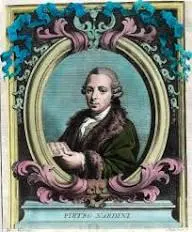
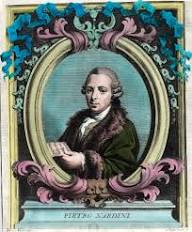
Pietro Nardini (1722–1793)
Download free sheet music from Pietro Nardini.
Pietro Nardini was one of the most distinguished violinists and composers of the 18th century, representing the elegant transition from the late Baroque to the early Classical era. Born in Livorno, Italy, he became the most celebrated pupil of the legendary Giuseppe Tartini, inheriting not just technical prowess but a profound sense of melodic expression. Nardini’s career took him to the prestigious court chapel in Stuttgart and eventually to Florence, where he served as the Director of Music for the Grand Duke of Tuscany. His contemporaries, including the influential
...The Singing Violin: Pietro Nardini’s Path from Padua to the Grand Duke
A fascinating anecdote from the annals of music history illustrates the high esteem in which Pietro Nardini was held by his peers, particularly the famously discerning Leopold Mozart. During the Mozart family’s tour of Italy in 1770, they encountered Nardini in Florence. Leopold Mozart, never one to hand out compliments lightly, was so moved by Nardini's performance that he wrote home describing his playing as the finest he had ever heard. He specifically noted that Nardini did not rely on "difficulties" or flashy tricks to impress the listener; instead, his tone was so pure and his expression so poignant that it possessed a "beauty and dignity" that was unmatched. This meeting also sparked a delightful musical moment: the young Wolfgang Amadeus Mozart, then only fourteen, actually performed alongside Nardini at the Villa Medicea di Poggio Imperiale. It is easy to imagine the teenage prodigy and the seasoned Italian master sharing the stage, bridging two generations of musical brilliance through the simple, elegant language of the violin.
The Tartini Legacy Nardini’s musical identity was forged under the tutelage of Giuseppe Tartini in Padua. Tartini, the composer of the famous "Devil’s Trill" Sonata, was known for a rigorous school of violin playing that emphasized both technical precision and soulful cantabile. Nardini was widely considered Tartini's most successful student, and he remained fiercely loyal to his mentor. When Tartini fell ill in his final years, Nardini left his lucrative position in Germany to return to Italy and care for his teacher until his death in 1770. This bond ensured that the "Paduan school" of violin playing—characterized by a vocalistic approach to the instrument—was preserved and disseminated throughout Europe through Nardini’s own teaching and performances.
Early Career and the Stuttgart Court In the 1760s, Nardini’s reputation led him to the court of the Duke of Württemberg in Stuttgart. At the time, the Stuttgart court was one of the most vibrant musical centers in Europe, boasting an orchestra that included some of the finest players of the era. It was here that Nardini worked alongside the great opera reformer Christoph Willibald Gluck and the innovative composer Niccolò Jommelli. His time in Germany was a period of immense professional growth, during which he refined his compositional style. The influence of the Mannheim school, with its emphasis on dynamic contrasts and orchestral brilliance, began to seep into his concertos, though he never abandoned the Italian lyrical tradition.
The Master of Florence The most significant chapter of Nardini’s life began in 1770 when he was appointed Maestro di Cappella to the Grand Duke of Tuscany, Leopold II. Florence was a hub of intellectual and artistic activity, and Nardini was its musical centerpiece. He led the court’s chamber music and orchestral performances, becoming a fixture in the city's cultural life. It was during this time that he was mentioned in the travelogues of writers like Hester Lynch Piozzi, who described the hushed reverence that fell over a room whenever Nardini picked up his bow. His salon in Florence became a destination for visiting musicians, including the young English prodigy Thomas Linley the Younger, who was often called "the English Mozart" and studied under Nardini during his time in Italy.
The Violin Concertos and Sonatas Nardini’s compositions are primarily centered around his own instrument. The Violin Concerto in E minor remains his most enduring work, often played by students and professionals alike for its blend of Baroque structure and Classical lyricism. Unlike the more aggressive concertos of Antonio Vivaldi, Nardini's works favor an intimate, conversational quality. His slow movements, in particular, are remarkable for their operatic beauty, often sounding like a wordless aria. His Six String Quartets are also of historical importance, representing some of the earliest Italian contributions to a genre that was being perfected simultaneously by Franz Joseph Haydn in Vienna.
Historical Significance and Pedagogy Nardini’s influence extended far beyond his own performances. As a teacher, he shaped the technical foundations of violinists like Bartolomeo Campagnoli and Giovanni Francesco Giuliani. His pedagogical reach was such that his methods helped standardize the way the violin was held and bowed during the transition to the modern era. He was a bridge between the old world of the Baroque "sonata da chiesa" and the emerging world of the public concert hall. When one listens to the music of Luigi Boccherini or even the early violin works of Beethoven, one can hear echoes of the refined, singing style that Nardini championed so effectively in Florence.
Conclusion for Program Notes For a modern audience, hearing a work by Pietro Nardini is like stepping into an 18th-century Tuscan palazzo. The music does not seek to overwhelm the listener with volume or complexity; rather, it invites them into a space of balance, grace, and genuine emotion. As performers explore the nuances of his phrasing—often marked by subtle ornaments and long, sustained lines—they are participating in a tradition that once captivated the greatest musical minds of the Enlightenment. Whether through a PDF download of his Sonata in D major or a live performance of his E minor concerto, Nardini’s voice remains a testament to the enduring power of melody. He was a man who understood that while technique can impress, it is the "sweetness of tone" that truly speaks to the human spirit.
Burney, Charles. The Present State of Music in France and Italy. T. Beckett and Co., 1771.
McVeigh, Simon. The Violinist in London's Concert Life, 1750–1784. Garland Publishing, 1989.
Schwarz, Boris. Great Masters of the Violin. Simon & Schuster, 1983.
Zaslaw, Neal. Mozart's Symphonies: Context, Performance Practice, Reception. Clarendon Press, 1989.
Einstein, Alfred. Mozart: His Character, His Work. Oxford University Press, 1945.
Follow us : 


Sheet Music International - Copyright 2026 all rights reserved
| English: Sheet Music (PDF) | Free Scores | French: Sheet Music (PDF) | Free Scores | Greek: Sheet Music (PDF) | Free Scores |
| German: Sheet Music (PDF) | Free Scores | Spanish: Sheet Music (PDF) | Free Scores | Portuguese: Sheet Music (PDF) | Free Scores |
| Italian: Sheet Music (PDF) | Free Scores | Russian: Sheet Music (PDF) | Free Scores | Norwegian: Sheet Music (PDF) | Free Scores |
| Ukrainian: Sheet Music (PDF) | Free Scores | Polish: Sheet Music (PDF) | Free Scores | Dutch: Sheet Music (PDF) | Free Scores |