Your Request is under process, Please wait.

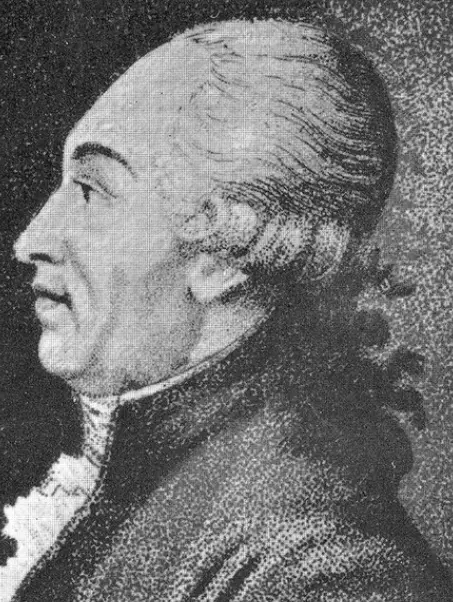
Giuseppe Tartini (1692–1770)
Download free sheet music from Giuseppe Tartini.
Giuseppe Tartini stands as one of the most influential figures in the history of the violin, a composer whose technical innovations and expressive depth bridged the gap between the Late Baroque and Early Classical eras. Born in Pirano, on the Istrian peninsula, Tartini’s path to musical greatness was anything but linear. Originally destined for the church and later a student of law, his life was redirected by a clandestine marriage that forced him into temporary exile. It was during this period of seclusion at the monastery of Assisi that his
...The Architect of the Devil’s Trill: The Musical Legacy of Giuseppe Tartini The origins of Giuseppe Tartini’s most famous work, the Violin Sonata in G minor, known as the "Devil’s Trill," are shrouded in a narrative so gothic and evocative that it has become inseparable from the music itself. According to the account Tartini allegedly gave to the French astronomer Jérôme Lalande, the composer dreamt one night in 1713 that he had made a pact with the Devil. In this vision, the Devil sat at the foot of his bed, took up the violin, and played a sonata of such exquisite beauty and superhuman complexity that Tartini felt his breath taken away. Upon waking, the composer immediately attempted to transcribe what he had heard. Though the resulting composition became his greatest masterpiece, Tartini would later remark with a touch of melancholy that the piece was so inferior to what he had heard in his dream that he would have broken his instrument and abandoned music forever had he possessed another means of support. This anecdote does more than provide a clever nickname; it encapsulates the essence of Tartini’s artistic struggle—the pursuit of a divine, or perhaps diabolical, perfection that pushed the physical boundaries of the violin beyond the conventions of the early 18th century.
The Formative Years and the Exile of a Rogue Giuseppe Tartini was not an infant prodigy in the vein of Wolfgang Amadeus Mozart. His parents intended for him to become a Franciscan friar, but the young man displayed a rebellious streak and a penchant for fencing. While studying law at the University of Padua, he secretly married Elisabetta Premazore, a relative of the powerful Cardinal Cornaro. The discovery of this union led to a warrant for Tartini’s arrest, forcing him to flee to the monastery at Assisi. This forced isolation was the catalyst for his transformation. Free from the distractions of law and swordplay, Tartini dedicated himself to the violin with a monomaniacal intensity. It was here that he likely encountered the works of Arcangelo Corelli, whose formal structures influenced his early style. However, Tartini was never content to simply mimic the past. He spent hours refining his bowing technique and investigating the physics of string vibration, a curiosity that would eventually lead to major theoretical breakthroughs.
Innovation and the "Third Sound" By the time Tartini was pardoned and allowed to return to Padua in 1715, he was already recognized as a formidable talent. His approach to the violin was increasingly scientific. Around this time, he discovered what he termed the terzo suono (third sound). He realized that when two notes are played simultaneously and perfectly in tune, the human ear perceives a third, lower tone. This phenomenon, now known as a "difference tone," became a cornerstone of his teaching. He insisted that his pupils play double-stops with such precision that this third sound became audible, ensuring perfect intonation. While his contemporary Johann Sebastian Bach was exploring the depths of counterpoint in Germany, and Antonio Vivaldi was perfecting the concerto form in Venice, Tartini was pioneering a more rational, yet deeply expressive, approach to string acoustics. This analytical mindset was reflected in his treatise, Trattato di musica secondo la vera scienza dell'armonia, which attempted to ground musical practice in physical laws.
Analysis of the Violin Sonata in G minor ("The Devil’s Trill") The "Devil’s Trill" Sonata serves as a perfect microcosm of Tartini’s stylistic evolution. Though published posthumously, it represents the height of his technical innovation. The work begins with a Larghetto affettuoso, written in 6/8 time. Unlike the fiery virtuosity often associated with the Devil, this opening is hauntingly lyrical, showcasing Tartini’s belief that the violin should "sing" like the human voice. The melody is plaintive and elegant, punctuated by subtle ornaments that require a sensitive bow arm. The second movement, an Allegro energico, introduces the more aggressive, bravura style that would define the virtuoso tradition.
The true heart of the legend, however, lies in the final movement. The Andante-Allegro is famous for the "Trill" section, where the performer is required to play a complex melody while simultaneously maintaining a sustained trill on a different string. At the time of its composition, this was considered nearly impossible. Even by modern standards, the coordination required is immense. This movement highlights Tartini’s development of the bow; he is credited with lengthening the bow and thinning the wood to allow for greater flexibility and "bite" in the articulation. The tension between the slow, melodic passages and the frantic, devilish trills creates a dramatic narrative that anticipated the Romantic obsession with the supernatural, later mirrored in the works of Niccolò Paganini.
The "School of Nations" and European Influence In 1721, Tartini was appointed the first violinist and conductor at the Basilica of Saint Anthony in Padua. This prestigious position provided him with the stability to establish his famous music school. He became a mentor to the greatest violinists of the mid-18th century, including Pietro Nardini, Johann Georg Leopold Mozart (who mentioned Tartini’s techniques in his own famous treatise), and Gaetano Pugnani. His teaching was not merely about finger dexterity; Tartini taught his students how to interpret the soul of the music. He often placed fragments of poetry at the top of his manuscripts to set the emotional mood, though he rarely published these inscriptions, keeping the specific poetic inspiration as a private guide for the performer. This emphasis on the "affetto" ensured that his students carried a distinct, expressive Italian style to the courts of France, Germany, and beyond.
Evolution Toward the Classical Style As Tartini aged, his music began to shed the heavy ornamentation of the High Baroque in favor of the cleaner lines of the Galant style. His later concertos show a move toward more transparent textures and a greater emphasis on melodic clarity. While he remained a master of the Baroque concerto form established by Vivaldi, Tartini’s phrase structures began to look forward to the symmetries of the Classical era. He composed over 130 violin concertos and nearly 200 sonatas, a massive body of work that documents the transition from the era of George Frideric Handel to the burgeoning world of Franz Joseph Haydn. His influence on the development of the sonata form was significant, as he experimented with thematic development and tonal relationships that would become standard practice in the decades following his death.
Tartini’s Theoretical Contributions and The Bow Beyond his compositions, Tartini’s physical alterations to the violin bow cannot be overstated. Before Tartini, the bow was shorter and often curved outward. Tartini’s innovations—using lighter wood and a straighter stick—allowed for the sustained "singing" tone he craved. This evolution changed the very sound of the orchestra. His theoretical works, though dense and sometimes criticized by contemporaries like Jean-Philippe Rameau for their mathematical complexity, showed a man obsessed with understanding why certain sounds move the human heart. He believed that music was a manifestation of universal harmony, a philosophy that elevated the status of the instrumentalist from a mere entertainer to a philosopher of sound.
Legacy and the Romantic Imagination The death of Giuseppe Tartini in 1770 marked the end of an era, yet his presence was felt throughout the 19th century. The myth of the "Devil’s Trill" fueled the Romantic fascination with the "haunted" virtuoso. Paganini, often accused of being in league with the Devil himself, was a direct musical descendant of the technical lineage Tartini established. Even in the 20th and 21st centuries, Tartini’s works remain essential repertoire. His music demands more than technical perfection; it requires a deep understanding of Baroque rhetoric and a willingness to embrace the theatricality of the dream world. He remains the "Master of Nations," a title earned not through conquest, but through the universal language of a violin that dared to play the music of the spheres—and the underworld.
Brainard, Paul. Die Violinsonaten von Giuseppe Tartini. Wiesbaden: Breitkopf & Härtel, 1968.
Lalande, Jérôme. Voyage d'un François en Italie. Venice and Paris, 1769. (Source for the "Devil's Trill" anecdote).
Petrobelli, Pierluigi. Tartini, le sue idee e il suo tempo. Lucca: Libreria Musicale Italiana, 1992.
Tartini, Giuseppe. Treatise on the Ornaments of Music. Translated and edited by Sol Babitz. Los Angeles: Early Music Laboratory, 1970.
Zagante, Alberto. Giuseppe Tartini: Bibliografia 1706–2000. Florence: Olschki, 2002.

Follow us : 


Sheet Music International - Copyright 2026 all rights reserved
| English: Sheet Music (PDF) | Free Scores | French: Sheet Music (PDF) | Free Scores | Greek: Sheet Music (PDF) | Free Scores |
| German: Sheet Music (PDF) | Free Scores | Spanish: Sheet Music (PDF) | Free Scores | Portuguese: Sheet Music (PDF) | Free Scores |
| Italian: Sheet Music (PDF) | Free Scores | Russian: Sheet Music (PDF) | Free Scores | Norwegian: Sheet Music (PDF) | Free Scores |
| Ukrainian: Sheet Music (PDF) | Free Scores | Polish: Sheet Music (PDF) | Free Scores | Dutch: Sheet Music (PDF) | Free Scores |