Your Request is under process, Please wait.

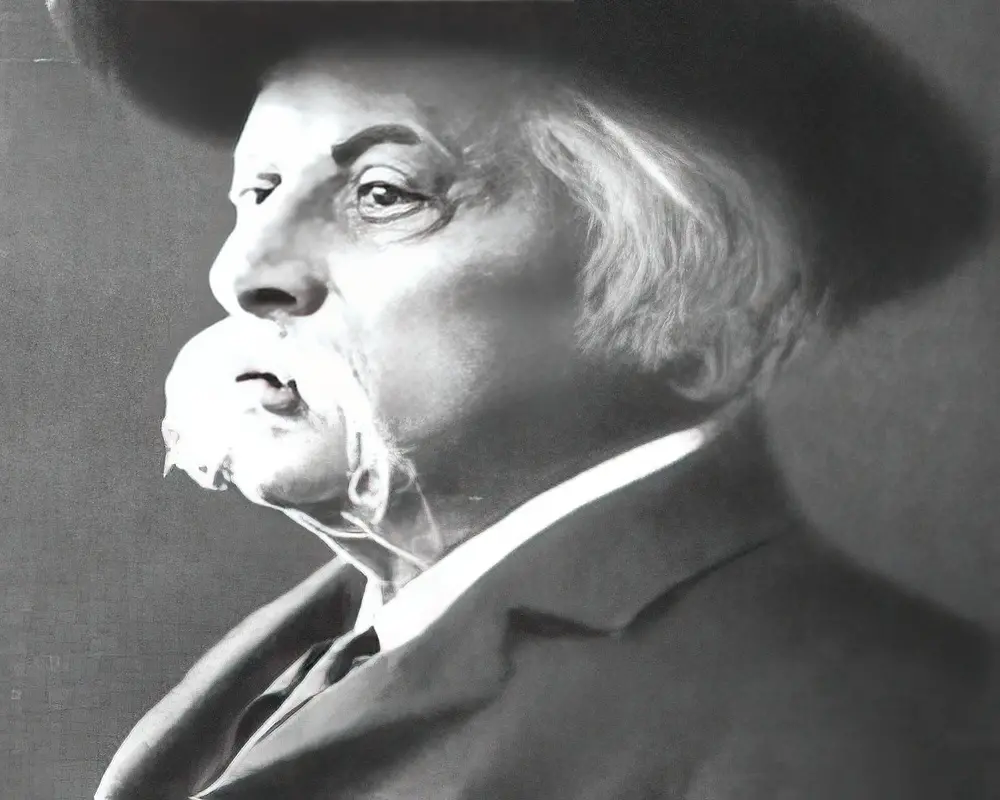
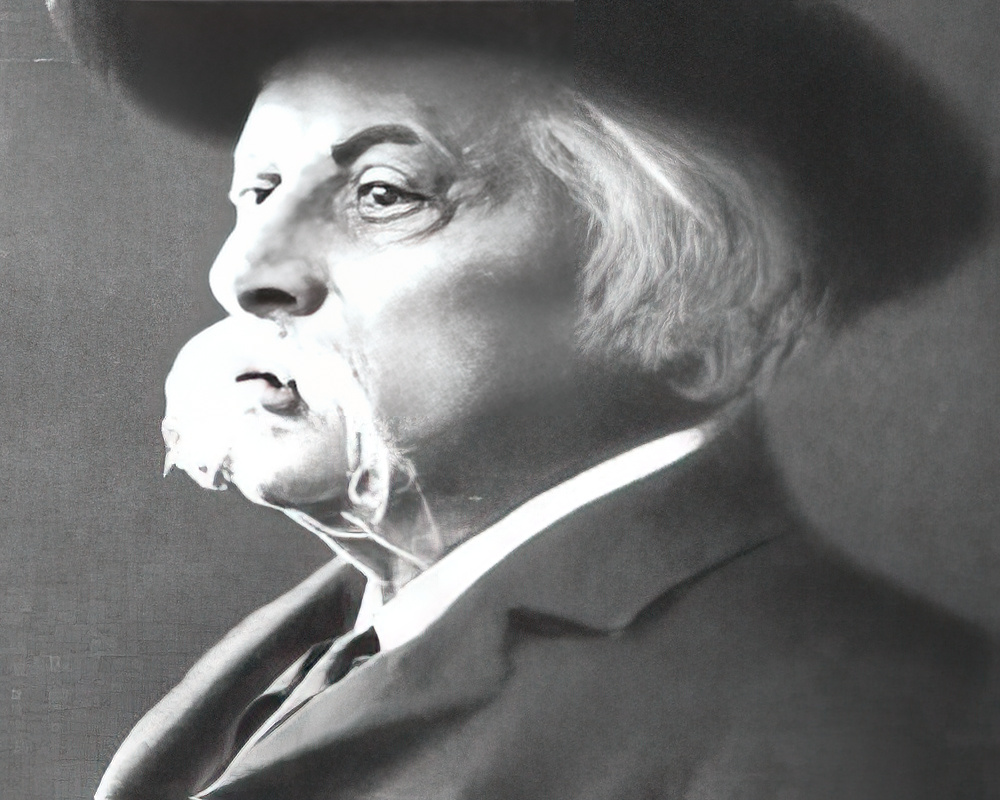
Karl Goldmark (1830-1915)
Download free sheet music from Karl Goldmark.
Discover the richly melodic and colorfully orchestrated music of Karl Goldmark, a leading composer of the late Romantic era in Vienna. Celebrated for his brilliant Violin Concerto and the charming Rustic Wedding Symphony, Goldmark’s works are filled with lyrical warmth and Hungarian fire. We offer high-quality, printable PDF scores of his most beloved instrumental pieces, perfect for soloists, orchestras, and chamber ensembles. Whether you are tackling the virtuosic challenges of the Violin Concerto or enjoying the delightful folk-inspired scenes of the symphony, our digital library provides access to the
...The Lion of Vienna: The Colorful World of Karl Goldmark
On the evening of March 10, 1875, the Vienna Court Opera, the glittering jewel of the Ringstrasse, was packed with the city's elite. They had come for the premiere of a new grand opera, Die Königin von Saba (The Queen of Sheba). Its composer was Karl Goldmark, a 45-year-old Hungarian musician who, after decades of poverty and struggle, was finally making his bid for operatic glory. The night was a triumph. The opera, with its exotic spectacle, lavish orchestration, and soaring melodies, was a sensation, catapulting its creator from relative obscurity to international fame. The former theater violinist had become the new "Lion of Vienna," a master of the Romantic style whose music perfectly captured the opulent spirit of his age.
From Hungarian Village to Vienna
Karl Goldmark’s journey to the pinnacle of the Viennese music world was a long and arduous one. He was born on May 18, 1830, in Keszthely, Hungary, into a large, impoverished Jewish family; his father served as a cantor. A largely self-taught violinist in his early years, Goldmark showed enough promise to be sent to Vienna to study. However, his formal education at the Vienna Conservatory was sporadic, constantly interrupted by a lack of funds. The revolution of 1848 forced him to flee, and for years he made a meager living as a violinist in provincial theater orchestras.
He eventually settled permanently in Vienna, but for two decades, his life was a struggle. He supported himself by teaching piano and working as a music critic, where his sharp and often biting prose earned him more fear than friends. During these lean years, he composed diligently but found little success. He was a stubborn, self-reliant, and determined artist, slowly honing his craft while waiting for his moment.
The Critic and the Brahms Circle
During his time as a critic, Goldmark entered the most important musical circle in Vienna, which centered around the formidable figure of Johannes Brahms. The two men, both outsiders who had fought their way to the top of the Viennese establishment, forged a deep, if sometimes cantankerous, friendship that would last for decades. They spent countless evenings together discussing music, playing four-hand piano arrangements, and arguing passionately about their craft. Brahms, notoriously critical, recognized Goldmark’s talent, offering both encouragement and blunt advice. Their friendship was a cornerstone of Goldmark's life, providing him with an artistic confidant of the highest caliber.
The Breakthrough: Sakuntala and The Queen of Sheba
Goldmark's breakthrough as a composer came relatively late in life. In 1865, the Vienna Philharmonic performed his concert overture Sakuntala, a lush and dramatic work inspired by a classic Hindu drama. Its success finally established him as a serious composer. This gave him the confidence to pursue his true ambition: opera.
He spent ten years meticulously crafting Die Königin von Saba. The result was a masterpiece of the grand opera tradition, perfectly tailored to the tastes of the Viennese public. The opera combines the epic scale of Meyerbeer, the harmonic richness of Richard Wagner, and Goldmark’s own gift for unforgettable melody and vibrant, exotic orchestration. Its premiere was a watershed moment, making Goldmark a household name throughout the Austro-Hungarian Empire and beyond.
The Celebrated Master
The success of his opera liberated Goldmark financially and allowed him to dedicate himself fully to composition. In the years immediately following, he produced his two most enduring instrumental works.
The Rustic Wedding Symphony (Ländliche Hochzeit), composed in 1876, is one of his most beloved creations. It is less a formal symphony than a five-movement suite of charming, folk-inspired vignettes, including a "Wedding March" with variations, a "Bridal Song," and a lively dance finale. The work is a masterpiece of pastoral charm and brilliant orchestration.
A year later, in 1877, he completed his Violin Concerto No. 1 in A minor. This magnificent work combines fiery Hungarian passion with lyrical Viennese elegance. It is a virtuosic and deeply romantic concerto that quickly entered the repertoire of the great violinists of the day and remains a favorite in the concert hall.
Later Years and Legacy
For the rest of his long life, Karl Goldmark was a revered figure in Vienna. He composed several more operas, chamber music, and choral works, and was a respected teacher whose students briefly included a young Jean Sibelius. He was admired by younger generations, and conductors like Gustav Mahler became champions of his operas, frequently performing them at the Vienna Opera.
He died in Vienna on January 2, 1915, at the age of 84, having lived long enough to see the Romantic world he had embodied begin to give way to the modernism of the 20th century. Goldmark’s music is the product of a brilliant musical synthesist. He masterfully blended the influences of German Romanticism from Mendelssohn and Schumann with Hungarian folk idioms and Wagnerian orchestral color. While many of his works have since faded from the standard repertoire, his magnificent Violin Concerto and the delightful Rustic Wedding Symphony remain as enduring testaments to the "Lion of Vienna," a composer whose music captured the golden, twilight glow of his era.
Botstein, Leon. "Karl Goldmark: A Forgotten Master." The Musical Quarterly, Vol. 98, No. 1/2, 2015, pp. 1-21.
Frisch, Walter. Brahms and His World. Princeton University Press, 2009.
Gänzl, Kurt. The Encyclopedia of the Musical Theatre. Schirmer Books, 2001.
Puskás, Regula. "Goldmark, Karl." Grove Music Online. Oxford University Press, 2001.
Follow us : 


Sheet Music International - Copyright 2026 all rights reserved
| English: Sheet Music (PDF) | Free Scores | French: Sheet Music (PDF) | Free Scores | Greek: Sheet Music (PDF) | Free Scores |
| German: Sheet Music (PDF) | Free Scores | Spanish: Sheet Music (PDF) | Free Scores | Portuguese: Sheet Music (PDF) | Free Scores |
| Italian: Sheet Music (PDF) | Free Scores | Russian: Sheet Music (PDF) | Free Scores | Norwegian: Sheet Music (PDF) | Free Scores |
| Ukrainian: Sheet Music (PDF) | Free Scores | Polish: Sheet Music (PDF) | Free Scores | Dutch: Sheet Music (PDF) | Free Scores |