Your Request is under process, Please wait.

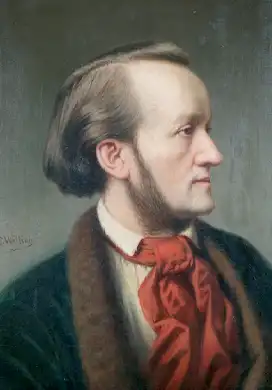
Richard Wagner’s Die Meistersinger von Nürnberg (The Mastersingers of Nuremberg) is an opera unlike any other in his canon, and perhaps in the entire repertoire. It is his only comedy and his only work set in a specific, historical time and place—16th-century Nuremberg—rather than the misty realms of myth.
Wagner famously wrote it during his 12-year "great pause" from the Ring cycle, in between the revolutionary tragedy of Tristan und Isolde and the epic, god-like world of Siegfried. The result is a work of astonishing warmth, humanity, and radiant, sun-drenched melody. But it
...A Vicious Satire and the Birth of a Pedant A Most Un-Subtle Revenge
One of the most amusing, and vicious, anecdotes about Die Meistersinger concerns its villain. Richard Wagner was famously thin-skinned, and his most powerful and articulate critic was the Viennese writer Eduard Hanslick. Hanslick championed the "absolute music" of Brahms and detested Wagner's "music of the future," finding it bombastic and formless. Wagner, naturally, decided to get his revenge in the most public way possible. In his first drafts, the character of the pedantic, foolish, and rule-obsessed "Marker" was not named Sixtus Beckmesser. He was named "Hans Lick". When Wagner gave a private reading of the libretto, the audience (which included Hanslick) was horrified at the barely disguised, malicious satire. Wagner was eventually persuaded to change the name to "Beckmesser," but the caricature remained. Beckmesser’s music is a brilliant parody: it is ugly, chromatic, rhythmically stiff, and pathetically imitative, everything Wagner believed his critics to be.
The "Other" Masterpiece
Wagner's mind was a place of extremes. He famously paused his work on the epic Ring cycle for twelve years. In that time, he produced two of his greatest, and most opposite, works. The first was Tristan und Isolde, an opera of pure, night-bound, chromatic desire that stretched tonality to its breaking point. The second, conceived as its direct "comic" counterpart, was Die Meistersinger. If Tristan is about the renunciation of life for a transcendent love-death, Meistersinger is a radiant, life-affirming celebration of community, daylight, and the tangible world. It is a deeply human opera, populated not by gods, giants, or mythical knights, but by real, working-class people: cobblers, goldsmiths, and bakers.
An Allegory of Art
This opera, more than any other, is Wagner's personal manifesto on art. He used this historical setting as a grand allegory for his own artistic struggles. The entire plot hinges on a single question: What is good art? On one side are the Mastersingers, who represent tradition, craft, and the rules (the "Tabulatur"). On the other side is the young knight, Walther von Stolzing, who represents natural genius, inspiration, and the "music of the future" (i.e. , Wagner himself). He is a genius who cannot articulate the rules, but whose music is undeniably beautiful and new. The opera’s central conflict is the attempt to reconcile these two opposing, but necessary, forces.
Hans Sachs: The Wisest Man in Opera
The opera's true protagonist, and its profound moral center, is the bass-baritone Hans Sachs. He is, quite possibly, the most beloved character Wagner ever created. Sachs is not a mythical king or a tormented god; he is a widower, a cobbler, and a poet. He is the bridge between the two worlds. He respects the Mastersingers' traditions, but he is the only one wise enough to recognize the "natural" genius in Walther's song. His two great monologues in Act III are the philosophical core of the opera: the Wahn! Wahn! monologue, where he reflects on the human madness that leads to riots, and his final address to the town, where he defends German art. He is a figure of immense warmth, melancholy, and profound wisdom.
A New, Radiant Orchestral Sound
For this opera, Wagner created an entirely new orchestral sound. After the dark, churning, and chromatic world of Tristan, the music of Meistersinger is overwhelmingly bright, rich, and diatonic. It is a score built on the key of C major, the key of daylight and simplicity. Wagner proves that he is not just a master of dark tragedy, but also of brilliant light. He creates this world through a complex, joyful polyphony (the interweaving of multiple melodies), a technique he consciously borrows from Johann Sebastian Bach, the "arch-Mastersinger" of German music.
The Overture: A Masterpiece of Counterpoint
The opera’s prelude is one of the most popular and complex orchestral pieces in the repertoire. It is not just a collection of tunes; it is a full-blown, perfectly executed piece of "academic" music that also happens to be a thrilling drama. Wagner brilliantly introduces the opera's main leitmotifs (leading motives) and then, in a staggering feat of counterpoint, weaves three of them together at once: the stately, C-major "Mastersingers" theme, the lyrical, passionate "Walther's Love" (which becomes the "Prize Song"), and the bright, martial "Masters' Banner" motif. It is a musical allegory for the entire opera: tradition, innovation, and community all joined together.
The Music of Tradition and Innovation
Wagner gives each faction its own unique musical language. The music of the Mastersingers is often foursquare, "old-fashioned" on purpose, and based on the Bar form (A-A-B) that was central to their historical craft. We hear this in David's (the apprentice's) long, comic list of "tones". In contrast, Walther's music is flowing, chromatic, and "formless" by their standards. His trial song in Act I, which Beckmesser so gleefully marks as a failure, is a burst of Tristan-like melody that the old masters simply cannot comprehend.
Beckmesser: The Perfect Parody
The character of Sixtus Beckmesser is a work of comic genius. He is the opera's only true antagonist, but he is a buffoon, not a villain. Wagner uses music as his primary weapon of satire. Beckmesser’s "serenade" in Act II is a musical disaster, an absurdly ornate, rhythmically stiff, and comically out-of-tune attempt at a love song, all while he is being "marked" by Hans Sachs's hammering. It is Wagner proving that those who follow rules without "natural" feeling will only ever produce ugly, ridiculous art.
The Act II "Riot" Fugue
The finale of Act II is one of the most breathtaking comic scenes in all of opera. A simple case of mistaken identity (David seeing Beckmesser serenading his own love, Magdalene) escalates into a small disagreement, which then explodes into a full-blown, town-wide street brawl. Wagner’s brilliant solution for this chaos? He sets it as a massive, complex, and technically perfect fugue. It is the most "academic" of all musical forms, used to depict the most primitive and chaotic human behavior. It is a staggering, hilarious, and brilliant stroke of musical-dramatic genius.
A New Leitmotif Language
The leitmotif technique is used here just as skillfully as in the Ring cycle, but to different ends. Instead of motives for swords, spears, and curses, we have motives for ideas. We hear themes for "The Rules of Art," "Spring," "Walther's Love," "German Tradition," and "Sachs's Poetic Wisdom". These themes are not just stated; they are developed, combined, and transformed, creating a vast symphonic tapestry that argues the opera's philosophical points even more eloquently than the text.
The Legacy: A Different Path Forward
Die Meistersinger offered a different "future" for music than Tristan. While Tristan led to the atonal experiments of Arnold Schoenberg, Meistersinger—with its rich, neo-classical counterpoint, its diatonic warmth, and its grand, good-humored humanity—became a foundational work for Richard Strauss. It is impossible to imagine the comedy and complex ensembles of Der Rosenkavalier without the model of Meistersinger. Similarly, the opera’s massive, life-affirming choral finales and its blend of the "lofty" and the "common" were a profound influence on the symphonies of Gustav Mahler. Even Engelbert Humperdinck, in his beloved Hänsel und Gretel, uses Wagner's leitmotif technique within a framework of German folk-song, a direct inheritance from the world of Meistersinger.
A Troubling Coda: "Holy German Art"
The opera's glorious finale, in which Hans Sachs delivers a stirring monologue, has become one of its most controversial elements. He warns the crowd to "honor your German masters" and to protect "holy German art" from "foreign" influence. For Wagner, this was a passionate call for cultural unity, a celebration of German identity through its artists like Bach and Beethoven. However, in the 20th century, these same words were easily and horrifically co-opted by the Nazi party, making Meistersinger their "unofficial" anthem. Today, the opera is still staged, but this final speech is a stark reminder of art's complex and often troubling relationship with nationalism and politics.
Act I: The Church of St. Catherine The opera opens with the final hymn of a church service. A young knight, Walther von Stolzing, has been exchanging glances with Eva, the daughter of the wealthy goldsmith Veit Pogner. He intercepts her and her nurse, Magdalene, and asks Eva a desperate question: is she engaged? She informs him that her father, a Mastersinger, has vowed to give her hand to the winner of the guild's song contest, to be held the next day (St. John's Day). Walther is determined to win her. David, Hans Sachs's apprentice (and Magdalene's sweetheart), begins to explain the impossibly complex rules of "Mastersinging" to Walther.
The Mastersingers, including Eva's father Pogner and the town clerk, Sixtus Beckmesser, begin to assemble. Pogner announces his plan: he will give his daughter and his entire fortune to the winner of the contest. Hans Sachs interjects, suggesting the people of the town should also have a say in the judging, but he is overruled. Walther introduces himself and asks to be admitted to the guild. His only qualification is that he learned the art of song from the birds and from nature itself. He is allowed to audition. Beckmesser, who also wants to win Eva's hand, serves as the "Marker," gleefully marking a new "error" on his slate with every new, unconventional phrase Walther sings. Walther’s "trial song" is a passionate, inspired, and "formless" disaster by their standards. He is rejected. Only Hans Sachs senses the "natural genius" in the young man's song.
Act II: A Street in Nuremberg That evening, David and the other apprentices are celebrating. Sachs, at his workbench, is lost in thought, unable to forget the strange, beautiful melody he heard from Walther. Eva approaches him, fishing for information about the song contest. Sachs, who is a widower and has a deep, paternal love for Eva, teases her, pretending to dislike Walther's song. In a jealous fit, Eva reveals her plan: she will elope with Walther.
As night falls, Walther arrives, and the two lovers prepare to flee. But Hans Sachs has overheard them. To stop them, he "accidentally" illuminates the street with his lantern, forcing them to hide. At that moment, Beckmesser arrives with his lute, intending to serenade Eva (who he thinks is at her window). Sachs begins a loud, cheerful cobbling song, ruining Beckmesser's attempts. They strike a "deal": Sachs will act as "Marker," and for every "error" he hears in Beckmesser's song, he will strike his hammer on his shoe. Beckmesser’s "serenade" is a disaster, constantly interrupted by the loud hammering. David, seeing Beckmesser "serenading" Magdalene (who is disguised at the window), attacks him. This escalates, and the entire neighborhood pours into the street, resulting in a full-blown riot. In the confusion, Sachs pulls Walther into his shop, pushes Eva into her father's arms, and the riot is dispersed by the sound of the night-watchman's horn.
Act III Scene 1: Sachs's Workshop The next morning, St. John's Day. Sachs is reading, lost in thought, and delivers his great monologue on the "madness" of the world (Wahn! Wahn!). Walther, who has stayed the night, awakens and tells Sachs of a beautiful dream he had. Sachs, recognizing this "dream" as a potential "Master-Song," helps him craft it, teaching him the "rules" and the traditional (A-A-B) Bar form. The song is born.
Beckmesser, aching from the previous night's riot, limps into the shop. He sees the new song, written in Sachs's hand, and assumes the "great" Hans Sachs is planning to enter the contest to win Eva himself. He steals the song. Sachs, seeing this, lets him take it, knowing it will be his undoing. Eva arrives, and a profound, wordless scene of understanding passes between her and Sachs. Walther enters and sings the final, glorious stanza of his new "Prize Song". The opera's great quintet, Selig, wie die Sonne, is sung by all, a moment of sublime, peaceful beauty.
Scene 2: A Meadow outside Nuremberg The entire town has gathered for the song contest. The guilds enter in a grand procession. The contest begins. Beckmesser is the first to sing. He attempts to sing the "stolen" song, but his memory is addled, and he butchers the words and the melody, turning Walther's beautiful love song into a grotesque, nonsensical parody. The crowd laughs him off the stage in disgrace. Beckmesser, furious, screams that the song is Sachs's. Sachs calmly replies that the song is beautiful, and he calls forth the man who truly wrote it. Walther steps forward and sings his "Prize Song". It is a stunning, innovative, and rule-abiding masterpiece. The crowd and the Mastersingers are captivated. Walther is declared the winner. He is offered membership in the guild, but he angrily refuses, still bitter from his rejection. The opera ends as Hans Sachs delivers his great address, admonishing Walther to "honor your German Masters" and to cherish "holy German art," as the crowd sings in praise of Sachs, Nuremberg, and art.
Follow us : 


Sheet Music International - Copyright 2025 all rights reserved
| English: Sheet Music (PDF) | Free Scores | Français: Partitions (PDF) | Musique gratuite | Ελληνικά: Παρτιτούρες (PDF) | Δωρεάν μουσική |
| Deutsch: Noten (PDF) | Kostenlose Partituren | Español: Partituras (PDF) | Música impresa | Português: Partituras (PDF) | Música gratuita |
| Italiano: Spartiti (PDF) | Partiture musicali | Русский: Ноты (PDF) | Бесплатные партитуры | Norsk: Noter (PDF) | Gratis noter |
| Українська: Ноти (PDF) | Безкоштовні партитури | Polski: Nuty (PDF) | Darmowe nuty | Nederlands: Bladmuziek (PDF) | Gratis partituren |