Your Request is under process, Please wait.

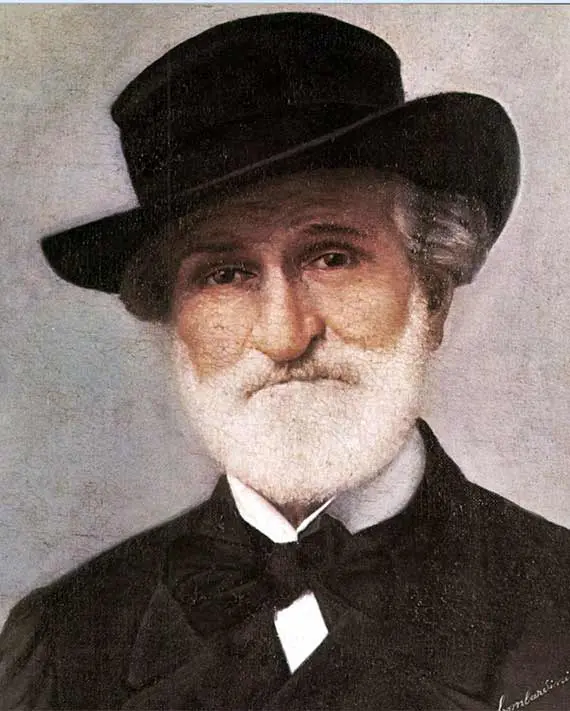
Giuseppe Verdi’s Les Vêpres siciliennes (The Sicilian Vespers) was his ambitious, and stormy, return to Paris in 1855. He was now the king of Italian opera, and this was his first original work for the mighty Paris Opéra, the temple of "grand opera". The production was plagued by disasters. Most famously, the prima donna, Sophie Cruvelli, simply vanished for six weeks, causing a city-wide scandal and prompting a frantic search.
Verdi, exasperated, half-joked that he would have to find his opera in the street. The collaboration with his librettist, the famous Eugène Scribe, was equally fraught. Verdi detested the
...A Battle of Titans: Verdi vs. Paris
The Vanishing Prima Donna and the "Imbecile" Libretto
The road to Les Vêpres siciliennes was perhaps the most difficult of Verdi’s career. He had been lured to Paris with the promise of its vast resources, but he quickly found himself in a creative prison. His first battle was with his librettist, Eugène Scribe, the undisputed king of the "grand opera" formula. Verdi, who was used to bullying his Italian librettists like Piave into shaping texts to his will, met his match in Scribe, who delivered a pre-fabricated, "take-it-or-leave-it" text. Verdi despised it, calling it a "feeble," "imbecile" libretto in private letters. His second battle was with the opera house itself. Rehearsals were chaotic, and the production was thrown into a state of panic when its star soprano, Sophie Cruvelli, disappeared without a trace for nearly six weeks. The press went wild, and Verdi threatened to sue, but she eventually returned, claiming she had just "taken a holiday". It was against this backdrop of artistic frustration and theatrical farce that Verdi composed one of his most ambitious and grand-scale operas.
Embracing the "Grande Boutique"
To understand Les Vêpres, one must first understand French "grand opera". This was the reigning art form in Paris, perfected by Giacomo Meyerbeer (with works like Les Huguenots) and Rossini (Guillaume Tell). It was a formula: a five-act historical epic, massive crowd scenes, spectacular special effects, a high-stakes public plot grafted onto a secret private one, and, most famously, an obligatory, 30-minute ballet in the third act. Verdi half-sarcastically called the Paris Opéra the "Grande Boutique" (the big shop), a place that could produce unparalleled spectacle but often at the expense of dramatic truth. Les Vêpres siciliennes was Verdi's attempt to beat Meyerbeer at his own game, to prove that he, too, could master the "Boutique" and fill its empty spectacle with real, red-blooded Italian passion.
A Second-Hand Plot
Verdi's frustration with Scribe only grew when he discovered the libretto was not even new. It was a recycled, slightly altered version of Le Duc d'Albe, a libretto Scribe had written years earlier for Donizetti, who had left it unfinished at his death. Verdi was furious, feeling he had been given a "second-hand" plot. The story is a classic Scribe construction: the historical event is the 1282 Sicilian uprising against the occupying French. The private drama, which Scribe mechanically grafts onto it, is the secret relationship between the French governor, Montfort, and the Sicilian hero, Henri, who are revealed to be father and son. This tension between public duty (rebellion) and private duty (filial love) is the opera's central, if formulaic, conflict. Verdi’s genius lies in overcoming the libretto's mechanical nature through the sheer force of his music.
The Overture: A Symphonic Masterpiece
Before the curtain rises, Verdi unleashes one of the greatest overtures of his career. It is a far cry from his earlier "potpourri" overtures. This is a true symphonic poem, a complex and brilliantly orchestrated piece that perfectly sets the opera's dark tinta (color). It opens with a long, cello-led lament, a dark, mournful theme that represents the suffering of Sicily (related to Procida's aria). This broods and builds, interrupted by sharp, violent orchestral blows, before finally erupting into a furious, high-velocity allegro that captures the fire and rage of the coming rebellion. It is a magnificent, self-contained drama that, some critics argue, is even more cohesive than the opera that follows.
Hélène: The Fiery French-Italian Soprano
The role of Hélène is a "killer," written for a soprano drammatico d'agilità. It demands a voice of immense power, range, and flexibility. She must navigate the grand, declamatory style of French opera but also possess the fiery coloratura of her Italian counterparts. Her Act I prayer, Au sein de la puissance, is a powerful call to vengeance. But her most famous, and most dramatically bizarre, moment is the "Boléro" in Act V, Merci, jeunes amies. It is a sparkling, light-hearted coloratura showpiece sung just moments before she is to be married and, she knows, a massacre is to begin. It is a classic example of Scribe's preference for spectacle over sense, but Verdi still infuses it with a desperate, almost hysterical energy.
Henri: A Hero Torn
The tenor, Henri, is the opera's dramatic pivot. He is a classic Verdi hero, torn between two irreconcilable loyalties. He loves his people and the duchess Hélène, and he is a sworn patriot. But in Act III, he is confronted with the shocking truth that his hated enemy, the tyrant Montfort, is his father. His music is heroic, high-lying, and requires immense stamina. His journey from defiant rebel to a man trapped between his lover and his father provides the opera with its main emotional engine, and his agonizing choice in Act IV—to save his father or his friends—is a moment of supreme Verdian drama.
Montfort: The Tyrant Father
Guy de Montfort is a classic "Verdi baritone" role, but with a crucial difference. He is the political tyrant, but he is also a lonely, tormented father. Verdi gives him the opera’s psychological core in the great Act III aria, Au sein de la puissance. It is not a traditional aria of rage or vengeance, but a vast, melancholy, and introspective monologue. He reflects on his lost love and his long-lost son, his music showing a vulnerability and depth that is rare in a "villain". This aria, with its sophisticated orchestration and psychological nuance, shows Verdi's art deepening, pointing the way toward figures like Philip II in Don Carlos.
Procida: The Voice of the Conspiracy
The bass, Jean Procida, is the opera’s unbending political engine. He is a historical figure, a doctor and patriot, and Verdi and Scribe portray him as a single-minded zealot. His is a world of shadows, oaths, and conspiracy. His famous entrance aria in Act II, Et toi, Palerme (O tu, Palermo, in Italian), is one of the greatest bass arias in the repertoire. It is a dark, noble, and profoundly moving lament for his conquered homeland, establishing him as a figure of grim, patriotic resolve. Unlike the other characters, who are torn by personal feelings, Procida has only one goal: to free Sicily, at any cost.
The Weight of Spectacle: Choruses and the Ballet
As a grand opéra, Les Vêpres is loaded with massive, complex ensembles and choruses. The Act II finale, where the Sicilians' plotting is interrupted by a festive tarantella, is a brilliant piece of musical layering. The conspiracy scene in Act IV is dark and thrilling. But the most "French" element, and the most problematic for the drama, is the obligatory ballet in Act III, "Les Quatre Saisons" (The Four Seasons). It is a charming, 30-minute dance suite that stops the plot dead, right after the opera's most shocking dramatic revelation (Henri learning Montfort is his father). This was the "price of admission" for composing in Paris, and while Verdi’s music is lovely, it is a perfect example of the "spectacle over drama" ethos he was fighting against.
A New Orchestral Sophistication
What makes Les Vêpres so fascinating is hearing Verdi's raw, Italian tinta colliding with the refined, elegant, and often stiff structure of the French form. The result is a hybrid. The orchestration is a revelation. Working with the superb Paris Opéra orchestra (which he praised as "an army of generals"), Verdi produced his most sophisticated and colorful score to date. His use of woodwinds is more delicate, his harmonic palette is richer, and his understanding of large-scale structure is more complex. He learned from the French tradition of Meyerbeer and Auber and used it to his own ends.
The Opera's Afterlife: I Vespri Siciliani
The opera was a critical and popular success in Paris, but Verdi, as always, looked to Italy. He quickly had the work translated as I Vespri Siciliani. This is the form in which the opera is most often heard today, though the Italian translation, with its subject of rebellion against a foreign occupier, ran into massive trouble with Italian censors. The opera's true legacy is how it expanded Verdi's technique. It was his "finishing school" in orchestration and large-scale dramatic architecture, lessons he would put to even greater use in his second French grand opera, Don Carlos, and in the seamless, magnificent dramas of Aida and Otello.
Act I: Palermo In the main square of Palermo, French soldiers celebrate their occupation, while the Sicilians, including the Duchess Hélène, mourn their lost freedom. Hélène's brother was executed by the French governor, Guy de Montfort. A French soldier, noting her grief, orders her to sing. She does, but she sings a fiery song of Sicilian courage, inciting the crowd. A near-riot is averted by the arrival of Montfort. Henri, a young Sicilian patriot just returned from exile, defiantly confronts the governor. Montfort is strangely impressed by the young man's courage and offers him a commission in the French service, which Henri contemptuously refuses.
Act II: A Valley near Palermo Jean Procida, the exiled leader of the Sicilian resistance, lands on the coast. He sings his famous aria, Et toi, Palerme, a love song to his homeland. He meets with Hélène and Henri, and the three plot the rebellion. Procida plans to use a local wedding celebration as cover. Montfort, however, has issued an invitation to a grand ball. Henri receives his invitation, and when he refuses to attend, Montfort’s soldiers arrest him and drag him away. This act of tyranny enrages the Sicilians. Procida encourages the couples to marry, but as the ceremony begins, French soldiers rush in, abduct the brides, and drag them off to the ball. The Sicilians, now at their breaking point, swear a terrible oath of vengeance.
Act III: Montfort's Study and the Ball Montfort is alone in his study. He reveals that he is the father of a long-lost son, the result of a youthful affair. His son's mother, who hated him, raised the boy to despise him. He has just learned that this son is none other than Henri. He sings of his paternal longing in the great aria, Au sein de la puissance. Henri is brought in. Montfort reveals the truth, but Henri, horrified, rejects his new-found father and his offers of power, vowing to stand with his mother's people. The scene then shifts to the grand ball, where Montfort has staged the lavish "Four Seasons" ballet. During the dance, Hélène and Procida approach Henri, revealing their plan: they will assassinate Montfort during the ball. Henri, trapped, begs them to stop. As they close in, he throws himself in front of Montfort, saving his life. The French guards seize the conspirators, and Hélène, Procida, and the Sicilians curse Henri as a traitor.
Act IV: The Prison Hélène is in the prison fortress. Henri arrives and explains his terrible dilemma, revealing that Montfort is his father. Hélène, seeing his agony, forgives him, and they join in a passionate duet. Procida enters and is being led to execution. Montfort arrives and offers Henri a deal: if Henri will publicly acknowledge him as his father, he will pardon everyone. Henri refuses. Montfort orders the executions to proceed. As Hélène is led to the block, Henri can bear it no longer and cries out, "O, mon père!" (Oh, my father!). Montfort immediately stops the execution, proclaims a general amnesty, and announces that, to seal the peace, Henri and Hélène will be married.
Act V: The Gardens of Montfort's Palace Wedding celebrations are underway. Hélène is joyful, but Procida approaches her with a dark secret. He informs her that the rebellion is not over. The ringing of the wedding bells will be the signal for the "Sicilian Vespers," a mass uprising and the slaughter of every French soldier on the island. Hélène is horrified. She is now trapped: she cannot marry Henri, as it will trigger the massacre, but if she refuses, she will be seen as a traitor to him. She refuses to go to the altar. Montfort, enraged by what he sees as her betrayal, seizes her hand, forces it into Henri's, and in a moment of fury, orders the bells to be rung as the signal for their wedding. The bells toll, Procida gives the signal, and the Sicilians, hidden in the gardens, rush in, crying "Death to the French!" as the massacre begins.
Follow us : 


Sheet Music International - Copyright 2025 all rights reserved
| English: Sheet Music (PDF) | Free Scores | Français: Partitions (PDF) | Musique gratuite | Ελληνικά: Παρτιτούρες (PDF) | Δωρεάν μουσική |
| Deutsch: Noten (PDF) | Kostenlose Partituren | Español: Partituras (PDF) | Música impresa | Português: Partituras (PDF) | Música gratuita |
| Italiano: Spartiti (PDF) | Partiture musicali | Русский: Ноты (PDF) | Бесплатные партитуры | Norsk: Noter (PDF) | Gratis noter |
| Українська: Ноти (PDF) | Безкоштовні партитури | Polski: Nuty (PDF) | Darmowe nuty | Nederlands: Bladmuziek (PDF) | Gratis partituren |