Your Request is under process, Please wait.

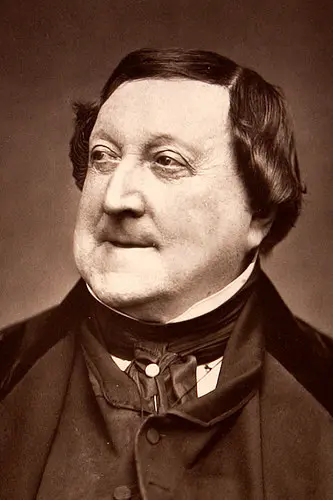
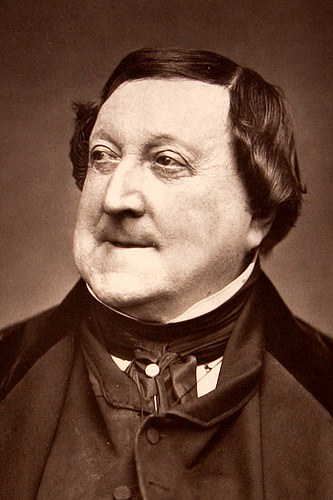
Gioachino Rossini’s Guillaume Tell (William Tell) is not just an opera; it is his grand, revolutionary farewell to the stage. At 37, Rossini was the richest, fastest, and most famous composer in the world, the undisputed king of opera buffa with hits like The Barber of Seville. Then, in 1829, he unleashed this colossal, four-hour French grand opéra on a stunned Parisian audience.
The opera, a sprawling epic of Swiss patriotism, is a story of a nation's fight for freedom from tyranny, centered on the legendary hero who is forced to shoot an apple from his son's head.
...The 39-Year Retirement: Rossini's Great Swan Song
The mystery of William Tell is not in its plot; it is in its composer. In 1829, Gioachino Rossini was 37 years old. He was, by an enormous margin, the most successful and celebrated composer in the world. He was "The Italian Mozart," a man who had conquered Europe with a string of brilliant, intoxicating comedies (Barber of Seville, La Cenerentola) and "serious" operas (Tancredi). He was at the absolute zenith of his powers. He then produced Guillaume Tell, a work of such staggering scale, innovation, and physical and emotional exhaustion, that immediately after, he simply... retired. He never wrote another opera. For the next 39 years of his life—until his death in 1868—he was the "silent" king of Paris, living off his fame, hosting salons, and writing only small, "private" pieces. William Tell is not just an opera; it is his "last will and testament," a final, monumental statement that single-handedly created a new genre and, in the process, seems to have creatively consumed its author. It is the most ambitious "mic drop" in music history.
The Birth of French "Grand Opéra"
Tell was a commission for the Paris Opéra, and Rossini knew he could not just write another Italian opera. The Paris audience demanded spectacle. He was required to deliver a "grand opéra," a massive, five-act (later four) historical epic. He was, in essence, inventing the "blockbuster film" of the 19th century. The opera had to have a huge historical or political theme, a massive cast, gigantic choruses, and, most importantly, a full-length, mandatory ballet in the middle. Rossini took this commercial "checklist" and forged it into a new, revolutionary art form. William Tell is arguably the first, and greatest, of all French "grand operas." It set the template that Giacomo Meyerbeer (with Les Huguenots) and, later, Giuseppe Verdi (with Don Carlos) would follow for decades. The story of the Swiss fight for freedom was a "safe" historical subject that was, in fact, a red-hot "revolutionary" text for a post-Napoleonic Europe, a direct precursor to the "patriotic" choruses of Verdi's Nabucco.
The Overture: A Groundbreaking Symphony
For most of the world, William Tell is its overture. It is, without question, the most famous overture ever written. But it is also one of the most revolutionary. Rossini threw out the old, fast-paced "potpourri" overture and, instead, wrote a complete, four-part "tone poem"—a symphony in miniature that tells the entire story of the opera before the curtain rises. Part 1, "Dawn": The opera opens not with a bang, but with a sublime, lonely, and "alpine" solo for five cellos, evoking a vast, silent, mountain sunrise. Part 2, "The Storm": This "dawn" is shattered by a sudden, violent, and terrifying orchestral storm. It is a masterpiece of "cinematic" scoring, a whirlwind of strings, brass, and percussion that would be a direct influence on the "storm" music of Wagner's Flying Dutchman. Part 3, "The Pastoral": The storm subsides, and we hear the famous Ranz des vaches ("call to the cows"), an "alpine" melody for the English horn and flute. It is the sound of peace, of the idyllic Swiss homeland. Part 4, "The Cavalry Charge": This pastoral calm is broken by a final, distant trumpet call, which erupts into the "March of the Swiss Soldiers"—the single most famous piece of "chase" music in history (later immortalized by The Lone Ranger). It is a finale of pure, unadulterated, kinetic joy.
Stretching "Bel Canto" to its Breaking Point
This opera is not the light, agile, ornamental bel canto ("beautiful singing") of The Barber of Seville. This is bel canto on steroids. Rossini takes the long, lyrical lines of his Italian style and infuses them with a new, "heroic" scale and dramatic weight. The vocal music is notoriously, fiendishly difficult, requiring singers of superhuman stamina and power. The tenor role of Arnold is, to this day, a "killer," a "Mount Everest" for tenors. It demands a singer who can combine the effortless high notes and agility of the old bel canto school with the raw, stentorian power of the new "dramatic" tenor. The role culminates in the Act IV aria, "Asile héréditaire" (My paternal home), a heartbreaking lament that famously, and terrifyingly, launches into a series of "rocket-ship" high Cs, setting the standard for all heroic tenors (Pavarotti included) who followed.
Arnold: The Opera's True "Heroic" Journey
Although the opera is named for the baritone, Tell, its true emotional journey belongs to the tenor, Arnold. William Tell is a static character; he is a "monument" to patriotism, a perfect, unwavering hero from the first note to the last. Arnold, however, is a classic, "modern" Romantic hero. He is a man torn in two. He is a Swiss patriot, but he is secretly, and scandalously, in love with Mathilde, a princess of the Hapsburgs, the Austrian oppressors. He is consumed by this "love vs. duty" conflict. His journey from a selfish, lovesick youth to a vengeful, patriotic leader (after the Austrians execute his father) is the opera's central, human drama. This "tenor-centric" plot, with the hero torn between his private love for a "forbidden" woman and his "public" duty to his country, became a staple of French and Italian opera for the next 50 years, most notably in the works of Verdi.
The "Spectacle" of Freedom
Tell is, above all, a "choral" opera. The real hero is not Tell or Arnold, but the Swiss people. Rossini creates massive, complex, and thrilling ensembles that make the "chorus" a main character. The climax of Act II is one of the most famous scenes in grand opéra: the "Gathering of the Cantons" (the "Rütli Oath"). In the dead of night, by the shores of Lake Lucerne, the leaders of the three Swiss cantons arrive, one by one, their boats landing in the mist. They join in a massive, slowly building, conspiratorial chorus, "Suivez-moi!" (Follow me!), a "call to arms" that builds to an explosive, "revolutionary" oath of "liberty or death." It is a scene of pure, patriotic, theatrical adrenaline.
The "Apple Scene": A Masterpiece of Tension
For all its grand spectacle, the opera's most famous and most powerful moment is one of quiet, unbearable, psychological tension: the "apple scene." Rossini, the master of buffa comedy, proves here that he is also a master of the "thriller." The tyrant, Gessler, has placed his hat on a pole and demanded all Swiss citizens bow to it. Tell refuses. Gessler, in a moment of inspired cruelty, recognizes Tell as a famous archer and devises a "sporting" punishment: Tell must shoot an apple off his own son's head. This is not a "grand aria" moment. The music becomes hushed, stark, and terrifying. Tell, his voice choked with emotion, sings his prayer to his son, "Sois immobile" (Stay still). It is not a "performance"; it is the private, agonized plea of a father. This focus on "realistic" psychological terror, over "operatic" display, was a profound innovation, proving Rossini's dramatic genius was every bit the equal of Beethoven or Verdi. It is the final, brilliant shot from a composer who, having proven he could do everything, chose to do nothing more.
Act I: The Village Festival
In a Swiss village, on the shores of Lake Lucerne, the people are celebrating a wedding festival. The shepherd, Leuthold, staggers in, wanted for killing an Austrian soldier who had tried to assault his daughter. He is a fugitive. The tyrannical Austrian governor, Gessler, and his troops are in hot pursuit. A storm is brewing, and no boatman is brave enough to row him across the raging lake to safety—except one. The patriot, Guillaume Tell, steps forward, and they escape just as the soldiers arrive. The soldiers, led by Rodolphe, demand the villagers reveal the boatman's name. When they refuse, the soldiers seize Melcthal, the village elder, as a hostage. Meanwhile, Melcthal's son, Arnold, is in turmoil. He has saved the life of a Hapsburg (Austrian) princess, Mathilde, and they are secretly in love. He is torn between his "forbidden" love for the oppressor and his loyalty to his country, which is represented by Tell.
Act II: The Rütli Oath
In a deep valley, Arnold and Mathilde meet at night. They sing a passionate love duet, but their joy is short-lived. Tell and his friend Walter arrive. They confront Arnold, asking him to join the Swiss rebellion. Arnold, still in love with Mathilde, hesitates. To shatter his indecision, Tell and Walter reveal the devastating truth: Gessler has executed his father, Melcthal. Arnold, in a rage, collapses in grief and then swears a terrible oath of vengeance. His indecision is over. The scene changes to the Rütli meadow, by the lake. It is here that the famous "Gathering of the Cantons" takes place. Men from the three cantons (Schwyz, Unterwalden, and Uri) arrive by moonlight. In a massive, building chorus, they unite and swear to fight for the liberation of Switzerland.
Act III: The Apple and the Arrest
In the marketplace at Altdorf, the Austrians are celebrating 100 years of their rule. Gessler has placed his hat on a high pole and commanded every Swiss citizen to bow before it. Tell and his young son, Jemmy, walk through the square and pointedly refuse to bow. Gessler recognizes Tell as the man who saved Leuthold. He devises a cruel, "sporting" punishment. Noticing Tell's fame as an archer, he orders Tell to shoot an apple off Jemmy's head. If he refuses, both he and his son will die. Tell, in agony, sings his heartbreaking, hushed prayer to his son, "Sois immobile" (Stay still). He takes aim and, with a single shot, splits the apple. The crowd is jubilant. But as Tell embraces his son, a second arrow falls from his cloak. Gessler demands to know what it was for. Tell, his fury unleashed, replies, "It was for you, tyrant, had I harmed my son!" Gessler, enraged, orders Tell, his wife Hedwige, and Jemmy to be arrested. Mathilde, using her royal authority, saves Jemmy, but Tell is bound and dragged away, to be taken across the lake to Gessler's fortress.
Act IV: The Liberation
At his father's ruined cottage, Arnold, now the leader of the Swiss rebels, is consumed by grief and rage. He sings his great, heroic aria, "Asile héréditaire" (My paternal home), vowing to avenge his father and free his country. The Swiss rebels arrive, armed, and Arnold points to Tell's house, which is burning in the distance—the signal for the revolt. The final scene: a rocky shore on the lake. A massive storm is raging. Hedwige and Jemmy are there, awaiting Tell's fate. Tell's prison boat is seen struggling in the storm. The boatmen, terrified, have unbound Tell, the only man who can pilot the boat. Tell steers the boat toward a flat rock, leaps ashore, and shoves the boat back into the waves. Gessler, on the boat, cries out. As Gessler appears on the rocks, Tell, having seized his bow and arrow from Jemmy, takes aim and shoots him, crying, "Let Switzerland breathe!" The storm suddenly subsides. The sun comes out (the beautiful "pastoral" theme from the overture returns), and the opera ends with a massive, triumphant, all-encompassing chorus, "Liberté, redescends des cieux!" (Liberty, descend again from Heaven!), as the Swiss people celebrate their freedom.
Follow us : 


Sheet Music International - Copyright 2026 all rights reserved
| English: Sheet Music (PDF) | Free Scores | French: Sheet Music (PDF) | Free Scores | Greek: Sheet Music (PDF) | Free Scores |
| German: Sheet Music (PDF) | Free Scores | Spanish: Sheet Music (PDF) | Free Scores | Portuguese: Sheet Music (PDF) | Free Scores |
| Italian: Sheet Music (PDF) | Free Scores | Russian: Sheet Music (PDF) | Free Scores | Norwegian: Sheet Music (PDF) | Free Scores |
| Ukrainian: Sheet Music (PDF) | Free Scores | Polish: Sheet Music (PDF) | Free Scores | Dutch: Sheet Music (PDF) | Free Scores |