Your Request is under process, Please wait.

Download free sheet music from Friedrich Seitz.
Introduce your students to the joy of solo performance with the music of Friedrich Seitz, one of the most important composers in the history of violin pedagogy. We offer a complete collection of his famous Student Concertos and other instructional works, available as high-quality, printable PDF files, completely free of charge. For generations, Seitz's charming and accessible concertos have served as the perfect bridge between technical exercises and the masterworks of the violin repertoire. Each piece is crafted to be musically engaging while systematically developing a young player's technique. Download these essential teaching
...The Champion of Young Violinists
For millions of violin students around the world, there is a magical moment of arrival. After months or years spent wrestling with scales, etudes, and simple folk songs, their teacher places a new piece of music on the stand. It is their very first "concerto"—a word that promises drama, virtuosity, and the thrill of standing in the spotlight. More often than not, the name at the top of that page is Friedrich Seitz. For over a century, Seitz’s Schüler-Konzerte, or Student Concertos, have been the gateway through which young players enter the grand tradition of solo violin performance. While his name may not command the same reverence as the great masters, Seitz’s legacy is etched not in the grand concert halls of the world, but in the practice rooms and recital stages where the violinists of tomorrow are made.
Early Life and Virtuoso Training
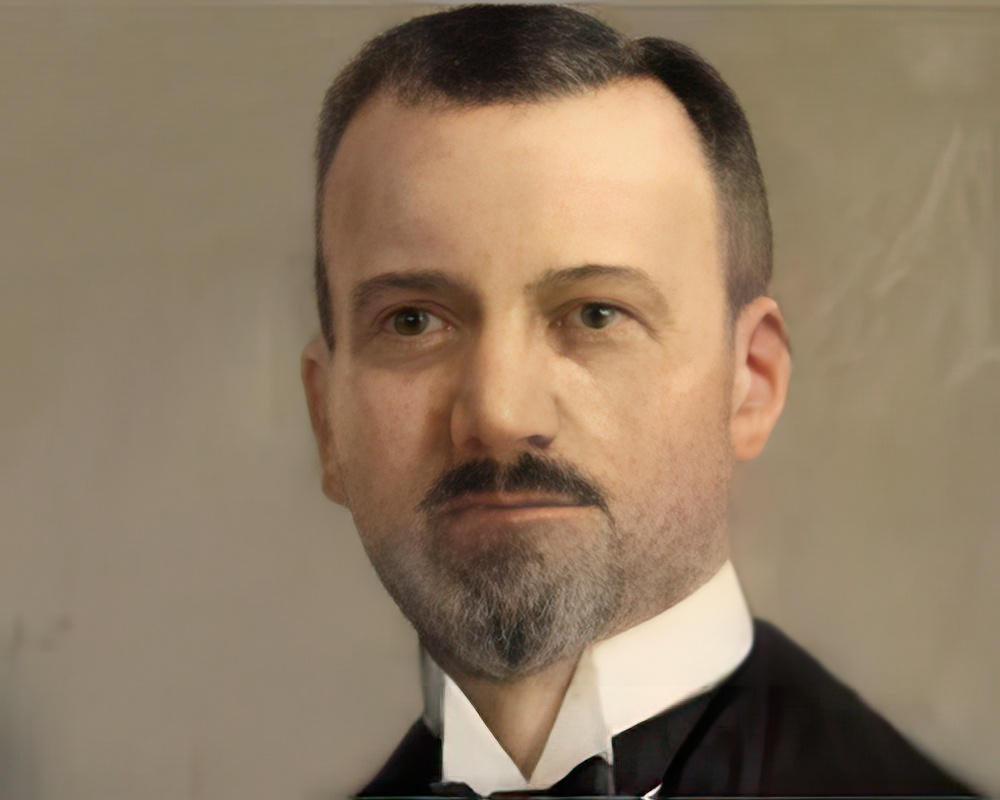
Friedrich Seitz was born on June 12, 1848, in the town of Günthersleben, near Gotha in what is now central Germany. He grew up in a musically fertile environment, and his own talent on the violin became apparent at an early age. As a young man, he was sent to study with Johann Christoph Lauterbach, a leading violinist and concertmaster in Dresden. Lauterbach was a prominent exponent of the celebrated "Dresden School" of violin playing, known for its technical polish and elegant, lyrical style. Under his tutelage, Seitz developed into a formidable virtuoso in his own right.
Following the path of many aspiring 19th-century musicians, Seitz embarked on a career as a touring soloist. He performed widely, honing his skills and gaining a reputation as a fine player. This experience as a professional virtuoso was crucial, as it gave him an intimate, first-hand understanding of violin technique—an understanding that would later prove invaluable in his work as a composer and teacher.
The Concertmaster of Sondershausen and Dessau
While a touring career offered fame, a stable orchestral position offered security and the opportunity to shape a musical community. In 1874, Seitz was appointed concertmaster of the court orchestra in Sondershausen, a town renowned for its progressive musical life. Here, he worked under the conductor Max Erdmannsdörfer, leading the orchestra and performing as a soloist.
His most significant appointment came in 1884 when he was named Hofkonzertmeister (Court Concertmaster) of the Ducal Orchestra in Dessau. This was a prestigious post that he would hold for the rest of his career. In Dessau, he was a central figure in the city's musical life, working alongside the respected conductor and composer August Klughardt. Seitz not only led the orchestra's violin section but also frequently conducted and continued to teach. It was in this stable, professional environment that he found the time and inspiration to compose the works for which he would become famous.
The Pedagogical Legacy: The Student Concertos
Friedrich Seitz’s enduring fame rests almost entirely on his series of eight Student Concertos for violin and piano. In these works, he achieved a perfect synthesis of his skills as a performer, a composer, and an educator. He recognized a critical gap in the existing violin repertoire: there were plenty of technical exercises and etudes, and there were the great, difficult concertos of the masters, but there was very little in between. A young student could not simply jump from a Kayser etude to a concerto by Johannes Brahms. Seitz’s concertos were designed to be that crucial intermediate step.
The genius of these pieces lies in their dual purpose. Musically, they are written in an appealing, accessible late-Romantic style. Their melodies are charming, their harmonies are rich, and they possess a sense of drama and passion that makes them exciting for a young person to play. They are not dry, academic exercises; they are real music that allows a student to feel the emotional rewards of performance.
Pedagogically, they are brilliant. Each concerto is a carefully constructed technical lesson. Seitz systematically introduces the core techniques a developing violinist must master:
Shifting: The concertos, particularly Nos. 2, 3, and 5, are masterful introductions to shifting, primarily into the third position, which is a major milestone for every student.
Bow Strokes: They require a variety of bow techniques, from smooth, singing legato to crisp staccato and sharp martelé, training the student's right-arm facility.
String Crossings: The passagework is designed to develop fluidity in moving across the strings.
Musical Form: By structuring the pieces in the traditional three-movement (fast-slow-fast) concerto format, he teaches students about musical architecture and the concept of a large-scale work.
Two works in particular have become staples of the international violin curriculum: the Student Concerto No. 2 in G Major, Op. 13, and the Student Concerto No. 5 in D Major, Op. 22. These two pieces were enthusiastically adopted by the Japanese educator Shinichi Suzuki for inclusion in his influential Suzuki Method, which guaranteed them a central place in violin pedagogy for the 20th century and beyond.
Enduring Influence
Friedrich Seitz was not a musical revolutionary like Arnold Schoenberg, nor did he compose works of profound, soul-searching depth. His contribution to music was of a different, but no less valuable, kind. He was a master craftsman who dedicated his compositional talent to the noble cause of education. He understood that the journey to musical mastery is built of small, confident steps, and he provided the perfect material for some of the most important steps a young violinist will ever take.
He remained in Dessau as a revered teacher and orchestral leader until his death on May 22, 1918. While his other compositions have largely faded from the repertoire, his student concertos are played every day in teaching studios all over the world. His legacy is not one of radical innovation, but of empowerment—a legacy measured in the millions of young musicians who, through his works, first experienced the incomparable joy of making a violin sing.
Bachmann, Alberto. An Encyclopedia of the Violin. Da Capo Press, 1966.
Grodzik, L. "Friedrich Seitz: The Master of Student Concertos." American String Teacher, vol. 54, no. 1, 2004, pp. 64-67.
Lahee, Henry C. Famous Violinists of To-day and Yesterday. L. C. Page and Company, 1899.
"Seitz, Friedrich." In Grove Music Online. Oxford University Press, 2001.
Suzuki, Shinichi. Nurtured by Love: The Classic Approach to Talent Education. Alfred Music, 1983.
Follow us : 


Sheet Music International - Copyright 2025 all rights reserved
| English: Sheet Music (PDF) | Free Scores | Français: Partitions (PDF) | Musique gratuite | Ελληνικά: Παρτιτούρες (PDF) | Δωρεάν μουσική |
| Deutsch: Noten (PDF) | Kostenlose Partituren | Español: Partituras (PDF) | Música impresa | Português: Partituras (PDF) | Música gratuita |
| Italiano: Spartiti (PDF) | Partiture musicali | Русский: Ноты (PDF) | Бесплатные партитуры | Norsk: Noter (PDF) | Gratis noter |
| Українська: Ноти (PDF) | Безкоштовні партитури | Polski: Nuty (PDF) | Darmowe nuty | Nederlands: Bladmuziek (PDF) | Gratis partituren |