Your Request is under process, Please wait.

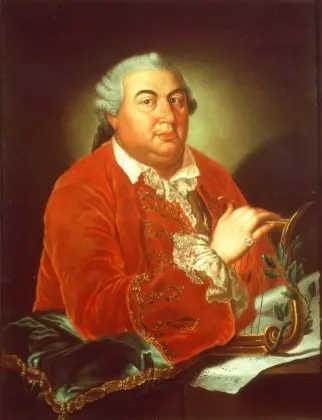
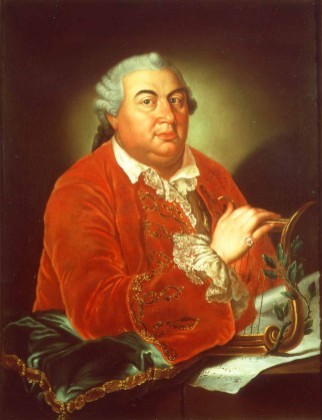
Niccolò Jommelli (1714–1774)
Download free sheet music from Niccolò Jommelli.
Niccolò Jommelli was one of the most celebrated and influential Italian composers of the eighteenth century, playing a pivotal role in the fundamental transition from the ornate late Baroque style to the balanced Classical era. Born in Aversa near Naples, he demonstrated prodigious musical talent from an early age and absorbed the rich traditions of the famous Neapolitan school.
Born: September 10, 1714, in Aversa, Kingdom of Naples.
Died: August 25, 1774, in Naples, Kingdom of Naples.
Nationality: Italian.
Era: Late Baroque and Early Classical (Galant / Empfindsamkeit).
Known For:
The Neapolitan Master of Dramatic Reform and Orchestral Fire
Jommelli achieved immense international renown primarily through his dramatic operas and deeply expressive sacred music, which captivated audiences across the European continent. His unique compositional voice blended Italian melodic lyricism with sophisticated German orchestral richness and harmonic depth, a synthesis he perfected during his fifteen-year tenure as Oberkapellmeister at the brilliant ducal court of Württemberg in Stuttgart. Recognized during his lifetime as the Italian equivalent of Christoph Willibald Gluck, Jommelli was a crucial reformer of opera seria, substantially elevating the dramatic role of the orchestra, utilizing accompanied recitative to heighten emotional tension, and breaking away from the rigid vocal display of the traditional da capo aria.
Beyond the theater, his profound sacred compositions, including his legendary setting of the Miserere and his solemn Requiem, were revered as masterpieces of counterpoint and vocal pathos. For modern conductors, performers, and musicologists, Jommelli offers a treasure trove of dramatically vibrant and technically rewarding repertoire.
Exploring and performing his printable PDF scores allows musicians to experience the vital evolutionary link between the masterworks of George Frideric Handel and Wolfgang Amadeus Mozart. His enduring legacy represents a pinnacle of dramatic expression and structural innovation in eighteenth-century music.
When young Niccolò Jommelli traveled to Bologna in 1741 to present himself to the legendary music theorist Padre Giovanni Battista Martini, he reportedly disguised his true identity. Arriving in the austere study of the esteemed friar, Jommelli introduced himself as a humble novice seeking lessons in counterpoint. Padre Martini, accustomed to eager amateurs, presented the young visitor with a fiercely intricate fugue subject and instructed him to develop it on the harpsichord.
Jommelli sat at the instrument and proceeded to weave a contrapuntal web of such breathtaking brilliance and daring harmonic progressions that the venerable friar leaped to his feet in astonishment. Padre Martini exclaimed, "Who are you making fun of? It is you who should be examining me; you are the one who should be teaching me!" When Jommelli revealed his identity, Padre Martini embraced him, sparking a profound, lifelong friendship between the two musical giants.
This famous encounter encapsulates the essential paradox of Jommelli’s genius. He possessed both the spontaneous melodic charm of the Neapolitan tradition and the rigorous architecture of northern academic counterpoint. It was precisely this synthesis that allowed him to revolutionize eighteenth-century theatrical and sacred music.
Early Neapolitan Roots and First Operatic Triumphs
Born in Aversa near Naples in 1714, Jommelli was immersed in the European center of vocal music. He received his formal training at two of Naples's premier conservatories, studying under respected masters including Francesco Durante, Nicola Fago, and Leonardo Leo.
These institutions were famous for producing virtuoso singers and brilliant melodists. Jommelli’s first comic opera, L'errore amoroso, premiered in Naples in 1737 under a protective pseudonym. The work was an instantaneous sensation, proving his natural affinity for dramatic pacing. Buoyed by this success, Jommelli quickly transitioned to the realm of opera seria with his serious drama, Ricimero re de' Goti, staged in Rome in 1740. The Roman public received the opera with rapturous applause.
This triumph captured the attention of Cardinal Henry Benedict Stuart, the wealthy patron who introduced Jommelli to the highest echelons of Roman aristocracy. During this fertile period, Jommelli established his foundational style, characterized by sweeping vocal lines that showcased the technical prowess of legendary singers while maintaining an underlying emotional sincerity that set him apart from his contemporaries.
The Venetian Interlude and Sacred Masterpieces
In the mid-1740s, Jommelli’s soaring reputation drew him to Venice, where he accepted the post of musical director at the Ospedale degl'Incurabili, one of the city's famous conservatories for orphaned girls. Following in the footsteps of Johann Adolph Hasse and Antonio Vivaldi, Jommelli composed a vast array of sacred music tailored specifically to the extraordinary vocal and instrumental abilities of his female students.
This Venetian interlude deeply enriched his harmonic palette. He composed magnificent oratorios, motets, and liturgical settings, including his celebrated early Laudate pueri and dramatic settings of the mass. Venice also provided a flourishing theatrical environment where Jommelli collaborated with the playwright Carlo Goldoni and interacted with contemporary masters like Baldassare Galuppi.
His Venetian works began to exhibit a heightened sensitivity to instrumental color, utilizing divided string sections and expressive woodwinds to depict psychological states. This experience in sacred choral composition instilled in Jommelli a profound sense of dramatic architecture that he subsequently imported into his secular theatrical works, blurring the traditional boundaries between church and stage.
The Roman Directorship and Global Fame
Returning to Rome in 1749, Jommelli reached a major milestone when he was appointed maestro di cappella as assistant to Giovanni Battista Costanzi at St. Peter's Basilica. Holding a premier position within the Vatican confirmed Jommelli’s absolute mastery of Renaissance polyphony. Yet, his ecclesiastical duties did not stifle his operatic output. He secured a leave of absence to travel to Vienna in 1749, where he achieved a legendary collaboration with the imperial court poet Pietro Metastasio.
Jommelli set Metastasio’s librettos Achille in Sciro and Didone abbandonata to music that completely enchanted the Viennese court of Empress Maria Theresa. Metastasio himself wrote enthusiastic letters praising Jommelli's unique capacity to capture the subtle nuances of human emotion, declaring that the music spoke directly to the heart.
During this Viennese sojourn, Jommelli also encountered the emerging symphonic forms of the Germanic realm, absorbing structural principles that would soon catalyze his revolutionary operatic reforms. By the early 1750s, Jommelli was universally recognized as Europe’s premier dramatic composer.
The Golden Age in Stuttgart: Orchestral Fire and Theatrical Reform
In 1753, Jommelli accepted an invitation from Duke Karl Eugen of Württemberg to become Oberkapellmeister at the court of Stuttgart. Duke Karl Eugen was a lavish monarch determined to create the most magnificent cultural establishment in Europe. He granted Jommelli unprecedented salary, artistic control, and an orchestra that was widely considered the finest and most disciplined on the continent, rivaled only by Mannheim.
For fifteen years, Stuttgart served as Jommelli’s creative laboratory. Collaborating with the visionary French choreographer Jean-Georges Noverre and set designer Giovanni Battista Colomba, Jommelli dismantled the stale conventions of traditional opera seria. He broke away from the rigid succession of static da capo arias, constructing highly integrated dramatic scenes. Most crucially, Jommelli elevated the orchestra from a mere accompanimental engine to an active participant in the psychological drama. He introduced dynamic orchestral crescendos, dramatic tremolos, slashing syncopations, and independent woodwind textures. This ferocious instrumental style became known across Europe as Jommelli's "orchestral fire." Masterpieces such as Fetonte (1768) and Armida abbandonata (1770) showcased this thrilling integration.
The Revolution of Accompanied Recitative
Perhaps Jommelli’s single greatest technical contribution to Western music was his expansion of recitativo accompagnato (orchestrally accompanied recitative). Prior to Jommelli, the majority of operatic narrative was delivered via dry secco recitative, accompanied only by harpsichord and cello. Jommelli recognized that moments of extreme emotional trauma or supernatural intervention demanded the full expressive weight of the symphonic ensemble. In operas like Demofoonte and Il Vologeso, he constructed vast monologues where the orchestra interjects with violent punctuation, tender sighs, or ominous harmonic shifts.
He utilized daring modulations and sudden pauses to mirror the fractured thought processes of his protagonists. This revolutionary approach anticipated the dramatic ideals later championed by Christoph Willibald Gluck in his preface to Alceste. Indeed, contemporary chroniclers such as the English music historian Charles Burney frequently compared Jommelli and Gluck, noting that while Gluck achieved drama through noble simplicity, Jommelli achieved it through sophisticated orchestral richness. Young Wolfgang Amadeus Mozart, who absorbed Jommelli’s scores, was profoundly influenced by these expressive recitatives, later echoing their dramatic architecture in Idomeneo and Don Giovanni.
The Sacred Summit: The Requiem and the Final Miserere
In 1768, deteriorating health prompted Jommelli to retire from Stuttgart and return to Naples. While his highly sophisticated orchestral style proved somewhat too complex for the conservative Neapolitan opera audiences of his twilight years, his final sacred compositions cemented his immortal legacy. In 1756, he had composed his monumental Missa pro defunctis (Solemn Requiem in E-flat major) for the funeral of the Duchess of Württemberg. This work remained the most frequently performed Requiem setting across Europe until Wolfgang Amadeus Mozart penned his setting in 1791. Jommelli’s Requiem is a masterpiece of somber elegance, contrasting hushed homophonic supplications with blazing contrapuntal fugues.
Even more legendary was his final composition, the Miserere in G minor for two soprano soloists, strings, and continuo, composed in 1774 on his deathbed. Setting an Italian paraphrase of Psalm 51 by Pietro Metastasio, Jommelli stripped away all operatic virtuosity, leaving behind an intensely intimate dialogue of penitence and grace. The sublime dissonances and weeping suspensions of this masterpiece moved listeners to tears and prompted Metastasio to declare it the finest music ever conceived.
Historical Legacy and Repertoire Value for Today's Ensembles
Niccolò Jommelli died in Naples on August 25, 1774, honored by a public funeral organized by his devoted colleagues. His historical significance as the crucial bridge between the Baroque world of Johann Sebastian Bach and George Frideric Handel and the Classical era of Joseph Haydn and Wolfgang Amadeus Mozart cannot be overstated. For contemporary conductors and performers, building concert programs around Jommelli’s sheet music offers immense artistic rewards. His operatic overtures function as brilliantly effective standalone symphonies, full of driving energy and dynamic contrast. His arias provide spectacular showcases for advanced vocalists looking beyond standard repertoire. Meanwhile, his sacred masterworks, especially the Requiem and Miserere, represent accessible yet profoundly impactful additions to any choral season. By downloading and performing his printable PDF scores, modern ensembles not only revive the brilliant musical voice of the Neapolitan innovator, but they also provide audiences with a vital chapter in the history of classical music.
References and Further Reading
McClymonds, Marita P. Niccolò Jommelli: The Last Years, 1769–1774. Ann Arbor: UMI Research Press, 1980.
Heartz, Daniel. Music in European Capitals: The Galant Style, 1720–1780. New York: Norton & Company, 2003.
Burney, Charles. The Present State of Music in Germany, the Netherlands, and United Provinces. London: Becket and Company, 1773.
Robinson, Michael F. Naples and Neapolitan Opera. Oxford: Clarendon Press, 1972.
Matteoni, Guido. Niccolò Jommelli: La vita e l'opera. Lucca: Libreria Musicale Italiana, 2015.
Follow us : 


Sheet Music International - Copyright 2025 all rights reserved
| English: Sheet Music (PDF) | Free Scores | Français: Partitions (PDF) | Musique gratuite | Ελληνικά: Παρτιτούρες (PDF) | Δωρεάν μουσική |
| Deutsch: Noten (PDF) | Kostenlose Partituren | Español: Partituras (PDF) | Música impresa | Português: Partituras (PDF) | Música gratuita |
| Italiano: Spartiti (PDF) | Partiture musicali | Русский: Ноты (PDF) | Бесплатные партитуры | Norsk: Noter (PDF) | Gratis noter |
| Українська: Ноти (PDF) | Безкоштовні партитури | Polski: Nuty (PDF) | Darmowe nuty | Nederlands: Bladmuziek (PDF) | Gratis partituren |