Your Request is under process, Please wait.
Severity: Warning
Message: fopen(/var/cpanel/php/sessions/ea-php72/ci_session6bc685a243a64466c65b44caefcec2e20302b06a): failed to open stream: No space left on device
Filename: drivers/Session_files_driver.php
Line Number: 172
Severity: Warning
Message: session_start(): Failed to read session data: user (path: /var/cpanel/php/sessions/ea-php72)
Filename: Session/Session.php
Line Number: 143

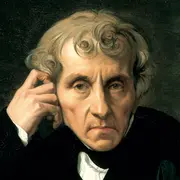
Download free sheet music from Luigi Cherubini.
Luigi Cherubini was a formidable force in European music, spanning the transition from the Classical elegance of Mozart and Haydn to the dramatic intensity of the Romantic era. Born in Florence, he spent the majority of his professional life in Paris, where he became the arbiter of musical taste as the long-standing director of the Paris Conservatoire. Cherubini’s influence was immense; Ludwig van Beethoven famously regarded him as the greatest living composer of his time, and his dramatic innovations in opera laid the groundwork for the works of Carl Maria von Weber and
...The Dictator of Music: Luigi Cherubini and the Architecture of Drama
A compelling anecdote that captures both Cherubini's austere reputation and the high regard in which he was held involves his relationship with Napoleon Bonaparte. Unlike many artists who sought to flatter the Emperor, Cherubini was famously blunt. During a conversation about music, Napoleon—who preferred the light, tuneful Italian style of Giovanni Paisiello—complained that Cherubini’s music was too "noisy" and complex. Cherubini coolly replied, "Sire, you want music that does not prevent you from thinking of state affairs." This lack of sycophancy led to a strained relationship with the French leadership, but it also cemented Cherubini's status as a man of uncompromising artistic principle. Despite the Emperor's personal distaste, the musical world knew better; even Beethoven, who was rarely impressed by his contemporaries, kept a score of Cherubini's Médée on his desk for constant study. It is this blend of iron-willed discipline and undeniable genius that defines the Cherubini legacy.
Formative Years and the Italian Foundation Cherubini began his studies in Florence under his father and later moved to Bologna to study with Giuseppe Sarti. Under Sarti, he received a rigorous education in the ancient traditions of counterpoint and church music, which would remain the backbone of his style for the rest of his life. His early operas were written in the traditional opera seria style, but even in these early efforts, one can see a desire to break free from standard conventions. In 1786, he made the move to Paris, a city that was then the center of the operatic world. There, he witnessed the final years of the Ancien Régime and the eruptive energy of the French Revolution, both of which would leave an indelible mark on his dramatic sensibilities.
The Transformation of Opera In Paris, Cherubini became a key figure in the development of "rescue opera"—a genre characterized by themes of heroism, justice, and the triumph over tyranny. His opera Lodoïska (1791) was a sensation, praised for its realistic characters and powerful orchestral writing. However, it was Médée (1797) that secured his place in history. This work was a radical departure from the polite conventions of the day. The title role, popularized in the 20th century by Maria Callas, demands an unprecedented level of vocal and emotional stamina. The music is visceral and unrelenting, utilizing the orchestra as a psychological extension of the characters' internal turmoil. This focus on dramatic truth over vocal display influenced everyone from Hector Berlioz to Giuseppe Verdi.
The Paris Conservatoire and Academic Authority In 1822, Cherubini was appointed Director of the Paris Conservatoire. In this role, he was the most powerful musical figure in France, overseeing the education of generations of composers, including Adolphe Adam, Daniel Auber, and the rebellious Hector Berlioz. Cherubini was a strict traditionalist in the classroom; his Cours de contrepoint et de fugue (1835) became the standard textbook for decades. His relationship with Berlioz was famously contentious, with the young Romantic iconoclast often mocking "Old Cherubini" in his memoirs. Yet, even Berlioz had to admit that Cherubini’s craftsmanship was beyond reproach. The tension between Cherubini's academic rigor and the burgeoning Romantic movement created a fertile environment that shaped the future of French music.
The Chamber Music Masterpieces While he was a public figure in the opera house, Cherubini’s most intimate musical thoughts are found in his six string quartets. He did not turn to this genre in earnest until later in his life, and the results are some of the most sophisticated quartets of the early 19th century. The String Quartet No. 1 in E-flat major is particularly noteworthy for its motivic economy and intellectual depth. In these works, Cherubini successfully merged the contrapuntal mastery of the Italian tradition with the developmental logic of Haydn. The quartets are not mere salon pieces; they are serious, architectural works that demand a high level of musicianship and intellectual engagement from the performers.
Sacred Music and the Requiem As Cherubini grew older, he turned increasingly to sacred music. His Requiem in C minor (1816), written to commemorate the execution of Louis XVI, is widely considered his masterpiece in the genre. Unlike the more operatic Requiems of later composers, Cherubini’s setting is austere and profoundly moving through its simplicity and choral clarity. Beethoven admired this work so much that he requested it be performed at his own funeral. Cherubini later wrote a Requiem in D minor specifically for male voices, fearing that the use of female voices in the church was becoming too secular. These sacred works demonstrate a composer who was deeply concerned with the spiritual and moral power of music.
The Cherubini Style: A Synthesis What makes Cherubini unique is his ability to maintain a Classical sense of balance while exploring Romantic emotional territory. His orchestration was revolutionary for its time, particularly his use of woodwinds to create specific atmospheric effects. He was a master of the long-form crescendo and the sudden, dramatic silence—techniques that Beethoven would later perfect. His music never feels indulgent; there is always a sense of purpose and a clear structural goal. This "architectural" approach to composition is what earned him the respect of the greatest composers of the age, even when the general public found his music to be overly intellectual.
Conclusion for Program Notes When introducing Luigi Cherubini to a modern audience, it is important to emphasize his role as a "composer’s composer." His music is a masterclass in form and dramatic pacing. Whether one is listening to the terrifying power of Médée or the serene beauty of his Requiem, there is a sense of being in the hands of a master craftsman who understood the weight and value of every note. Downloading his sheet music offers a rare opportunity to study the technical brilliance that inspired Beethoven and Mendelssohn. Cherubini was more than just a strict pedagogue; he was a visionary who believed that music should be noble, disciplined, and profoundly expressive. His legacy continues to resonate in every conservatoire and concert hall where the pursuit of musical excellence is honored.
Deane, Basil. Cherubini. Oxford University Press, 1965.
Bellasis, Edward. Cherubini: Memorials Illustrative of His Life. Burns and Oates, 1874.
Berlioz, Hector. The Memoirs of Hector Berlioz. Translated by David Cairns, Alfred A. Knopf, 1969.
Fend, Michael. Cherubini: A Life in the Stage and in the Shadows. In the Shadows of the Revolution, 2023.
Willier, Stephen Ace. Luigi Cherubini: A Guide to Research. Routledge, 2004.
Follow us : 


Sheet Music International - Copyright 2026 all rights reserved
| English: Sheet Music (PDF) | Free Scores | French: Sheet Music (PDF) | Free Scores | Greek: Sheet Music (PDF) | Free Scores |
| German: Sheet Music (PDF) | Free Scores | Spanish: Sheet Music (PDF) | Free Scores | Portuguese: Sheet Music (PDF) | Free Scores |
| Italian: Sheet Music (PDF) | Free Scores | Russian: Sheet Music (PDF) | Free Scores | Norwegian: Sheet Music (PDF) | Free Scores |
| Ukrainian: Sheet Music (PDF) | Free Scores | Polish: Sheet Music (PDF) | Free Scores | Dutch: Sheet Music (PDF) | Free Scores |