Your Request is under process, Please wait.

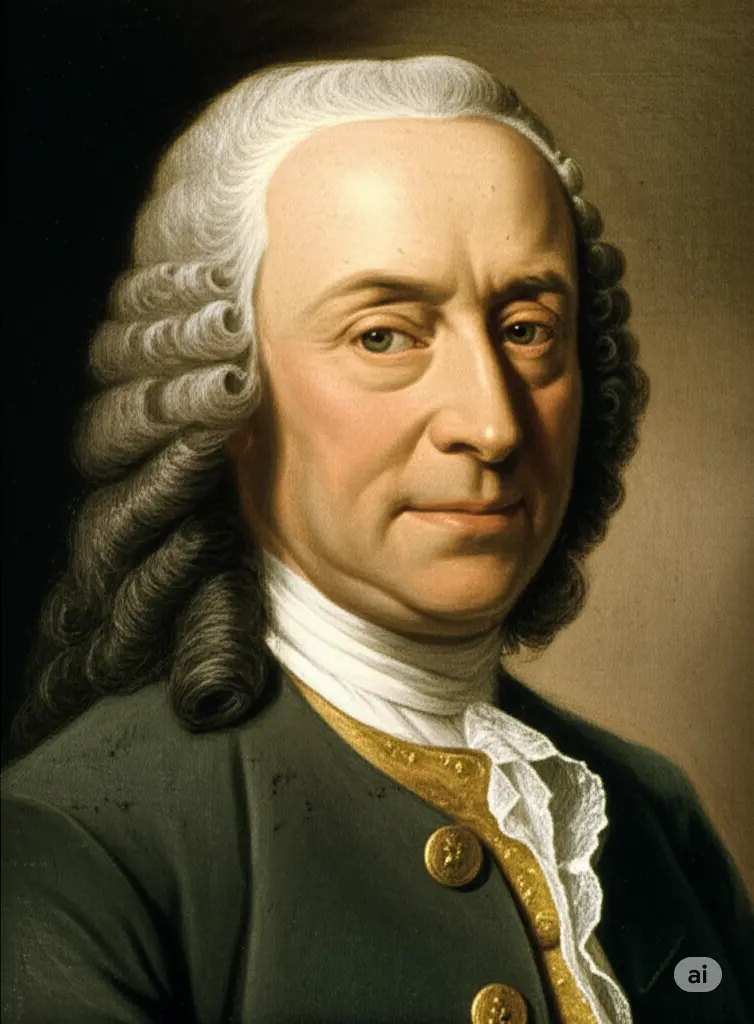
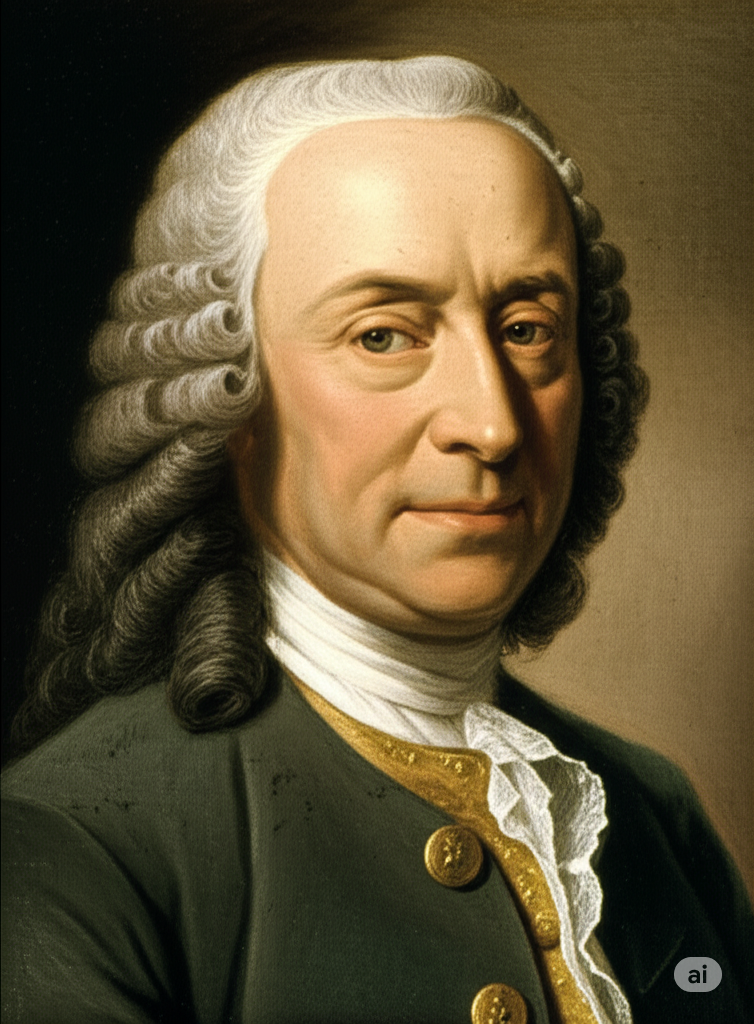
William Boyce (1711-1779)
Download free sheet music from William Boyce.
Discover the vigorous and masterful music of William Boyce, the most important English-born composer of the 18th century. As a successor to Handel and a contemporary of the early Classical masters, Boyce forged a unique style that blended Baroque grandeur with graceful, forward-looking elegance. He is most celebrated for his set of Eight Symphonys, beloved for their infectious energy and brilliant string writing. Explore the works of this quintessential English master, from his groundbreaking symphonies to his noble church anthems, all available as high-quality, printable PDFs perfect for orchestras, choirs,
...The English Orpheus: Upholding a National Tradition
In the middle of the 18th century, as his hearing began to irrevocably fail, the great English composer William Boyce faced a difficult choice. Deafness, a cruel fate for any musician, threatened to end his active career. Rather than succumbing to despair, he redirected his formidable energies from the creation of new music to the preservation of the old. He retired to his rooms in Kensington and embarked on a monumental scholarly project: completing and publishing Cathedral Music, a massive collection of the greatest English sacred music from the past two centuries. This act was symbolic of his entire career. At a time when London’s musical life was utterly dominated by foreign masters like George Frideric Handel, Boyce stood as a proud and steadfast champion of England’s native musical traditions. He was a composer of immense talent and vigor, a man who not only created a legacy of his own but also ensured that the legacy of his nation’s music would not be forgotten.
A Londoner's Musical Education
William Boyce was born in London and his life and career would be inextricably linked with the city's great institutions. As a boy, he was a chorister at St. Paul's Cathedral, where he received his first musical training. After his voice broke, he began formal studies with Maurice Greene, the cathedral's organist and a leading composer of the day. This apprenticeship placed him at the very center of English musical life. Through Greene, he was exposed to the rich tradition of English church music and the modern Handelian style that was captivating London audiences.
Boyce was a diligent and gifted student, and his career progressed steadily. In the 1730s, he began to secure a series of prestigious appointments as an organist at various London churches, including the Oxford Chapel (now St. Peter's, Vere Street) and later, St. Michael's, Cornhill. His reputation grew not only as a performer but also as a composer of fine sacred music. His anthems were noted for their expressive power and solid craftsmanship. At the same time, he was drawn to the more secular world of the London stage. He began composing songs, masques, and overtures for productions at the Drury Lane Theatre, the city’s premier playhouse. This experience in the theater, writing for a paying public, honed his gift for memorable melody and vibrant rhythm, qualities that would later define his famous symphonies.
Master of the King's Musick
Throughout the 1740s and 1750s, Boyce’s career reached its zenith. He was appointed composer to the Chapel Royal, a post that required him to produce a steady stream of anthems and services for the royal court. He also composed grand odes for royal birthdays and New Year's celebrations, large-scale works for soloists, chorus, and orchestra that were a staple of court life. His music from this period, such as the celebratory ode The Charms of Harmony, shows his mastery of the grand Handelian style, yet always with a distinctly English accent—a certain melodic directness and a sturdy, cheerful vigor.
In 1755, upon the death of his former teacher Maurice Greene, Boyce was appointed to the most prestigious musical post in the nation: Master of the King's Musick. This position made him the direct musical servant of the monarch, responsible for all music at court. It was the culmination of his steady rise through the ranks of London’s musical establishment. However, it was also during this period of great professional success that his deafness, which had afflicted him for some years, became progressively worse, forcing him to rely more on his assistants and to curtail his public performing. It was this personal tragedy that prompted his shift in focus toward musicology and editing.
The Eight Symphonys and a National Style
While his official duties demanded sacred and ceremonial music, Boyce’s most enduring legacy lies in the set of Eight Symphonys in Eight Parts, Op. 2, published in 1760. These works were not composed as a set, but were rather a collection of overtures he had written over the previous two decades for theatre productions and court odes. By collecting them and publishing them for use in the burgeoning public concerts of London, Boyce effectively created the first popular set of English symphonies. They were enormously successful, performed in concert rooms and private homes throughout England and even in the American colonies.
The symphonies are a perfect encapsulation of his style. They are compact, three-movement works that brilliantly blend the old and the new. The influence of the Baroque is clear in their robust counterpoint, their driving rhythms, and their frequent use of the French overture form (a slow, majestic introduction followed by a fast, fugal section). Yet, they are also forward-looking, filled with the elegant phrasing, clear textures, and graceful melodies of the emerging Classical style. Unlike the more complex and cosmopolitan works of his German contemporaries, Boyce’s symphonies have a direct, open-hearted quality. They are brimming with energy, from the bustling string passages of Symphony No. 4 to the grand trumpet fanfares of Symphony No. 5. They are the sound of mid-century England—confident, prosperous, and unpretentious.
Preserving a Heritage: Cathedral Music
The final great project of Boyce’s life was the completion of Cathedral Music. The collection had been the life’s work of his teacher, Maurice Greene, who had spent years gathering and editing the finest examples of English church music from the Tudor period to his own time. On his deathbed, Greene bequeathed the unfinished project to Boyce, entrusting him to see it through to publication. Boyce took on the monumental task with scholarly dedication. For over a decade, he meticulously edited, corrected, and prepared the vast collection for the press.
The three-volume set, published between 1760 and 1773, was a landmark in music history. It was one of the first major attempts at a critical, historical anthology of music. It preserved dozens of masterpieces by composers like Thomas Tallis, William Byrd, Orlando Gibbons, and Henry Purcell that might otherwise have been lost or forgotten. At a time when musical taste was rapidly changing, Boyce’s collection created a canon of English sacred music, ensuring that the great works of the past would remain in the repertoires of cathedrals and chapels for generations to come. It was a profound act of musical patriotism and scholarship, undertaken by a man who, as his own ability to hear the music faded, worked tirelessly to ensure that others could. He died in 1779 and was buried, fittingly, in the crypt of St. Paul’s Cathedral, where his remarkable musical journey had begun.
Bartlett, Ian. "Boyce, William." Grove Music Online. Oxford University Press, 2001.
Fiske, Roger. English Theatre Music in the Eighteenth Century. Oxford University Press, 1973.
Cudworth, Charles. "Boyce and the Symphony." Music & Letters, vol. 40, no. 4, 1959, pp. 359–61.
Johnstone, H. Diack. "The Boyce-Greene 'Cathedral Music'." Music & Letters, vol. 84, no. 1, 2003, pp. 26–51.
Boyce, William. Cathedral Music, edited by Samuel Arnold, vol. 1, 1788. (Preface contains biographical information).
Follow us : 


Sheet Music International - Copyright 2026 all rights reserved
| English: Sheet Music (PDF) | Free Scores | French: Sheet Music (PDF) | Free Scores | Greek: Sheet Music (PDF) | Free Scores |
| German: Sheet Music (PDF) | Free Scores | Spanish: Sheet Music (PDF) | Free Scores | Portuguese: Sheet Music (PDF) | Free Scores |
| Italian: Sheet Music (PDF) | Free Scores | Russian: Sheet Music (PDF) | Free Scores | Norwegian: Sheet Music (PDF) | Free Scores |
| Ukrainian: Sheet Music (PDF) | Free Scores | Polish: Sheet Music (PDF) | Free Scores | Dutch: Sheet Music (PDF) | Free Scores |