Your Request is under process, Please wait.

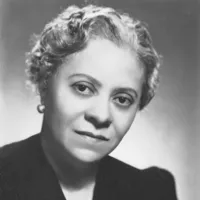
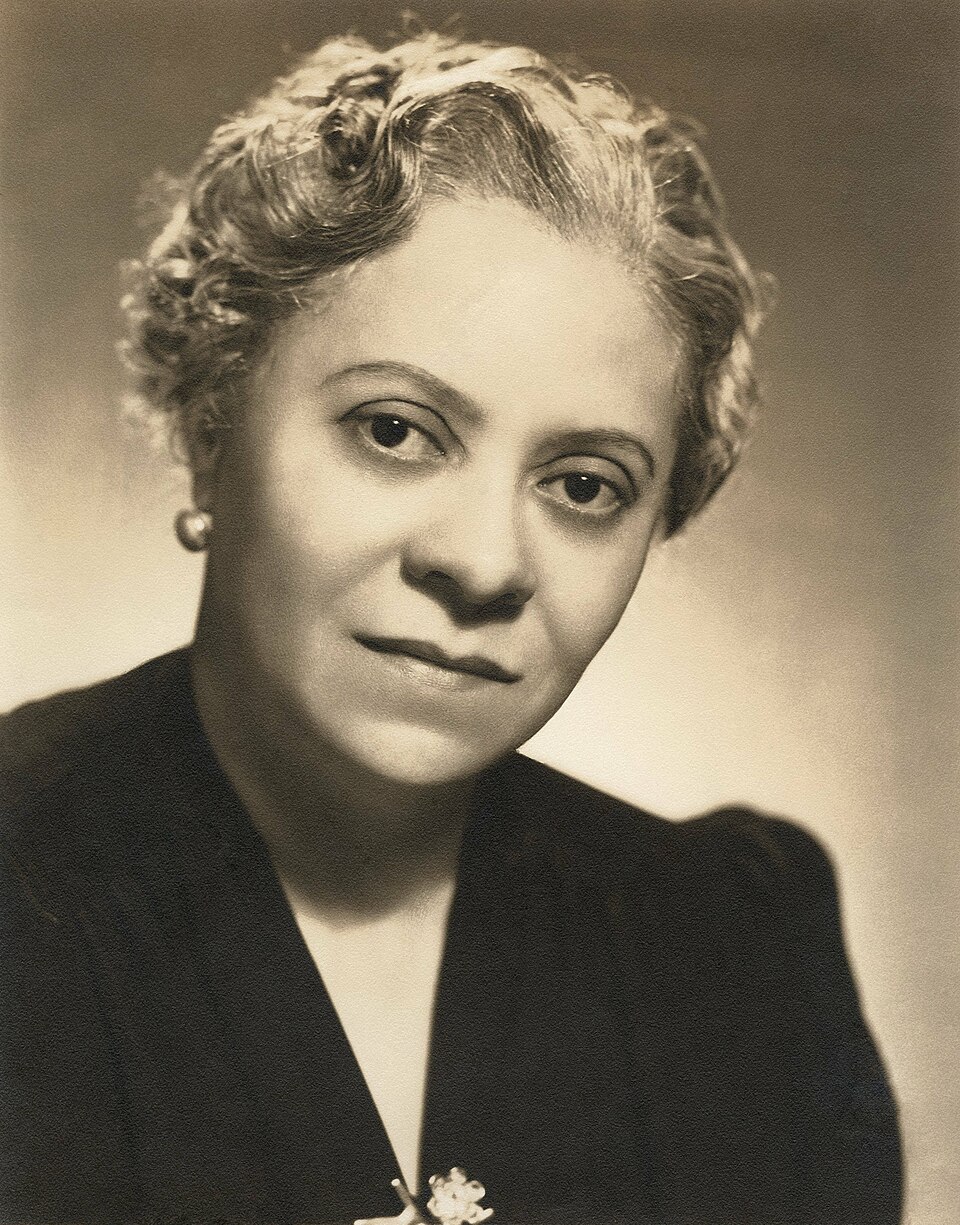
Florence Price (1887–1953)
Download free sheet music from Florence Price.
Florence Price stands as a monumental figure in American music history, breaking significant barriers as the first African American woman to have a symphonic work performed by a major national orchestra. Born in Little Rock, Arkansas, Price’s musical journey began under the tutelage of her mother before she moved to Boston to study at the New England Conservatory of Music.
One of the most poignant aspects of Price's career was her persistent correspondence with the gatekeepers of the classical music world.
 Program Notes

 woman composers, aferican american composer, african american woman composer
Price’s upbringing in Little Rock was characterized by a rare combination of cultural richness and the harsh realities of segregation. Her father, James H. Smith, was a successful dentist, and her mother, Florence Gulliver Smith, was a music teacher who recognized her daughter's talent early on. In a community where Black excellence was often met with hostility from the outside world, the Smith household was a sanctuary of intellectual and artistic growth. Price gave her first piano performance at the age of four and published her first composition by the time she was eleven.
The dual influence of her mother’s classical training and the vibrant traditions of the Black church in Little Rock laid the foundation for her unique compositional style. The spirituals she heard and the hymns she sang were not just religious expressions but a musical language that she would later elevate to the symphonic stage. Recognizing that the South offered limited opportunities for advanced musical study for a Black woman, her mother insisted she attend the New England Conservatory (NEC) in Boston.
At NEC, Price flourished under the tutelage of prominent figures like George Whitefield Chadwick and Frederick Converse. To avoid the intense prejudice of the time, she often passed as Mexican, listing her hometown as "Pueblo, Mexico" on her application. This act of survival highlights the precarious nature of her position even in the supposedly progressive North. During her time in Boston, she earned degrees in both piano and organ, demonstrating a technical proficiency that would define her career as a performer.
More importantly, she began to find her voice as a composer. Chadwick, known for his interest in a distinctly "American" sound, encouraged her to look toward her own roots rather than strictly imitating European models. This advice resonated deeply, and Price began the lifelong process of integrating the "sorrow songs" and rhythmic complexities of African American music into the rigorous framework of the Western classical tradition.
After graduating from NEC in 1906, Price returned to Arkansas to teach. She held positions at Arkadelphia Presbyterian Academy and later at Clark University in Atlanta before returning to Little Rock to marry Thomas J. Price, a prominent attorney. Despite her professional success as a teacher and her growing reputation as a private piano instructor, the racial climate in Arkansas was becoming increasingly dangerous. The rise of racial violence, lynching, and the formalization of restrictive Jim Crow laws made life for a middle-class Black family nearly unbearable. The turning point came in 1927 when a brutal lynching occurred in Little Rock, prompting the Price family to join the Great Migration. They moved to Chicago, a city that promised greater freedom and a burgeoning Black middle class that supported the arts.
Chicago proved to be the catalyst for the most productive period of Price's life. The city was a hub for the "Chicago Renaissance," a movement of Black artists and thinkers that mirrored the Harlem Renaissance in New York. She found herself surrounded by other influential Black musicians and intellectuals, such as Margaret Bonds, a fellow composer who became a close friend and collaborator, and the renowned contralto Marian Anderson.
It was in Chicago that Price’s career reached its zenith. She continued her studies at the American Conservatory of Music and the Chicago Musical College, refining her orchestration and exploring more complex harmonic languages. The supportive environment of the Chicago Black community, particularly the National Association of Negro Musicians (NANM), provided the platform she needed to showcase her work to a broader audience.
Price’s music is often described as a bridge between two worlds. On one hand, she was a devotee of the late Romantic style, influenced by composers like Dvorak, Tchaikovsky, and Brahms. She utilized traditional forms such as the symphony, the concerto, and the sonata. On the other hand, her music is deeply rooted in the African American experience. She was a master of the spiritual, not just as a folk melody but as a sophisticated thematic element. She frequently employed the "Juba" dance—an African-inspired rhythmic tradition involving stomping and clapping—as the rhythmic engine for her scherzo movements. This was a revolutionary act; by placing the Juba in the context of a symphony, she was legitimizing Black vernacular dance as a high art form.
Her use of pentatonic scales, call-and-response patterns, and blue notes gave her music a distinct "American" flavor that was deeply personal. Price once wrote to the conductor Serge Koussevitzky, "I have two handicaps—those of sex and race. I am a woman; and I have some Negro blood in my veins." This candid admission reveals her awareness of the barriers she faced, but her music was her way of transcending them. She didn't just want to write music that sounded like her European predecessors; she wanted to write music that sounded like her people. Her art was an assertion of humanity and a reclamation of cultural agency in a world that often denied both to Black Americans.
While Price composed over 300 works, her breakthrough came with her Symphony No. 1 in E minor. In 1932, she entered the Wanamaker Foundation Awards, a prestigious competition for Black composers. She won first prize for the symphony and third prize for her Piano Sonata in E minor. This victory brought her to the attention of Frederick Stock, the conductor of the Chicago Symphony Orchestra. On June 15, 1933, Stock conducted the world premiere of the symphony, making history. The performance was a triumph, with critics praising its melodic invention and technical assurance. The symphony’s success proved that a Black woman could master the most complex form of Western music and imbue it with a unique, culturally specific voice.
Her output was vast and varied, including four symphonies (the second is lost), two piano concertos, a violin concerto, and numerous choral works and art songs. Her art songs, in particular, are gems of the vocal repertoire. Collaborating with poets like Langston Hughes and Paul Laurence Dunbar, she created songs that captured the pathos and pride of Black life. Her arrangement of "My Soul's Been Anchored in the Lord" became a signature piece for Marian Anderson, closing many of her historic concerts, including the 1939 performance at the Lincoln Memorial. Price also wrote extensively for the organ and piano, creating pedagogical pieces that are still used by students today. Her chamber music, such as the Five Folk Songs in Counterpoint for string quartet, demonstrates her ability to blend folk melodies with sophisticated contrapuntal techniques.
Despite her successes, Price struggled for widespread recognition throughout her life. While she had supporters like Stock and Anderson, many conductors and publishers remained indifferent or outright hostile to her work. She was often excluded from the mainstream canon, and after her death in 1953, her music fell into relative obscurity. For decades, she was remembered primarily as a footnote in music history—a "first" who had been forgotten. The systemic racism and sexism of the mid-20th century ensured that her scores remained unpublished and unperformed, relegated to dusty archives.
However, the narrative of Florence Price changed dramatically in 2009. A couple renovating an abandoned house in St. Anne, Illinois—Price’s former summer home—discovered a massive collection of her manuscripts, including lost symphonies and concertos. This discovery sparked a global revival of her work. Musicologists, performers, and conductors began to champion her music, recognizing it as a vital part of the American symphonic tradition.
Major orchestras today regularly program her symphonies, and her chamber music has found a permanent home in the repertoire. The revival of Florence Price is not just about nostalgia; it is about recognizing a composer whose voice was silenced by prejudice but whose music was too powerful to remain hidden forever.
Today, the very institutions that once ignored her are finally reckoning with that history. The Philadelphia Orchestra, formerly led by Ormandy, has recently made Price a cornerstone of their repertoire, recording her complete cycle of symphonies and championing her as an "American Master.
Florence Price’s legacy is one of triumph over adversity and the enduring power of artistic integrity. She navigated a world that was designed to limit her potential, yet she created a body of work that is both universally resonant and deeply specific to her heritage. Her ability to synthesize the European tradition with the African American vernacular created a new, authentic American sound.
By honoring Price today, we are not only acknowledging her individual genius but also honoring the countless Black artists whose contributions were historically marginalized. She remains an inspiration for composers and performers who seek to bring their full selves—their history, their culture, and their truth—to the stage. Florence Price did more than just write music; she paved the way for future generations to believe that their stories were worthy of the symphony.
Follow us : 


Sheet Music International - Copyright 2025 all rights reserved
| English: Sheet Music (PDF) | Free Scores | Français: Partitions (PDF) | Musique gratuite | Ελληνικά: Παρτιτούρες (PDF) | Δωρεάν μουσική |
| Deutsch: Noten (PDF) | Kostenlose Partituren | Español: Partituras (PDF) | Música impresa | Português: Partituras (PDF) | Música gratuita |
| Italiano: Spartiti (PDF) | Partiture musicali | Русский: Ноты (PDF) | Бесплатные партитуры | Norsk: Noter (PDF) | Gratis noter |
| Українська: Ноти (PDF) | Безкоштовні партитури | Polski: Nuty (PDF) | Darmowe nuty | Nederlands: Bladmuziek (PDF) | Gratis partituren |