Your Request is under process, Please wait.

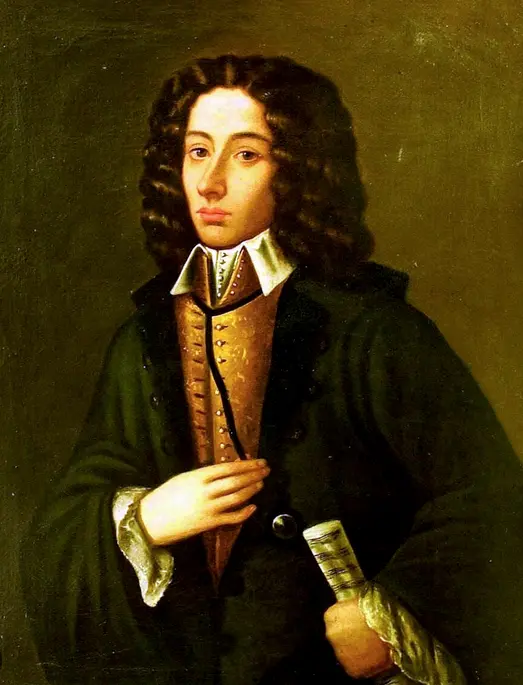
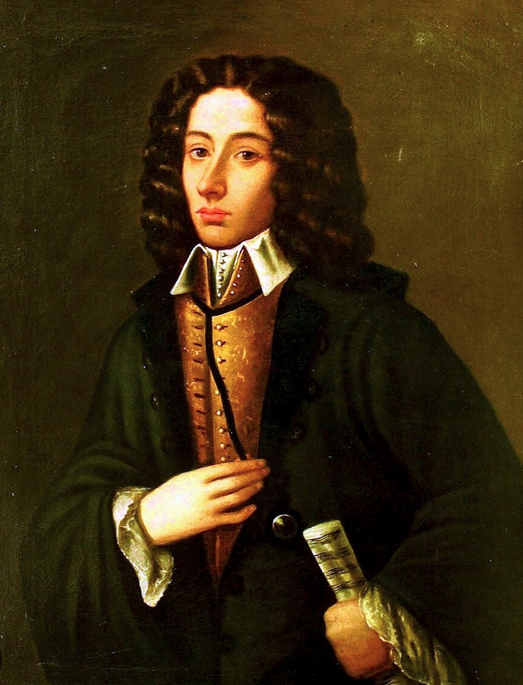
Giovanni Battista Pergolesi (1710–1736)
Download free sheet music from Giovanni Battista Pergolesi.
Giovanni Battista Pergolesi was a shooting star in the firmament of 18th-century Italian music, his brief but brilliant career tragically cut short by tuberculosis at the age of just 26. Despite his short life, his compositional impact was immense, particularly in his mastery of the emerging Neapolitan School style, characterized by its melodic clarity, expressive power, and galant charm. Born near Ancona, he studied at the Conservatorio dei Poveri di Gesù Cristo in Naples, where his genius quickly manifested. His greatest fame rests on two contrasting yet equally
...A Life Too Short: The Enduring Legacy of the Neapolitan Master
The posthumous fame of Giovanni Battista Pergolesi reached such mythic proportions that for decades after his premature death, unscrupulous publishers and composers attributed countless works to him in order to boost sales—a practice that, while flattering, created a chaotic body of work. A famous, if apocryphal, anecdote involves the composition of his final, immortal work, the Stabat Mater. It is said that Pergolesi was commissioned to write it as a replacement for the older, well-known setting by Alessandro Scarlatti. By the time he received the commission, he was already gravely ill and had retreated to the Franciscan monastery in Pozzuoli, near Naples, hoping the sea air would aid his failing health. The legend holds that he raced against the clock, furiously composing the tender and despairing masterpiece as his own life ebbed away, pouring his personal sorrow into the music. Whether fully accurate or not, this romantic story underscores the work's profound emotional depth and its status as a farewell to the world, securing the composer’s place as a martyr to musical genius.
Early Life and Neapolitan Training
Giovanni Battista Pergolesi was born in the town of Jesi in 1710. The first formative chapter of his life was his education at the prestigious Conservatorio dei Poveri di Gesù Cristo in Naples, starting around 1725. Naples at this time was the epicenter of European music, particularly for opera and sacred music, boasting four of the finest conservatories in Europe. Pergolesi's teachers included renowned masters of the Neapolitan School, such as Francesco Durante and Gaetano Greco. This education provided him with an unparalleled foundation in harmony, counterpoint, and melodic construction. His talent was immediately apparent, and he quickly absorbed the characteristics of the developing galant style: a move away from the dense, mathematical counterpoint of the High Baroque towards music emphasizing lyrical melody, harmonic clarity, and graceful ornamentation, which aimed to be immediately appealing to the ear.
The Public Debut and Opera Seria
Pergolesi made his public debut with the opera Salustia in 1732. This was followed by his comic opera Lo frate ‘nnamorato (The Enamoured Brother), which, despite a slow start, eventually proved immensely popular. Like most composers of his time, he was primarily a composer of opera seria, the dominant and more financially lucrative genre of the day, which typically featured heroic plots, elevated language, and virtuoso displays by star singers. His major works in this genre include Il prigioniero superbo (The Proud Prisoner) from 1733, which was paired with a two-act intermezzo that would soon eclipse it in fame: La serva padrona.
La serva padrona: The Birth of Modern Opera Buffa
La serva padrona (The Servant Mistress) is arguably the most historically important work Pergolesi ever wrote. It was originally performed as a light, two-part intermezzo—a comic sketch performed between the acts of the serious opera Il prigioniero superbo. This miniature work features only three characters: Uberto, a wealthy bachelor; Serpina, his cunning servant; and Vespone, a mute valet. The plot is simple: Serpina manipulates Uberto into marrying her. Its significance lies not in its plot, but in its revolutionary musical style. Pergolesi’s music for La serva padrona is realistic, witty, and perfectly tailored to the characters' human flaws and farcical situations. The arias are short, memorable, and conversational, featuring simple, catchy melodies and rhythms that were a world away from the elaborate, highly stylized virtuosity of opera seria. This opera became the prototype for opera buffa and triggered a major artistic conflict decades later in Paris known as the Querelle des Bouffons (Quarrel of the Comedians).
The Querelle des Bouffons and Parisian Impact
In 1752, a traveling Italian troupe performed La serva padrona in Paris. This seemingly innocent event ignited a passionate, two-year intellectual battle between musical factions. The "King’s Party," led by conservatives who championed the traditional French tragédie lyrique of Jean-Baptiste Lully and Jean-Philippe Rameau, argued that French music was superior. The "Queen’s Party," led by influential thinkers like Jean-Jacques Rousseau, championed Pergolesi’s Italian opera buffa, arguing for its superior naturalness, immediacy, and expression of human emotion. Rousseau himself even wrote a famous pamphlet on the subject. Pergolesi became the unlikely symbol of musical reform, with his opera lauded as the model for a more modern, expressive, and less artificial form of opera. This immense fame in Paris, long after his death, cemented his influence on the entire subsequent generation of opera composers.
The Stabat Mater: Sacred Music and Lyrical Devotion
In stark contrast to the comic brilliance of his opera, the Stabat Mater is a work of immense spiritual and lyrical power. Composed in 1736, the last year of his life, this setting of the 13th-century Latin hymn on the sorrow of the Virgin Mary stands as a monumental achievement. It is scored for two solo voices (Soprano and Alto), string orchestra, and basso continuo. The work moves through a series of twelve short movements—arias and duets—that are notable for their deeply felt emotional expression and their melodic grace.
Stabat Mater: Movement Analysis
The opening Stabat Mater dolorosa (At the cross her station keeping) is one of the most famous openings in all of sacred music. It features an exquisite, often-imitated walking bass line and aching suspensions in the upper strings, setting a mood of profound, yet tender, sorrow. The duet structure is particularly effective in movements like Quis est homo (Who is the man), where the two voices weave together in close, interlocking harmony, conveying a unified sense of shared grief. The writing often sounds less like traditional church music and more like sacred opera, with highly expressive, lyrical lines that allow the vocalists to convey intense personal feeling. This style was highly influential, paving the way for the more expressive and emotional sacred works of the Classical period.
Other Notable Sacred and Instrumental Works
Beyond his two most famous compositions, Pergolesi also produced significant sacred and instrumental music. His Mass in F Major (or Missa Romana) from 1734 showcases his command of large-scale polyphonic choral writing while still retaining the clarity and lightness of the Neapolitan style. His instrumental works, though less numerous and sometimes of questionable authenticity due to the misattribution problem, include various trio sonatas and a Concerto for Violin and Strings. These pieces demonstrate a fluid, melodic approach to instrumental writing, further confirming his transitional role between the Baroque era of Johann Sebastian Bach and George Frideric Handel and the emerging Classicism of Joseph Haydn and Mozart. The composer’s brief life denied the world a full flowering of his genius, but his influence on opera, sacred music, and the transition to the galant style ensures his place as one of the most important figures of the early 18th century.
References and Further Reading
Farr, Robert. Pergolesi: Stabat Mater. Liner notes for the recording by Hogwood/Kirkby/Bowman. L'Oiseau-Lyre, 1989.
Grout, Donald Jay, and Claude V. Palisca. A History of Western Music, 7th ed. New York: W. W. Norton & Company, 2006.
Robinson, Michael F. Giovanni Battista Pergolesi: Life and Work. New York: Pendragon Press, 2001.
Starr, Mark. The Legacy of Pergolesi: An Examination of the Intermezzo La serva padrona. Ph.D. diss., University of California, Berkeley, 1993.
Follow us :


Sheet Music International - Copyright 2026 all rights reserved