Your Request is under process, Please wait.

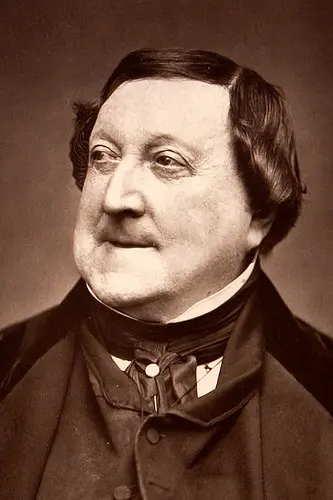
Legend holds that Gioachino Rossini, the fastest and (famously) laziest composer in Italy, was so late in writing the overture for his new opera, La gazza ladra (The Thieving Magpie), that the impresario at La Scala had to take drastic measures. The day of the 1817 premiere, he allegedly locked Rossini in a room with a plate of pasta, ordering him not to leave until the overture was finished.
Rossini, as was his custom, simply scribbled the pages and, one by one, threw them out the window to the copyists waiting below. Whether the story is true or
...The Opera of Injustice: Rossini's Great "Semiseria"
The 1817 premiere of La gazza ladra at La Scala was not just a success; it was a city-wide event. Rossini was already the undisputed king of Italian opera, but he was known almost exclusively as the master of opera buffa (comic opera). His The Barber of Seville (1816) had, after its famously disastrous premiere, become the most popular comedy in the world. The Milanese audience was expecting another Barber. The overture, with its shocking, military snare drums, was their first clue that they were in for something entirely different. This opera was a semiseria ("semi-serious") drama, a genre that would come to define the "bridge" between the 18th-century classicism of Mozart and the 19th-century romanticism of Verdi. It was a "third way" between the silliness of buffa and the stuffy, mythological "gods and kings" plots of opera seria. La gazza ladra was the ultimate semiseria: it took "real" people—a servant girl, a lecherous mayor, a middle-class family—and plunged them into a high-stakes drama of life and death. This was "realism" decades before the verismo movement, a story of class prejudice, systemic corruption, and capital punishment.
A New Kind of Heroine
The heroine, Ninetta, is a radical departure from the witty, self-assured Rosina of The Barber of Seville. Ninetta is a "sentimental" heroine. She is virtuous, loyal, and, above all, a victim. She is a descendant of the heroines in the "rescue opera" tradition, a good person wrongfully accused and trapped by a system she cannot fight. This makes her drama one of pathos, not of wit. Rossini reflects this in her music. While she is a bel canto role, her vocal fireworks are not displays of sassy confidence, but of desperate, tragic emotion. Her entrance aria, "Di piacer mi balza il cor" (My heart leaps with joy), is a brilliant, joyful cavatina that establishes her innocence and her love for Giannetto, but this is the last moment of pure happiness she will have. Her true vocal power is unleashed in the magnificent, tragic ensembles, such as the trial scene, and her profound prayer in the final act, "Deh, tu reggi in tal momento" (Oh, guide me in this moment), a moment of pure, lyrical stillness before the "march to the scaffold."
The "Buffo" Villain: The Podestà
The opera's genius lies in its villain, the Podestà (Mayor), Gottardo. Here, Rossini does use his buffa skills, but for a dark and chilling purpose. The Podestà is a classic "basso buffo" (comic bass), a direct descendant of Dr. Bartolo from Barber. He is pompous, self-important, and sings fast, comic "patter" songs about his own greatness. But his actions are monstrous. He is consumed by a lecherous desire for Ninetta. When she spurns his advances, he abuses his "official" power to pursue his personal "vendetta." It is he who recognizes her father as a deserter, and it is he who presides over the sham trial, pushing for the death penalty when Ninetta refuses to "buy" her freedom with sexual favors. This combination of comic, buffa music and truly evil, sadistic action is a brilliant and terrifying stroke of characterization. He is a Dr. Bartolo who has been given the power of life and death, a chilling portrait of corruption.
The Orchestra as a Character
This is Rossini the "symphonist," the great heir to Mozart and the precursor to Verdi. The orchestration of La gazza ladra is brilliant and innovative. The two snare drums in the overture are not just a "gimmick." They are the sound of the "law," the "military," and the "judgment" that hangs over the entire opera. The snare drum motif returns with chilling effect in the trial scene and, most terrifyingly, in the final "march to the scaffold." The score is built on massive, complex ensembles. The Act I finale ("Non so qual colpo..."), which erupts after Ninetta is accused, is a masterpiece of rising panic and confusion, a "crescendo" of chaos that far surpasses the ensembles in Barber. The Trial Scene in Act II is, for 1817, revolutionary. It is not a series of "stop-and-start" arias. It is a long, continuous, and "through-composed" scena, where the music ratchets up the tension as the court questions Ninetta, her father bursts in, and the Podestà delivers his merciless verdict. This is the model that Giuseppe Verdi would later use for his own great trial and tribunal scenes in Aida and Don Carlo.
A "Rescue" Opera and a Nod to Beethoven
La gazza ladra is a quintessential "rescue opera." This plot—an innocent person condemned to death by a corrupt authority, only to be saved at the last possible second—was a hugely popular post-revolutionary genre. The most famous example, of course, is Ludwig van Beethoven’s Fidelio, which had its final, triumphant premiere in 1814, just three years before La gazza ladra. Rossini’s opera taps into this same deep, public anxiety about injustice, the power of the state, and the fate of the "little man" (or, in this case, "little woman"). But where Beethoven’s rescue is a sublime, "German," and philosophical triumph of marital love and human freedom, Rossini’s is a "fluke." Ninetta is not saved by a heroic, trumpet-wielding minister. She is saved, at the last possible second, by a magpie. This is a deeply cynical, or perhaps "realistic," twist. All this human tragedy, this suffering, this state-sanctioned murder, is ultimately revealed to be the result of a bird.
The Real Culprit: The Thieving Magpie
The magpie itself is the opera's "useless precaution" (the subtitle of The Barber of Seville). It is a brilliant theatrical device. Rossini even gives the bird its own leitmotif—a short, chattering, "thieving" theme in the piccolo that we hear from the very beginning of the overture. The audience is "in on the secret" from the start, which makes the drama all the more agonizing. We are not watching a "whodunit"; we are watching an innocent woman be railroaded by a system that is both brutal and comically stupid. The Podestà's lust, the court's blind adherence to "the law," and the town's suspicion of a "servant" are all just as guilty as the bird. La gazza ladra was a turning point. It proved that Rossini was not just a comic "clown." He was a serious dramatist. This new, hybrid semiseria style paved the way for the grand, emotional, and "realistic" tragedies of Donizetti (like Lucia di Lammermoor) and Bellini. It remains one of his most ambitious, powerful, and (unjustly) neglected masterpieces.
Act I: The Accusation
In the courtyard of a wealthy farmhouse, the family of Fabrizio Vingradito is celebrating the happy return of their son, Giannetto, from the war. Everyone is preparing for the wedding of Giannetto and the beloved servant girl, Ninetta. The only one not celebrating is Lucia, Fabrizio's wife, who is suspicious of Ninetta and constantly counts the silverware. Ninetta's joy is complete, but she is also worried about her father, Fernando, a soldier. A peddler arrives, and Ninetta buys a silver cross from him. The lecherous, pompous Mayor (the Podestà), Gottardo, arrives and, seeing Ninetta alone, attempts to proposition her. She furiously rejects him. Just as he is threatening her, a vagrant appears. It is Ninetta's father, Fernando, in disguise. He is a deserter, under a death sentence, and has come to beg his daughter for money to escape. He gives her his last valuable possession, a silver spoon, and asks her to sell it. As he is about to leave, the Podestà returns, and Fernando hides. The Podestà, furious at being rejected, receives a warrant for the arrest of a deserter (Fernando). Since he has left his glasses, he asks Ninetta to read the description. She, in a panic, "fakes" the description, allowing her father to escape. At that moment, Lucia, the mistress of the house, rushes out, screaming that one of her new, valuable silver forks is missing. The magpie (the real thief, unseen by the characters) has stolen it. The Podestà, seeing his chance for revenge on Ninetta, immediately opens a formal investigation. He finds the bill of sale for the silver cross on Ninetta, and, in her pocket, the money from her father. This "evidence" is enough. He accuses her of the theft, and, as the act ends in a massive, horrified ensemble, Ninetta is arrested and dragged to prison.
Act II: The Trial and the March to the Scaffold
In the prison, Ninetta is visited by her lover, Giannetto, who swears he believes in her innocence. She is then visited by the Podestà, who makes her one last, lecherous offer: her freedom, in exchange for her "love." She rejects him with disgust. The scene changes to the great hall of justice. The trial is a sham, controlled by the vengeful Podestà. The law is read: in this village, theft by a servant is punishable by death. Ninetta, in a panic, is saved when her father, Fernando, having heard of her arrest, storms into the courtroom. He reveals his identity and, in a passionate aria, defends his daughter's honor. But this only plays into the Podestà's hands. He gleefully arrests Fernando as a deserter. The judges, ignoring all reason, find Ninetta guilty. She is sentenced to death.
The final scene. Ninetta is in her cell, where her friend, the young boy Pippo, visits her. She sings her final, heartbreaking prayer, "Deh, tu reggi in tal momento." From outside, the grim "March to the Scaffold" is heard (using the snare drum motif from the overture). She is led out to her execution. Just as she is gone, Pippo, who has been sent by Ninetta to retrieve the cross, climbs an old tower to find the magpie's nest. He looks inside and, to his astonishment, finds not only his own missing coins, but the missing silver fork. He rushes off, ringing a bell, as the other characters discover the nest. They fire a cannon—the signal to stop the execution. The crowd, hearing the good news, celebrates. Fernando is pardoned, and Ninetta and Giannetto are reunited, as the opera ends in a chorus of mass jubilation.
Follow us : 


Sheet Music International - Copyright 2025 all rights reserved
| English: Sheet Music (PDF) | Free Scores | Français: Partitions (PDF) | Musique gratuite | Ελληνικά: Παρτιτούρες (PDF) | Δωρεάν μουσική |
| Deutsch: Noten (PDF) | Kostenlose Partituren | Español: Partituras (PDF) | Música impresa | Português: Partituras (PDF) | Música gratuita |
| Italiano: Spartiti (PDF) | Partiture musicali | Русский: Ноты (PDF) | Бесплатные партитуры | Norsk: Noter (PDF) | Gratis noter |
| Українська: Ноти (PDF) | Безкоштовні партитури | Polski: Nuty (PDF) | Darmowe nuty | Nederlands: Bladmuziek (PDF) | Gratis partituren |