Your Request is under process, Please wait.

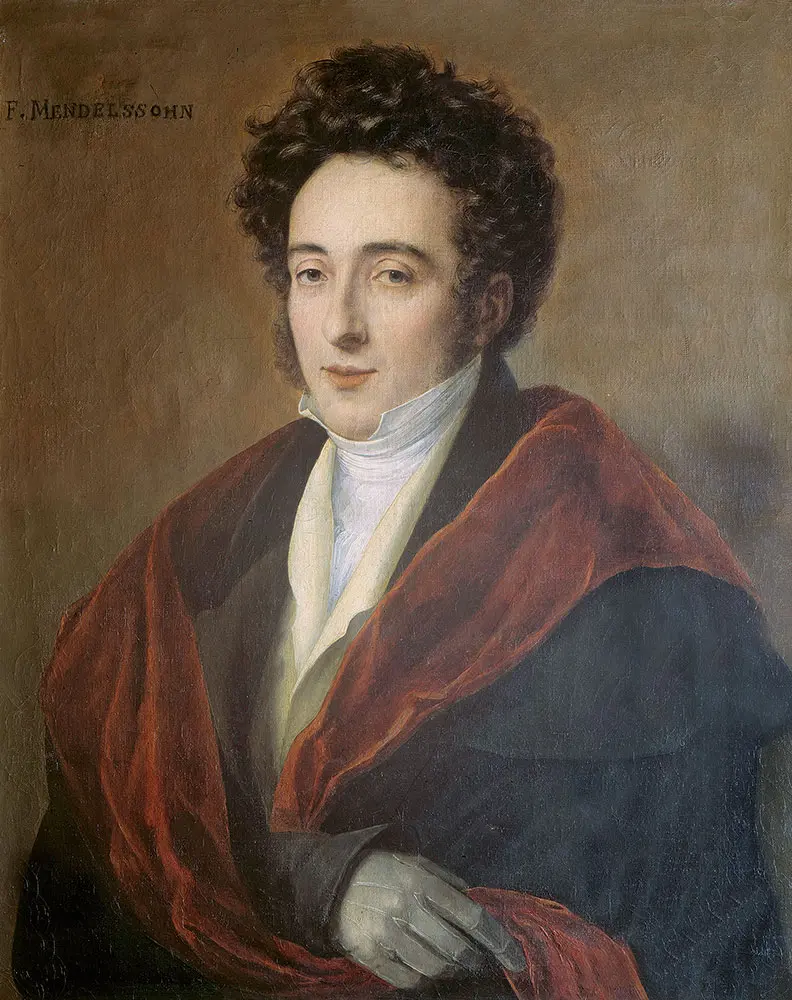
Felix Mendelssohn’s "Reformation" Symphony is a magnificent and deeply personal statement of faith, a symphonic drama depicting the struggle and ultimate triumph of the Protestant Reformation. Composed in 1830 to commemorate the 300th anniversary of the Augsburg Confession—a foundational document of Lutheranism—the work is rich with historical and musical symbolism. Mendelssohn brilliantly weaves celebrated liturgical melodies into the symphonic fabric. The first movement quotes the serene "Dresden Amen" to represent the ancient Catholic tradition, while the finale is built entirely upon Martin Luther’s defiant and powerful hymn, "A Mighty Fortress Is Our God." Despite its ambitious design and powerful message,
...A Symphony of Faith and Conflict
In 1830, the Protestant world prepared to celebrate the 300th anniversary of the Augsburg Confession, one of the most important events of the Lutheran Reformation. For this great occasion, the 21-year-old Felix Mendelssohn, a devout Lutheran himself, composed a grand "confessional" symphony. It was intended to be the musical centerpiece of the celebrations. However, due to political unrest in Europe, the festivities were canceled, and the symphony's premiere was scuttled. Two years later, Mendelssohn tried to premiere the work in Paris, but the orchestra musicians rejected it, finding its serious, contrapuntal style too severe and academic. "It has no passion," one player reportedly sniffed, "only counterpoint." After a lukewarm reception in Berlin, Mendelssohn’s own enthusiasm for the piece waned dramatically. He came to dislike it, never published it, and never performed it again. This magnificent work, born of such sincere conviction, thus became one of its composer’s most rejected creations, only to be rediscovered and celebrated long after his death.
A Confession in Music
The "Reformation" Symphony is an explicitly programmatic work, tracing a clear narrative from the old Catholic faith, through the struggles of the Reformation, to the final, triumphant establishment of Protestantism. Mendelssohn, a master of musical symbolism, uses specific, historically charged melodies to guide the listener through this journey. The entire symphony is constructed as a musical argument for the faith he held so dear, a work that looks back to the church music of J.S. Bach while speaking with a bold Romantic voice.
Movement I (Andante — Allegro con fuoco): The Old Order and the New Struggle
The symphony opens with a slow, solemn introduction that evokes the atmosphere of an ancient cathedral. The music is prayerful and reverent, and soon the strings intone a beautiful, ascending six-note motif known as the "Dresden Amen." This was a liturgical sequence used in the Catholic churches of Saxony, and Mendelssohn uses it here to symbolize the old faith. (Decades later, Richard Wagner would famously borrow this same melodic fragment to represent the Holy Grail in his opera Parsifal.) This peaceful introduction is shattered by the arrival of the main Allegro con fuoco, a stormy and dramatic movement in D minor. This is the sound of conflict, a musical depiction of the turbulent arguments and struggles that defined the Reformation era.
Movement II (Allegro vivace): A Moment of Lightness
After the weighty drama of the first movement, the second movement provides a brief and delightful interlude. It is a light, graceful scherzo in B-flat major, whose flowing rhythms and cheerful woodwind melodies seem to come from a different, more secular world. It is a moment of simple, untroubled joy—perhaps representing the everyday life that continued amidst the grand theological battles of the age. Its placement provides a perfectly timed respite before the symphony returns to its solemn, sacred narrative.
Movement III (Andante): A Prayerful Recitative
The third movement is not a full-scale slow movement but a short, deeply expressive bridge leading directly to the finale. Marked Andante, it has the character of an intimate and heartfelt vocal solo, a prayerful recitative sung by the first violins. The music is full of yearning and quiet introspection, a moment of personal reflection and anticipation before the grand, collective statement of faith that is to come.
Movement IV (Chorale: "Ein feste Burg ist unser Gott")
The finale is the symphony’s magnificent culmination and the explicit statement of its program. It begins with the sound of a solo flute, gently presenting the melody of Martin Luther’s most famous hymn, "Ein feste Burg ist unser Gott" ("A Mighty Fortress Is Our God"). This chorale was the defiant anthem of the Protestant Reformation, a symbol of unwavering faith in the face of adversity. Mendelssohn presents the theme first in this simple, pure form, as if recalling the humble origins of the faith.
A Chorale Transformed
The entire finale is constructed as a grand set of variations on Luther’s hymn. After its gentle introduction, the theme is taken up by the woodwinds and then the full orchestra in a powerful, march-like procession. This leads to a brilliant Allegro vivace, which masterfully weaves fragments of the chorale into a complex sonata form, full of intricate counterpoint that pays clear homage to the genius of Bach. The music depicts the confident, energetic, and intellectually rigorous spirit of the new Protestant faith.
A Triumphant Conclusion
The symphony drives to a majestic and powerful conclusion. The orchestra slows, and the chorale theme is proclaimed once more by the full might of the brass and winds in a glorious, triumphant statement in D major. This is the final victory, the resolution of all the conflict and struggle from the first movement. The work ends in a blaze of orchestral color, a final, magnificent hymn of praise. The "Mighty Fortress" stands secure.
A Legacy Reconsidered
For all its power, it is perhaps easy to see why Mendelssohn, the ultimate classicist, grew to dislike the "Reformation" Symphony, possibly finding its programmatic nature too literal or its construction too academic. However, modern audiences have embraced the work for what it is: a powerful and brilliantly crafted symphony of ideas. It is a unique and deeply personal work that provides a fascinating window into the composer's profound faith and his deep connection to the musical and spiritual history of Germany.
Follow us : 


Sheet Music International - Copyright 2025 all rights reserved
| English: Sheet Music (PDF) | Free Scores | Français: Partitions (PDF) | Musique gratuite | Ελληνικά: Παρτιτούρες (PDF) | Δωρεάν μουσική |
| Deutsch: Noten (PDF) | Kostenlose Partituren | Español: Partituras (PDF) | Música impresa | Português: Partituras (PDF) | Música gratuita |
| Italiano: Spartiti (PDF) | Partiture musicali | Русский: Ноты (PDF) | Бесплатные партитуры | Norsk: Noter (PDF) | Gratis noter |
| Українська: Ноти (PDF) | Безкоштовні партитури | Polski: Nuty (PDF) | Darmowe nuty | Nederlands: Bladmuziek (PDF) | Gratis partituren |