Your Request is under process, Please wait.

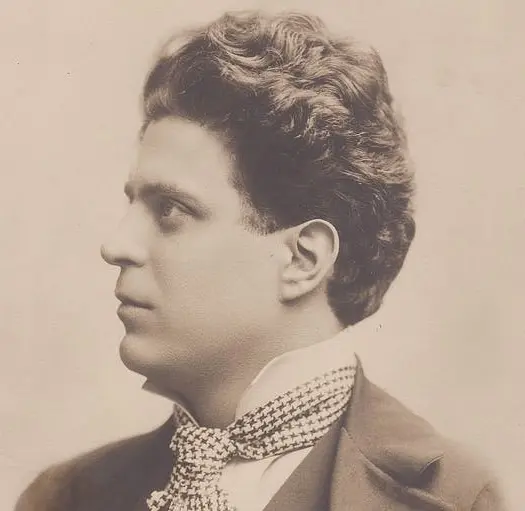
In 1889, the young and impoverished composer Pietro Mascagni was on the verge of giving up music entirely. As a last-ditch effort, he decided to enter a competition for new one-act operas, hastily composing Cavalleria Rusticana (Rustic Chivalry) in just two months. He submitted the score at the last possible minute, and it went on to win the competition. Its premiere in Rome in 1890 was not just a success; it was a volcanic eruption that single-handedly launched the explosive new operatic movement of verismo (realism) and made the unknown Mascagni an international superstar overnight. The opera is a compact
...A Masterpiece of Raw, Violent Passion
The premiere of Pietro Mascagni’s Cavalleria Rusticana at the Teatro Costanzi in Rome on May 17, 1890, was one of those rare, explosive events that changes the course of music history. Mascagni, a poor, unknown, 26-year-old music teacher, had entered his one-act opera in a competition sponsored by the publisher Sonzogno. He won first prize, and the resulting premiere was a sensation of almost unprecedented proportions. The audience was electrified by the opera’s raw emotionalism, its gritty realism, and its torrent of passionate, red-blooded melody. The age of polite, romantic opera was over; the age of verismo had begun. Cavalleria Rusticana (Rustic Chivalry) is a masterpiece of theatrical compression, a short, brutal, and unforgettable story of everyday people caught in a deadly love triangle, set against the backdrop of an Easter Sunday celebration in a Sicilian village.
The Birth of Verismo
Verismo, which translates as "realism," was a literary and operatic movement that sought to portray the lives of ordinary, contemporary people with all their flaws, passions, and often violent impulses. It was a stark contrast to the historical epics and mythological fantasies that had dominated the operatic stage. Cavalleria Rusticana, with its story of lower-class villagers, its themes of adultery and revenge, and its shocking, violent conclusion, became the foundational work of this new, powerful movement. Its success immediately inspired a wave of similar works, most famously Ruggero Leoncavallo’s Pagliacci, with which it is now almost always performed as part of the famous "Cav/Pag" double bill.
A Synopsis of the Plot
The opera, in a single, continuous act, is set in a Sicilian village on Easter morning. Before the curtain rises, we hear the voice of Turiddu, a young soldier, singing a serenade to his new lover, Lola. Lola, however, is married to the carter, Alfio. The main action begins in the village square. Santuzza, a young peasant girl, arrives in distress. She had been engaged to Turiddu, but he abandoned her after she gave herself to him, rekindling his old affair with Lola. Santuzza, who is now pregnant and has been excommunicated from the church for her sin, confronts Turiddu’s mother, Mamma Lucia. As the villagers enter the church for Easter Mass, Santuzza stays behind and confronts Turiddu, begging him to come back to her. He violently rejects her. In a fit of jealous rage, Santuzza tells the newly returned Alfio that his wife, Lola, has been unfaithful to him with Turiddu. Alfio vows a bloody revenge.
The famous "Intermezzo" is then played to an empty stage, a moment of sublime, spiritual peace that provides a heartbreaking contrast to the violent passions of the story. After the Mass, the villagers emerge. Turiddu, in a mood of cheerful bravado, offers everyone wine. Alfio arrives and refuses Turiddu's offer, instead challenging him to a duel according to Sicilian custom. Turiddu accepts. Overcome with guilt and a premonition of his own death, he bids a tearful, desperate farewell to his mother, asking her to care for Santuzza if he does not return. He runs offstage to fight. A few moments later, a woman’s cry is heard from offstage: "They have murdered Turiddu!"
The Characters and the Music
The characters are not kings or gods, but recognizable, flawed human beings. Santuzza is the opera's tragic heart, a devout woman undone by love and shame, whose famous aria, "Voi lo sapete, o mamma" ("You know well, O mother"), is a devastating outpouring of grief. Turiddu is the arrogant, thoughtless young man whose infidelity sets the tragedy in motion. And Alfio is the proud, working-class husband, driven by the brutal Sicilian code of honor to seek a bloody revenge.
Mascagni’s score is a masterpiece of theatrical effectiveness. It is filled with one unforgettable melody after another. The "Easter Hymn" is a magnificent chorus, a huge, glorious wave of sound that blends the sacred music from inside the church with the secular passions of the characters in the square. But the opera’s most famous and beloved number is the purely orchestral "Intermezzo. " This beautiful, lyrical piece, with its soaring string melody, provides a moment of spiritual reflection and a heartbreaking lament for the tragedy that is about to unfold.
An Enduring Legacy
Cavalleria Rusticana was a cultural phenomenon. It made Mascagni a wealthy and famous man overnight and changed the face of Italian opera forever. Its formula—a short, fast-paced, and emotionally overwrought slice of life culminating in a violent conclusion—became the blueprint for the verismo movement. Its combination of raw, realistic drama and an endless stream of glorious, passionate melody has made it one of the most popular and enduring works in the entire operatic repertoire, a thrilling and unforgettable theatrical experience.
A Sicilian Village Square on Easter Morning
The opera opens just before dawn. Before the curtain even rises, we hear the voice of Turiddu off-stage, singing a "Siciliana" (a traditional song) to his secret lover, Lola. This is a song of love, but it is not for Santuzza, the woman he is publicly known to be with.
As the sun rises on Easter morning, villagers fill the square and sing the "Regina Coeli" (Queen of Heaven) in celebration, heading into the church for mass. Santuzza, looking distraught, approaches Mamma Lucia's tavern. She is looking for Turiddu. Santuzza cannot enter the church herself, as she has been excommunicated for having an affair with Turiddu and becoming pregnant without being married.
Mamma Lucia tells Santuzza that Turiddu has gone to another town to buy wine. Santuzza, in her agitation, insists this is a lie; she knows he was seen in the village late last night.
Alfio, the village carter and Lola's husband, arrives, singing a cheerful song about his work and his love for his wife. He asks Mamma Lucia for wine. When she repeats her story that Turiddu is away, Alfio casually contradicts her, saying he saw Turiddu lingering near his own house that very morning. This confirms Santuzza's worst fears.
As the sound of the mass is heard from the church, Santuzza stays behind. In her heartbreaking aria ("Voi lo sapete, o mamma"), she confesses her entire story to Mamma Lucia. Before Turiddu left for the army, he was in love with Lola. While he was away, Lola impatiently married the wealthier Alfio. When Turiddu returned, he was heartbroken. In an act of revenge, he seduced Santuzza, promising to marry her. Santuzza, truly in love, gave in to him. Now, however, Turiddu has grown tired of Santuzza and has rekindled his passionate, adulterous affair with his old flame, Lola.
Turiddu himself arrives. Santuzza immediately confronts him, begging him to stay and not to abandon her. He callously brushes her off, denying her accusations. Their argument is interrupted when Lola saunters into the square, on her way to church. She flirts openly with Turiddu and mockingly asks Santuzza if she is going to mass. When Santuzza says no, Lola taunts her before heading into the church. Humiliated and enraged, Turiddu shoves Santuzza to the ground and follows Lola into the church, leaving Santuzza utterly broken.
At this moment, Alfio returns. Santuzza, in a blind fit of despair and rage, screams a curse after Turiddu: "A te la mala Pasqua!" ("May you have an evil Easter!"). Then, seeing Alfio, she makes a fatal decision. She tells him what she knows: "While you are at church, your wife, Lola, is with another man." She reveals that Turiddu is Lola's lover.
Alfio is stunned, then consumed by a cold, murderous rage. He thanks Santuzza for telling him and vows that he will have revenge before the day is over. Santuzza is immediately horrified by what she has unleashed, but it is too late.
The scene is broken by the famous, beautiful Intermezzo. The orchestra plays a serene melody, representing the peace of the Easter service, which stands in stark contrast to the violent human tragedy that is about to unfold.
The mass ends, and the villagers pour out of the church. Turiddu, in high spirits, invites everyone to his mother's tavern, singing a lively drinking song (Brindisi). Alfio appears and Turiddu, unaware, offers him a glass of wine. Alfio refuses it, saying, "It would turn to poison in my stomach." The two men understand each other. In the traditional Sicilian challenge, Turiddu bites Alfio's ear, accepting the challenge to a duel to the death.
Turiddu's bravado finally breaks. He knows he must die for his sins. He calls for Mamma Lucia and, in his final aria ("Mamma, quel vino è generoso"), he begs her to be a mother to Santuzza if he does not return, and asks for her blessing. He kisses his mother goodbye and runs off-stage to the duel.
Mamma Lucia and Santuzza wait in the square, filled with terror. A few moments pass in agonizing silence. Suddenly, a woman's voice is heard screaming from off-stage. A villager runs in and shouts the final, tragic line: "Hanno ammazzato compare Turiddu!" ("They have killed neighbor Turiddu!").
Santuzza and Mamma Lucia collapse in horror as the curtain falls.
Follow us : 


Sheet Music International - Copyright 2025 all rights reserved
| English: Sheet Music (PDF) | Free Scores | Français: Partitions (PDF) | Musique gratuite | Ελληνικά: Παρτιτούρες (PDF) | Δωρεάν μουσική |
| Deutsch: Noten (PDF) | Kostenlose Partituren | Español: Partituras (PDF) | Música impresa | Português: Partituras (PDF) | Música gratuita |
| Italiano: Spartiti (PDF) | Partiture musicali | Русский: Ноты (PDF) | Бесплатные партитуры | Norsk: Noter (PDF) | Gratis noter |
| Українська: Ноти (PDF) | Безкоштовні партитури | Polski: Nuty (PDF) | Darmowe nuty | Nederlands: Bladmuziek (PDF) | Gratis partituren |