Your Request is under process, Please wait.

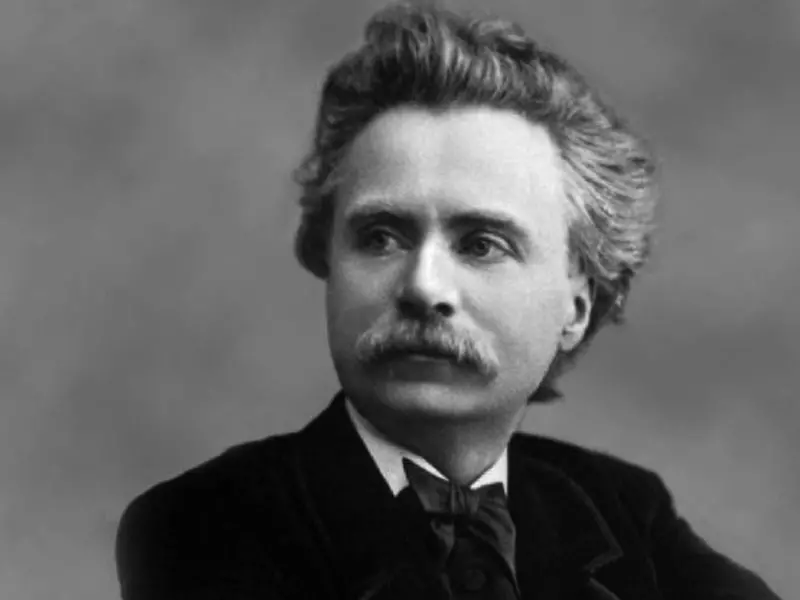
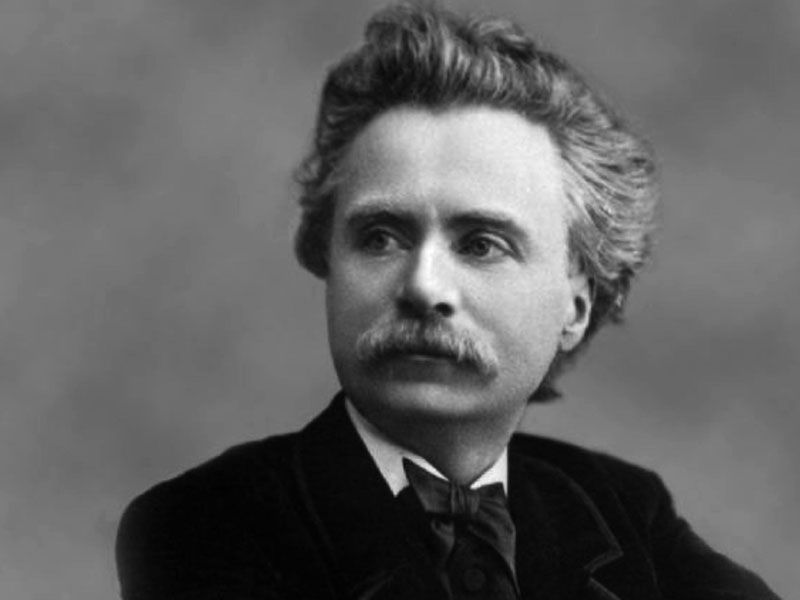
Edvard Grieg’s concert overture In Autumn is a thrilling and evocative musical landscape, a powerful tone poem capturing both the melancholy beauty and the wild, stormy heart of the Norwegian fall. The work has a famously defiant history. In 1866, the young Grieg showed the original version to the influential Danish composer Niels Gade, who was a leading figure in Scandinavian music. Gade, a product of the German conservatory tradition, coldly dismissed the fiercely nationalistic work, advising Grieg to "go home and write something better. " Stung but undeterred, Grieg later revised the overture. He
...Triumph Over a Critic's Scorn
The story of In Autumn is a tale of youthful defiance and ultimate vindication. In 1866, the 23-year-old Edvard Grieg, brimming with the fires of Norwegian nationalism, traveled to Copenhagen to show his new overture to the elder statesman of Scandinavian music, Niels Gade. Gade, who had built his own successful career on a style deeply indebted to German Romantics like Felix Mendelssohn and Robert Schumann, was unimpressed by the raw, rustic, and overtly Norwegian folk character of Grieg's music. He famously told Grieg it was "trash" and that he should go home and write something better. This harsh rejection from a composer he had admired was a severe blow to the young Grieg’s confidence. However, it also strengthened his resolve to pursue his own artistic path. He later revised the work and, in an act of artistic defiance, submitted it to a competition in Stockholm. The overture was awarded first prize, an honor it shared with a work by Grieg's friend and rival, Johan Svendsen. In a perfect twist of fate, the judging committee that crowned the work a winner included the very man who had once dismissed it: Niels Gade.
A Declaration of Norwegian Identity Finding a National Voice
In Autumn was one of Grieg’s first major orchestral works written after he had returned from his studies at the Leipzig Conservatory and fully embraced the cause of Norwegian musical nationalism. Frustrated by what he saw as the overly polished and academic German style, Grieg sought to create a new concert music that was rooted in the folk traditions, landscapes, and spirit of his homeland. This overture was a bold and powerful statement of that intent. Its melodies, rhythms, and harmonies were consciously different from the German models, drawing instead on the raw, vigorous, and often melancholic character of Norwegian folk music.
From Song to Overture The Music's Origin
The thematic material for the overture is drawn from one of Grieg's own earlier songs, "Høstsang" (Autumn Song), Op. 4. The song’s text, by the poet Christian Richardt, provides the emotional program for the entire overture. The poem contrasts the gloom and decay of autumn with the joyful memories of summer and the firm hope for the coming of spring. This journey from melancholy to storm and finally to triumphant hope is the narrative arc that Grieg so brilliantly translates into purely instrumental terms. He first arranged the work for piano four-hands before creating the full orchestral version.
A Nordic Sonata The Overture's Structure
While the spirit of the work is that of a rhapsodic tone poem, its structure is a surprisingly disciplined sonata form. A slow, melancholy introduction immediately sets the scene. Plaintive woodwind solos over stark string harmonies paint a picture of a bleak, beautiful, and windswept autumn landscape. The main Allegro then begins, launching the exposition. The first theme is a vigorous and stormy motive, rhythmically charged and full of dramatic tension. This is the "Autumn Storm" itself, derived directly from the song's main melody. This is contrasted with a beautiful and lyrical second theme, a more hopeful and gentle melody that represents the promise of spring's return. The central Development section is a turbulent and dramatic depiction of the storm at its peak, with the main theme being tossed about the orchestra with brilliant fury. After a powerful Recapitulation, the work concludes with a glorious Coda, where the hopeful second theme is transformed into a triumphant, sun-drenched hymn, proclaimed by the full brass section, signifying nature's ultimate victory over the winter darkness.
The Sound of Norway Grieg's Nationalist Language
Throughout the overture, Grieg employs specific musical techniques to create an authentically Norwegian sound. The melodies often use the modal harmonies found in Norwegian folk music, which sound distinctly different from the standard major and minor scales of German classical music. He makes use of drone basses in the lower strings, imitating the sound of the Hardanger fiddle, Norway's national instrument. The rhythms are often sharp, rustic, and energetic, based on folk dances like the halling or springar. These elements combine to create a sound world that is rugged, powerful, and deeply connected to the natural landscape.
A Young Master of the Orchestra Grieg's Orchestration
Grieg often expressed insecurity about his skills as an orchestrator, especially when comparing himself to the seemingly effortless brilliance of his contemporary Johan Svendsen. In Autumn, however, is a powerful and confident display of orchestral mastery. His writing for the brass section is particularly effective, creating moments of immense power and grandeur. He uses the woodwind section with great sensitivity to paint the colors of the landscape, from the lonely oboe solos of the introduction to the swirling flutes of the storm. The strings provide the relentless, driving energy for the storm sequences and the warm, rich foundation for the final hymn. It is the work of a young composer in full command of his orchestral resources, using them to create a thrilling and deeply personal musical drama.

Follow us : 


Sheet Music International - Copyright 2025 all rights reserved
| English: Sheet Music (PDF) | Free Scores | Français: Partitions (PDF) | Musique gratuite | Ελληνικά: Παρτιτούρες (PDF) | Δωρεάν μουσική |
| Deutsch: Noten (PDF) | Kostenlose Partituren | Español: Partituras (PDF) | Música impresa | Português: Partituras (PDF) | Música gratuita |
| Italiano: Spartiti (PDF) | Partiture musicali | Русский: Ноты (PDF) | Бесплатные партитуры | Norsk: Noter (PDF) | Gratis noter |
| Українська: Ноти (PDF) | Безкоштовні партитури | Polski: Nuty (PDF) | Darmowe nuty | Nederlands: Bladmuziek (PDF) | Gratis partituren |