Your Request is under process, Please wait.

Reinhold Glière’s Russian Sailors' Dance is one of the most thrilling crescendos in all of classical music, a masterclass in orchestral energy that builds from a quiet folk tune to a truly frenzied conclusion. While it is now a world-famous concert staple in its own right, this exhilarating dance originated in a much larger and more complex work: Glière’s 1927 ballet, The Red Poppy. This ballet, the first of the Soviet era to deal with a contemporary revolutionary theme, tells a propagandistic story of heroic Soviet sailors in a Chinese port, their conflict with villainous capitalists,
...From Soviet Propaganda to Concert Hall Staple
The origins of the universally beloved Russian Sailors' Dance are rooted in the complex and politically charged world of early Soviet art. The dance is the most famous excerpt from the 1927 ballet The Red Poppy, a landmark work that was the first successful Soviet ballet on a contemporary revolutionary theme. The plot, which seems like heavy-handed propaganda to a modern audience, is set in a bustling port in 1920s China. The beautiful local dancer, Tao-Hoa, falls in love with the heroic Captain of a visiting Soviet ship. Her greedy capitalist manager, Li-shan, orders her to kill the Captain, but she refuses. In the final act, Tao-Hoa is killed by the evil Europeans, but before she dies, she gives a red poppy to a young Chinese girl as a symbol of love and liberty. Amidst this melodrama, the first act features a scene where the Soviet and international sailors showcase their native dances. It is here that the Russian sailors perform their electrifying dance, a moment of seemingly pure, unadulterated folk energy that would soon take on a life of its own.
Glière and the Russian Tradition An Heir to the Mighty Handful
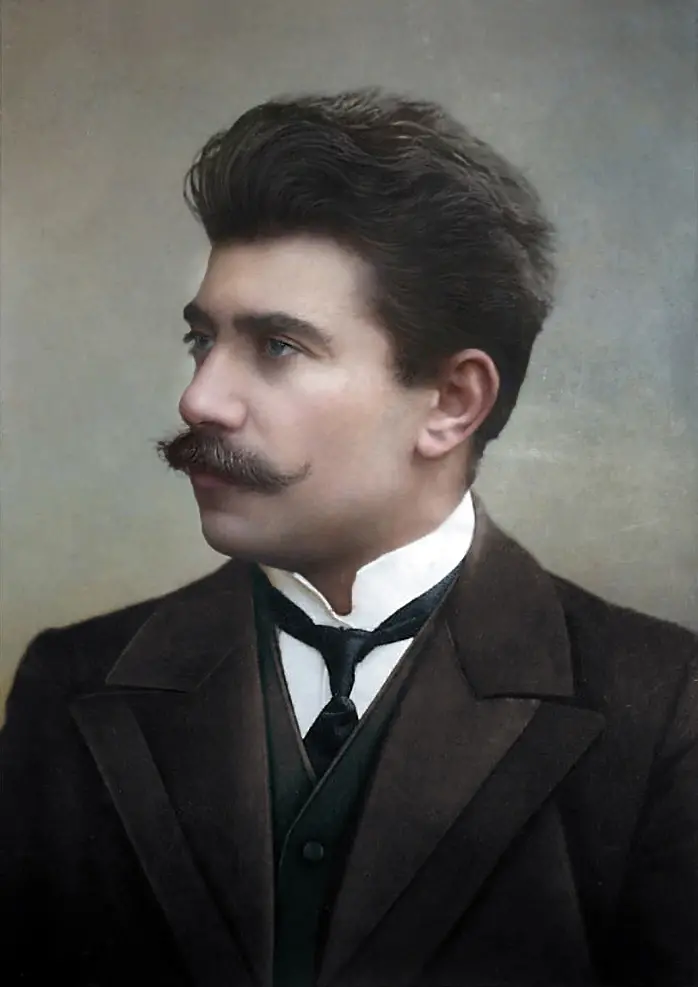
Reinhold Glière was a composer whose career uniquely bridged the pre-revolutionary Tsarist era and the new Soviet state. Stylistically, he was a direct heir to the great 19th-century Russian nationalist composers known as "The Mighty Handful," particularly Alexander Borodin and Nikolai Rimsky-Korsakov. From them, he inherited a gift for writing memorable, folk-inspired melodies and a masterful, brilliantly colorful approach to orchestration. While younger, more modernist composers like Shostakovich and Prokofiev were forging a new, often spikier Russian sound, Glière’s music remained rooted in the lush, romantic tradition of his teachers. This made him a "safe" and reliable choice for state commissions, and the Russian Sailors' Dance is a perfect example of his style: accessible, exciting, and impeccably crafted.
The Theme: "Yablochko" A "Little Apple"
The musical foundation of the dance is the well-known Russian folk song "Yablochko," which means "Little Apple. " The tune was particularly popular with sailors in the Black Sea Fleet and had many different sets of lyrics, some of which were political in nature. By using a genuine and recognizable folk melody, Glière instantly gave the dance a feeling of authenticity and populist appeal, a quality that was highly valued in Soviet art. The tune itself is simple, highly rhythmic, and cast in a minor key, with a structure that is perfectly suited for a traditional Russian squat-kicking folk dance.
The Structure: An Unrelenting Crescendo A Tour of the Orchestra
The genius of the Russian Sailors' Dance lies in its simple but incredibly effective structure: a theme and variations built as a single, continuous acceleration. The piece is a masterclass in building and sustaining orchestral excitement. It begins quietly and simply, with the "Yablochko" theme introduced by a solo bass clarinet over a spare pizzicato accompaniment in the low strings. The theme is then taken up in a series of variations, each one introducing new instruments and a slightly faster tempo. First, the bassoons take the melody, then the oboes and other woodwinds enter, adding counter-melodies and increasing the rhythmic complexity. The music continues to build, layer by layer, with the horns and other brass instruments eventually entering to add weight and power. The tempo begins to press forward relentlessly, with frantic woodwind flourishes and increasingly prominent percussion, including xylophone, snare drum, and cymbals. The final section is a breathtaking prestissimo, where the entire orchestra, led by the blaring trumpets and trombones, plays the theme at top speed and full volume, driving the piece to an explosive and exhilarating finish.
A Concerto for Orchestra A Virtuosic Showcase
While not officially titled as such, the dance functions as a brilliant miniature "concerto for orchestra. " Its structure is designed to showcase the virtuosity of nearly every section of the ensemble. It begins with soloistic passages for the principal woodwinds and builds to powerful statements for the full brass and percussion sections. The string players are required to maintain absolute precision through the constantly accelerating tempo. For conductors, it is a test of control, a challenge to manage the long crescendo and acceleration without peaking too early or allowing the ensemble to rush out of control. For the audience, it is a thrilling display of orchestral power and discipline.
A Life Beyond the Ballet From the Bolshoi to the Boston Pops
While the full ballet of The Red Poppy, with its problematic plot, is now rarely performed outside of Russia (and even there, often with a revised, de-politicized story), its most famous dance was an immediate international hit. Completely detached from its propagandistic origins, the Russian Sailors' Dance became a standalone concert favorite, a perfect encore piece guaranteed to bring an audience to its feet. It was championed by conductors of "pops" orchestras, like Arthur Fiedler and the Boston Pops, who made it a signature tune. Its appeal is universal: it is short, incredibly exciting, easy to understand, and a dazzling display of orchestral fireworks. Its simple but brilliant formula has made it one of the most recognizable and enduring orchestral showpieces of the 20th century.
Follow us : 


Sheet Music International - Copyright 2025 all rights reserved
| English: Sheet Music (PDF) | Free Scores | Français: Partitions (PDF) | Musique gratuite | Ελληνικά: Παρτιτούρες (PDF) | Δωρεάν μουσική |
| Deutsch: Noten (PDF) | Kostenlose Partituren | Español: Partituras (PDF) | Música impresa | Português: Partituras (PDF) | Música gratuita |
| Italiano: Spartiti (PDF) | Partiture musicali | Русский: Ноты (PDF) | Бесплатные партитуры | Norsk: Noter (PDF) | Gratis noter |
| Українська: Ноти (PDF) | Безкоштовні партитури | Polski: Nuty (PDF) | Darmowe nuty | Nederlands: Bladmuziek (PDF) | Gratis partituren |