Your Request is under process, Please wait.

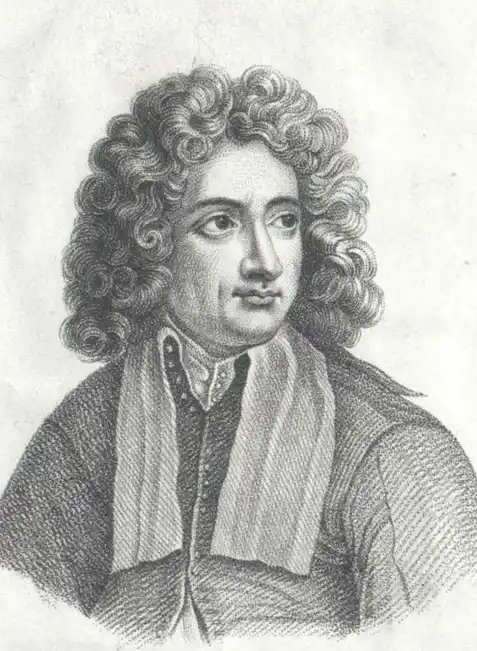
Arcangelo Corelli’s Concerto Grosso in G minor, Op. 6, No. 8, known to the world as the "Christmas Concerto," is one of the most beloved and enduring works of the entire Baroque era. Published posthumously in 1714, this work was inscribed by the composer Fatto per la notte di Natale ("Made for the night of Christmas"). While the body of the concerto is a stunning example of Corelli’s dramatic and elegant style, it is the sublime final movement, a gentle Pastorale, that has forever linked it to the spirit of
...The Perfectionist's Legacy: A Treasure Guarded for Decades
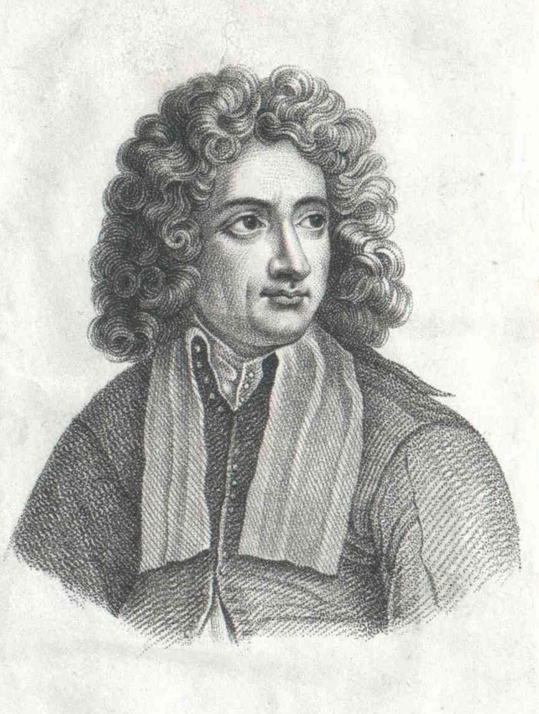
In the late 17th and early 18th centuries, Arcangelo Corelli was the undisputed king of music in Rome. As a violinist, his playing was legendary for its unparalleled beauty and elegance; as a composer and orchestra leader, his influence was immense. Yet, he was a notorious perfectionist. For over thirty years, he labored on his set of twelve Concerti Grossi, Op. 6, constantly refining and polishing them. He guarded these scores jealously, allowing them to be performed only under his direct supervision and refusing to publish what he considered his crowning achievement. It was only after his death in 1713 that the collection was finally published, unleashing a musical phenomenon across Europe. The concertos became an instant "bestseller," studied and imitated by an entire generation of composers, including a young George Frideric Handel, who had known and admired Corelli during his time in Rome. This Christmas Concerto, the eighth in the set, was the collection's shining star.
Corelli did not invent the concerto grosso, but he perfected it, establishing a model that would dominate orchestral music for decades. Unlike a solo concerto that features a single star performer, the concerto grosso is built on the principle of dialogue. A small group of soloists, the concertino (in this case, two violins and a cello), is contrasted with the full string orchestra, the ripieno (meaning "full"). The beauty of the form lies in the interplay between these two groups—the intimate, virtuosic statements of the soloists answered by the rich, powerful tutti of the orchestra. Corelli’s genius was in the perfect balance and clarity of this dialogue.
Rather than the familiar fast-slow-fast three-movement structure later popularized by his contemporary Antonio Vivaldi, Corelli structures this concerto on the older sonata da chiesa, or "church sonata," model. This results in a sequence of multiple, shorter movements that create a rich tapestry of contrasting moods and tempos. The concerto moves fluidly from solemn gravity to energetic brilliance, from poignant reflection to joyful celebration, all before arriving at its famous, appended finale.
The concerto opens with a brief but dramatic flourish, a call to attention marked Vivace. This is immediately answered by a Grave section of powerful, slow-moving chords, creating a sense of immense solemnity and grandeur. This dramatic juxtaposition of fast and slow is a hallmark of Corelli's style.
The first full, fast movement follows the solemn introduction. This is a quintessential example of Corelli's craft, a fluid and elegant Allegro in which the soloists and orchestra engage in a lively, imitative conversation. The music unfolds with a sense of perfect logic and graceful energy, with no single instrument dominating the texture.
This central section is a miniature three-part form. It opens and closes with a deeply expressive Adagio, featuring poignant, almost operatic solos for the first violin. These beautiful, lyrical moments frame a short, dance-like Allegro, creating a passage of intense emotional contrast and highlighting the virtuosic skill of the lead violinist.
A short, energetic Vivace leads into the final fast movement of the main concerto body, another brilliant Allegro. This movement is characterized by its driving rhythm and brilliant passagework for the strings, bringing the traditional "church sonata" portion of the work to a spirited and satisfying conclusion. Had Corelli stopped here, it would have been a masterpiece of the form. But he had one more gift to offer.
Follow us : 


Sheet Music International - Copyright 2025 all rights reserved
| English: Sheet Music (PDF) | Free Scores | Français: Partitions (PDF) | Musique gratuite | Ελληνικά: Παρτιτούρες (PDF) | Δωρεάν μουσική |
| Deutsch: Noten (PDF) | Kostenlose Partituren | Español: Partituras (PDF) | Música impresa | Português: Partituras (PDF) | Música gratuita |
| Italiano: Spartiti (PDF) | Partiture musicali | Русский: Ноты (PDF) | Бесплатные партитуры | Norsk: Noter (PDF) | Gratis noter |
| Українська: Ноти (PDF) | Безкоштовні партитури | Polski: Nuty (PDF) | Darmowe nuty | Nederlands: Bladmuziek (PDF) | Gratis partituren |