Your Request is under process, Please wait.

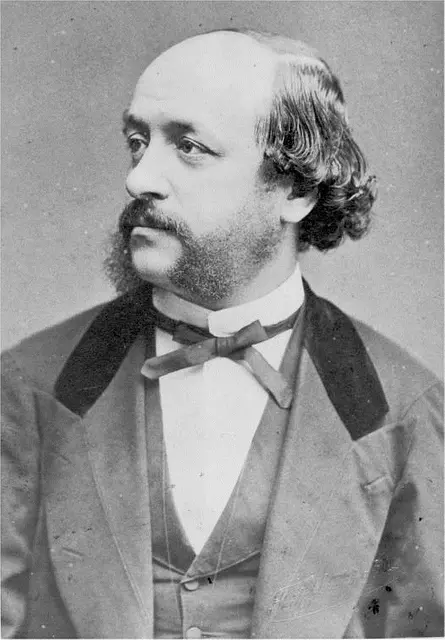
Joseph Hellmesberger Sr. (1828-1893)
Download free sheet music from Joseph Hellmesberger Sr.
Step into the vibrant musical world of 19th-century Vienna with scores from Joseph Hellmesberger Sr., one of the most influential musicians of his era. While primarily celebrated as a virtuoso violinist, conductor, and legendary quartet leader, Hellmesberger was also a gifted composer of charming and elegant music. Our collection offers you direct access to his delightful character pieces and salon music for violin, available as high-quality, printable PDFs. Perfect for violinists seeking to explore the Romantic repertoire beyond the standard concertos, these scores capture the spirit and flair
...The Violin King of 19th-Century Vienna
In the latter half of the 19th century, if a composer wanted to introduce a new piece of chamber music in Vienna, there was one man whose approval and performance were paramount. When Johannes Brahms, a notoriously self-critical genius, completed a new string quartet, he did not entrust its premiere to just anyone. He gave it to his friend Joseph Hellmesberger Sr., the leader of the city's most prestigious string quartet. This act was a testament to the immense power, influence, and artistic integrity wielded by Hellmesberger. He was not merely a musician; he was a Viennese institution, a kingmaker whose bow and baton shaped the musical tastes of an empire for nearly half a century. His own compositions, though less famous than the works he premiered, provide a delightful window into the musical world he so thoroughly dominated.
A Musical Dynasty Begins
Joseph Hellmesberger Sr. was born into music. His father, Georg Hellmesberger Sr. (1800-1873), was a distinguished violinist, pedagogue, and conductor at the Vienna Court Opera. From his earliest moments, Joseph was immersed in a rigorous musical environment. Trained intensively by his father, he proved to be a remarkable prodigy on the violin. He made his public debut at the age of eleven, and his talent was immediately apparent to all who heard him play. He was not just technically proficient; he possessed a mature musicality that belied his years.
His education took place at the Vienna Conservatory, where his own father was a professor. This formal training, combined with the practical experience of growing up in a high-level musical household, prepared him for a swift and meteoric rise. Vienna was a city that revered musical talent, and the name Hellmesberger was already synonymous with violinistic excellence. Joseph was poised to not only continue but to vastly expand his family's legacy.
The Rise of a Virtuoso and Educator
Hellmesberger’s career progressed with astonishing speed. By the age of 19, in 1847, he was already performing solo violin parts at the Court Opera. In 1851, at the remarkably young age of 23, he was appointed a professor of violin at the Vienna Conservatory. This was not just a teaching position; he was made the conservatory's artistic director, a role of immense responsibility that placed him in charge of the artistic direction and curriculum of one of Europe's most important musical institutions. He would hold this directorship until his death in 1893, influencing generations of musicians.
As a teacher, he was demanding but revered. He trained some of the finest violinists of the era, including the legendary Leopold Auer and dozens of others who would go on to populate the great orchestras of Europe. His pedagogical approach was rooted in the classical Viennese tradition, emphasizing purity of tone, elegant phrasing, and a deep understanding of musical structure.
The Hellmesberger Quartet: A Viennese Institution
While his role at the conservatory was influential, Hellmesberger’s most enduring legacy as a performer was the string quartet he founded in 1849. The Hellmesberger Quartet was not just a musical ensemble; it was the epicenter of chamber music life in Vienna for over four decades. As the first violinist and leader, Hellmesberger guided the group to unparalleled heights of technical and artistic excellence.
The quartet's subscription concert series was a highlight of the Viennese social and cultural calendar. Hellmesberger had a profound sense of historical responsibility and a keen ear for new music. He programmed the complete cycle of Ludwig van Beethoven's string quartets at a time when the late quartets were still considered esoteric and difficult by the general public. He championed the chamber works of Franz Schubert, giving the posthumous premiere of the magnificent String Quintet in C major.
Crucially, the quartet became the chosen vehicle for the premieres of new works by contemporary composers. They developed a particularly close relationship with Johannes Brahms, premiering his Piano Quintet in F minor, the String Quartet in C minor, and other major works. They also premiered works by Anton Bruckner, solidifying their role as the essential interpreters of the most important new chamber music of the day. To have a work performed by the Hellmesberger Quartet was the ultimate seal of approval.
Conductor and Concertmaster
Hellmesberger's influence extended far beyond the classroom and the recital hall. In 1860, he added the role of concertmaster of the prestigious Vienna Court Opera Orchestra to his duties, a position that placed him as the leader of one of the world's greatest orchestras. He was also a regular conductor of the Vienna Philharmonic and the concerts of the Gesellschaft der Musikfreunde (Society of Friends of Music).
He worked alongside legendary conductors like Hans Richter and was a central figure in all aspects of Vienna's orchestral life. His comprehensive knowledge of the repertoire, his exacting standards, and his authoritative presence made him an indispensable figure. He was a man of immense energy, somehow balancing his demanding roles as director, professor, quartet leader, concertmaster, and conductor simultaneously.
The Composer: Music for the Salon and Stage
Amidst his whirlwind of performing and administrative duties, Hellmesberger also found time to compose. His works are a direct reflection of the tastes of his time. He was not an innovator like Brahms or Bruckner, but a master craftsman of charming, effective, and brilliantly written music for his own instrument. His compositions are primarily salon pieces and character studies for the violin, such as Ballszene (Ball Scene), Romanze, Elfenreigen (Dance of the Elves), and Teufelstanz (Devil's Dance).
These pieces are filled with graceful melodies, virtuosic passages, and an undeniable Viennese charm. They were designed to delight audiences and showcase the technical and expressive capabilities of the violin. He also wrote several ballets and operettas, which enjoyed success in their day but have since faded from the standard repertoire. While his compositions may not be profound, they are impeccably written and offer a perfect glimpse into the elegant musical world he inhabited.
Legacy and the Next Generation
Joseph Hellmesberger Sr. died in Vienna in 1893. His passing marked the end of an era. For nearly 50 years, he had been a central pillar of the city's musical life. His legacy is not that of a great composer, but of a great musician in the most complete sense of the word. He was the guardian of tradition, the champion of new music, the master educator, and the consummate performer.
He passed the torch to his two sons, who continued the family dynasty. His son, Joseph Hellmesberger Jr. (1855-1907), known as "Pepi," was also a highly talented violinist, composer, and conductor who took over leadership of the Hellmesberger Quartet and the Court Opera. Through his tireless work, Joseph Hellmesberger Sr. defined what it meant to be a professional musician in Vienna and left an indelible mark on the city's culture that can still be felt today.
Follow us :


Sheet Music International - Copyright 2026 all rights reserved