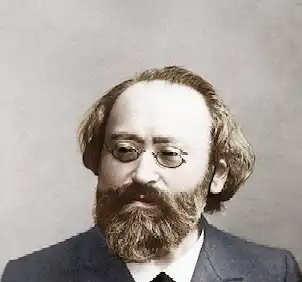
While Max Bruch’s magnificent first violin concerto has secured his place in the hearts of concertgoers, much of the German composer’s extensive catalogue remains unjustly neglected. A man of staunchly conservative musical tastes, Bruch spent a significant portion of his career railing against the ‘new music’ of Liszt and Wagner, championing a more traditional Romanticism inherited from Mendelssohn and Schumann. It is one of music’s charming ironies, then, that this bastion of German classicism possessed a remarkable gift for capturing the spirit of folk music from distant lands, a talent brilliantly displayed in his Suite on Russian Folk Melodies, Op. 79b.
Bruch, it must be said, had a reputation for being somewhat… well, grumpy. The composer himself lamented late in life, “In fifty years, my G-minor concerto will be the only thing anyone remembers of me.” He was also a man of unfortunate financial acumen, having sold the rights to that very concerto to his publisher for a pittance, a decision he would forever regret. One can almost picture him, lamenting the state of modern music and his own fortunes, finding solace and a fresh wellspring of inspiration not in the complex chromaticism of his contemporaries, but in the heartfelt, unvarnished beauty of folk song.
This suite, composed in 1903, is a colorful orchestration of an earlier work for violin and piano. Bruch’s source material was a collection of Russian folk songs compiled by Mily Balakirev, a leading figure of the Russian nationalist school of music. It is rather amusing to consider Bruch, the staunch German traditionalist, eagerly poring over a volume of Russian tunes. Yet, his treatment of these melodies is not one of mere transcription; he imbues them with the full, rich palette of the late Romantic orchestra, treating them with a tender care and masterful craftsmanship that is quintessentially Bruch.
The suite unfolds in five distinct movements, each a miniature tone poem. The opening Andante sostenuto sets a somber, introspective mood, with a soulful melody introduced by the cor anglais. This is not the grand, sweeping Russia of Tchaikovsky’s symphonies, but something more intimate and melancholic, a glimpse into the vast, soulful landscape of the Russian soul.
The second movement, marked Adagio ma non troppo lento — Vivace, begins with a lyrical, almost hymn-like theme before suddenly bursting into a lively and infectious dance. The contrast is startling and delightful, showcasing Bruch’s ability to shift from moments of profound reflection to unbridled joy. The third movement, a spirited Tanz, continues in this exuberant vein, a rustic peasant dance full of rhythmic vitality and colorful orchestration.
A solemn Trauermarsch (Funeral March) forms the fourth movement. Here, Bruch demonstrates his mastery of orchestration, creating a mood of dignified grief with muted brass and somber strings. There is a weight and gravity to this movement that provides a powerful emotional core to the suite.
The finale, Allegro energico, ma non troppo, brings the work to a rousing conclusion. After a brief, anticipatory introduction, the orchestra launches into a spirited rendition of the famous "Song of the Volga Boatmen." While this melody is often associated with a sense of weary toil, in Bruch's hands, it becomes a powerful and triumphant anthem, a fittingly robust and optimistic conclusion to this musical journey.
In the Suite on Russian Folk Melodies, we hear a side of Max Bruch that is often overlooked. Beyond the celebrated violin concerto, and behind the facade of the cantankerous conservative, was a composer with a deep appreciation for the power of a good tune, no matter its origin. This charming suite is a testament to that, a delightful fusion of German craftsmanship and Russian soul.