Your Request is under process, Please wait.

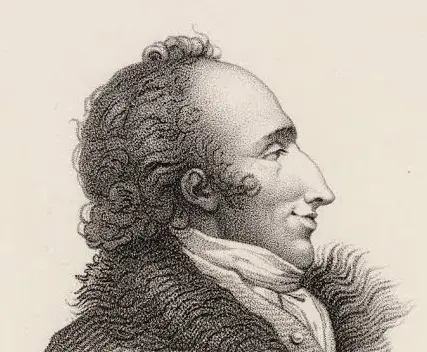
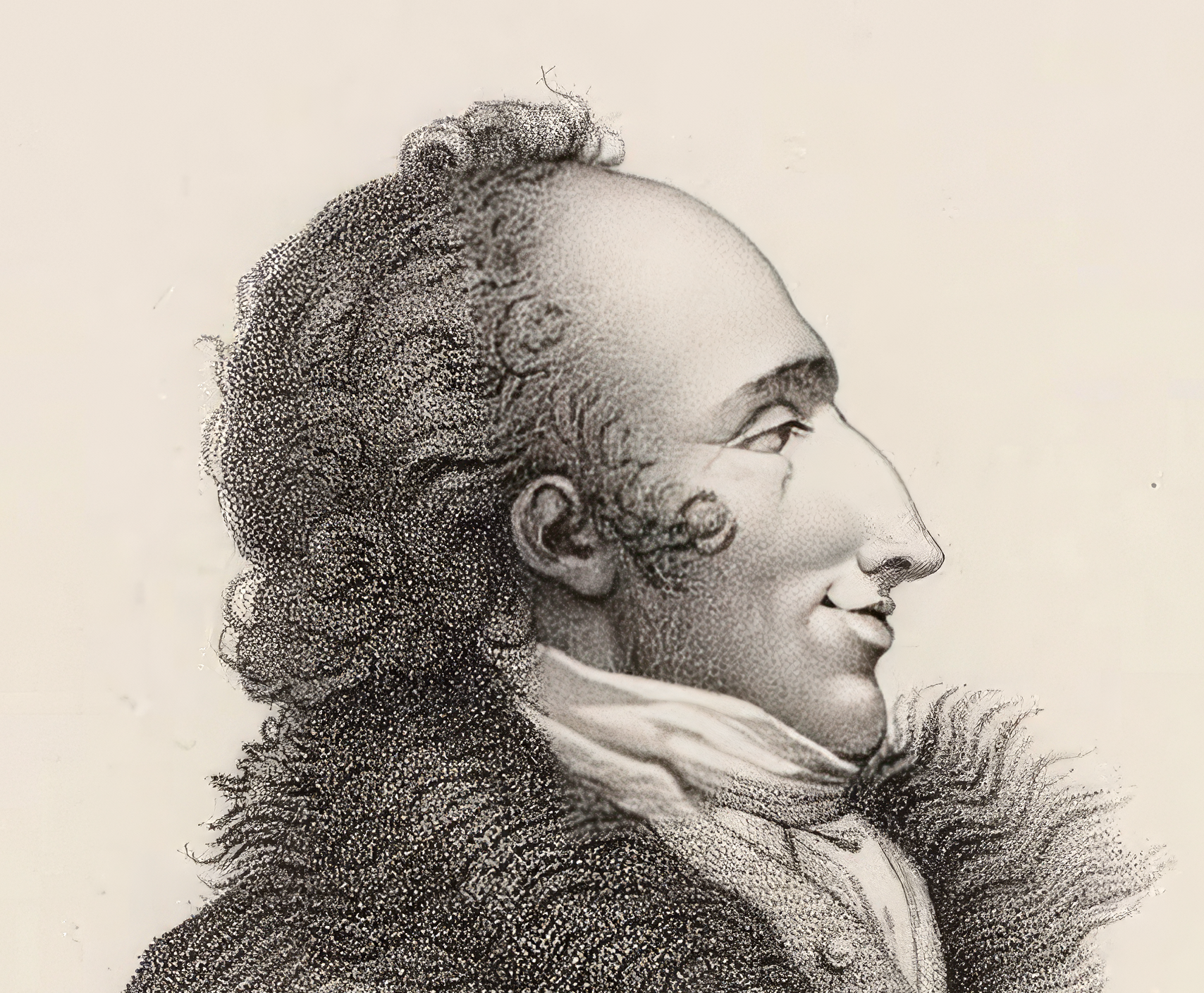
Federigo Fiorillo (1755 – c. 1823)
Download free sheet music from Federigo Fiorillo.
Master the essential techniques of the violin with the works of Federigo Fiorillo, a crucial figure in the history of violin pedagogy. Fiorillo is celebrated for his 36 Etudes (or Caprices), Op. 3, an indispensable collection that has been a cornerstone of violin education for over two centuries. We offer high-quality, printable PDF scores of these brilliant studies, perfect for students and teachers. These etudes serve as the vital bridge between foundational exercises and the advanced concerto repertoire, developing nuanced bowing, dexterity, and musicality. Download these
...The Enigmatic Master of the Etude
Every serious violin student knows the name Fiorillo. It is a name synonymous with the tireless pursuit of technical mastery, encountered in the pages of the 36 Etudes or Caprices—a rite of passage for any aspiring virtuoso. Students wrestle with Fiorillo’s clever bowing puzzles, intricate fingerings, and tests of endurance. Yet, while the music is a fixture in practice rooms worldwide, the man behind it remains one of the most enigmatic figures of the Classical era. Federigo Fiorillo was a celebrated virtuoso who performed in Europe's greatest musical capitals, a respected composer who stood at the crossroads of musical history, and a man who, after helping to shape the future of his instrument, vanished almost without a trace.
A Musical Inheritance
Federigo Fiorillo was born in 1755 in Brunswick, Germany, into a distinguished musical family. His father was Ignazio Fiorillo, a successful Neapolitan opera composer and the esteemed Kapellmeister at the court of the Duke of Brunswick. Growing up in this vibrant musical environment, Federigo received a superb education, developing into a prodigy on both the violin and the viola. His father’s influence and the high standards of the court orchestra provided the perfect incubator for his talents, instilling in him the technical discipline and stylistic elegance that would define his career.
The Traveling Virtuoso
Like many ambitious musicians of his day, Fiorillo did not remain in his hometown. He embarked on a career as a traveling virtuoso, a path that took him across the continent. In 1777, he served as a musician at the Imperial court in St. Petersburg, Russia. By 1780, he had moved to Poland, and from 1782 to 1784, he held the prestigious position of concertmaster for the orchestra in Riga (now the capital of Latvia). This period established his reputation as a formidable performer and a capable musical leader.
His ambitions soon led him to the musical epicenter of Europe: Paris. Arriving in 1785, he made a sensational debut at the renowned Concert Spirituel, the city's most important public concert series. Parisian audiences were captivated by his virtuosity. During this time, Fiorillo composed several Sinfonie Concertanti, a popular genre featuring two or more solo instruments with orchestra. These works, which often featured him as a soloist on either violin or viola, placed him firmly within the circle of the burgeoning French school of violin playing, alongside its great pioneer, Giovanni Battista Viotti.
The London Years and the Haydn Connection
Around 1788, Fiorillo crossed the English Channel and settled in London, which was then a bustling and lucrative center for music. It was here that he entered the most historically significant phase of his career. He became the principal violist of a professional string quartet organized by the great impresario and violinist Johann Peter Salomon.
This position placed Fiorillo at the very heart of music history. It was Salomon who, in 1790, famously traveled to Vienna and convinced the legendary Joseph Haydn to come to London. As a member of Salomon’s inner circle, Fiorillo was an active participant in the triumphant London visits of Haydn. He almost certainly performed as a leading violist in the premieres of Haydn’s twelve "London" Symphonies, some of the greatest orchestral works ever composed. It is a remarkable thought: the same man whose etudes would train future generations of violinists likely sat in the orchestra under the direction of Haydn himself, helping to bring these masterpieces to life for the very first time.
The Enduring Legacy: The 36 Etudes
While his performances and other compositions were praised in his lifetime, Fiorillo’s lasting fame rests entirely on one pedagogical work: the 36 Etudes (or Caprices) for Violin, Op. 3, published in 1793. This collection was a work of genius, created by a composer who possessed a complete understanding of the violin's technical and expressive possibilities.
The etudes are not merely mechanical exercises; they are concise and elegant musical pieces, each designed to isolate and conquer a specific technical challenge. Their true importance lies in their pedagogical position. They serve as the indispensable bridge between the foundational studies of Rodolphe Kreutzer and the transcendentally difficult caprices of Niccolò Paganini. Fiorillo’s work prepares the student for the advanced demands of the Romantic concerto repertoire by systematically developing a complete command of the bow. The etudes are a masterclass in bowing techniques, covering every essential stroke: detaché, legato, staccato, spiccato, and complex slurring patterns.
Beyond bowing, the collection addresses shifting, intonation in difficult keys, double stops, arpeggios, and the development of left-hand velocity. Etudes like the famous No. 28, with its relentless focus on shifting and string crossing, have become legendary hurdles for students. By completing Fiorillo’s 36 Etudes, a violinist acquires the technical polish and control necessary to tackle the works of Beethoven, Mendelssohn, and Brahms.
An Enigmatic End
After a successful period in London, where he also played viola in the orchestra of the King's Theatre, Fiorillo’s life becomes shrouded in mystery. He appears to have ceased performing and publishing after the early 1800s. His final years are a blank, and the exact date and place of his death are unknown. Most musicologists believe he died around 1823, possibly in London, though some sources suggest Amsterdam or Paris.
This quiet, uncertain end stands in stark contrast to the clarity and permanence of his contribution to music. Though the details of his life may be lost to history, Federigo Fiorillo’s musical voice speaks clearly every day in countless practice rooms around the globe. He is the enigmatic master whose brilliant pedagogical vision continues to guide violinists on their arduous journey toward mastery.
Bachmann, Alberto. An Encyclopedia of the Violin. Da Capo Press, 1966.
Dubourg, George. The Violin: Some Account of That Leading Instrument and Its Most Eminent Professors. R. Cocks and Co., 1852.
Stowell, Robin. The Cambridge Companion to the Violin. Cambridge University Press, 1992.
Trimpert, Dieter. "Fiorillo, Federigo." Grove Music Online. Oxford University Press, 2001.
Follow us :


Sheet Music International - Copyright 2026 all rights reserved