Your Request is under process, Please wait.

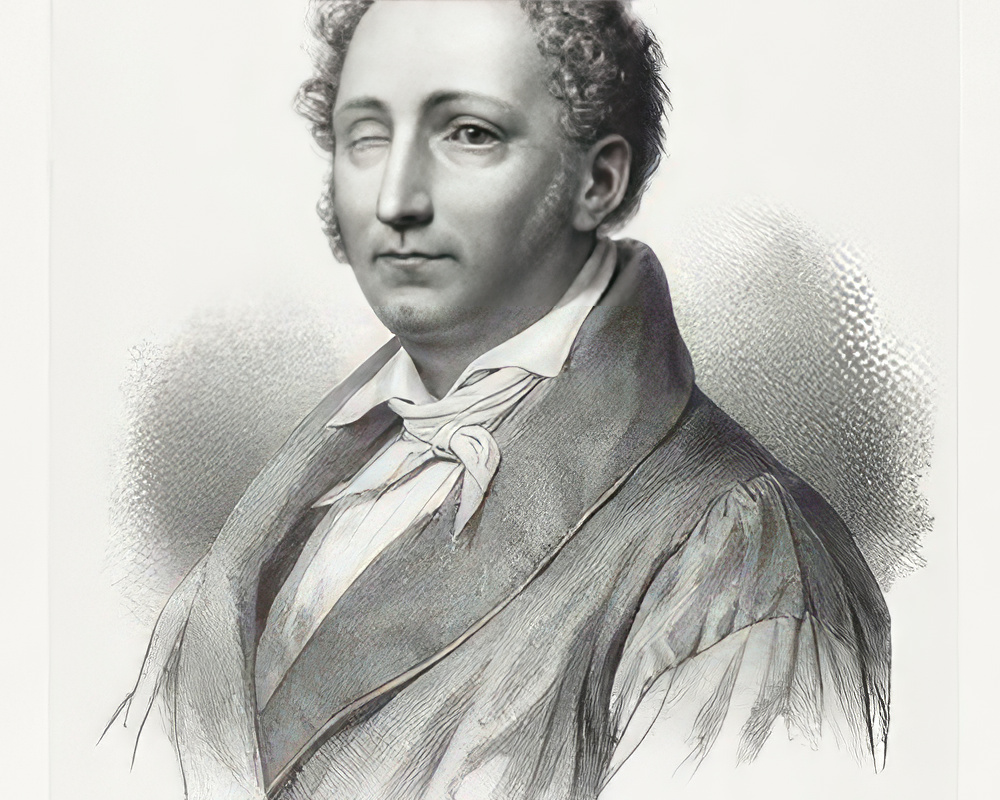
Friedrich Daniel Rudolf Kuhlau (1786-1832)
Download free sheet music from Friedrich Kuhlau.
Explore the works of Friedrich Kuhlau, a composer celebrated by piano students and flute virtuosos alike. Often called the "Beethoven of the Flute," this German-Danish composer created one of the most significant and enduring bodies of work for the instrument. At the same time, his brilliant and perfectly crafted piano sonatinas have become an essential cornerstone of pedagogical literature, guiding generations of developing pianists. His music is the epitome of Classical and early Romantic charm, bridging the gap between the era of Mozart and the innovations of Beethoven
...The Beethoven of the Flute
In September 1825, a Danish composer and a few friends made a pilgrimage to the town of Baden, just outside Vienna. Their goal was to meet the man they admired above all others: Ludwig van Beethoven. The meeting was a resounding success. A famously convivial and boisterous evening unfolded, filled with wine, food, and exuberant conversation shouted into the deaf composer's ear-trumpet. The two composers found they were kindred spirits. In a fit of mutual admiration, they began scribbling musical puzzles—canons—on scraps of paper for each other. The next morning, Beethoven sent a note to his new friend, playfully referencing the previous night's festivities and affectionately addressing him as the "great Kühlau." This single, memorable encounter encapsulates the stature of Friedrich Kuhlau: a composer deeply respected by the greatest master of the age, and a brilliant musician whose own work stands as a vital bridge between the Classical and Romantic worlds.
A German Talent, A Danish Home
Friedrich Kuhlau was born in Uelzen, Germany, into a poor family. His grandfather and father were both military oboists. Tragedy struck early when, at the age of seven, he slipped on ice and lost his right eye in the resulting accident. Despite this and his family's modest means, his prodigious musical talent was undeniable. He studied piano and composition in Hamburg with the respected teacher C.F.E. Schwenke. His career as a concert pianist and composer was just beginning to blossom when his life was upended by the Napoleonic Wars.
In 1810, to avoid being conscripted into Napoleon Bonaparte's army, the 24-year-old Kuhlau fled Germany. He made his way to Copenhagen, Denmark, a city that would become his beloved adopted home. He arrived with little more than his talent and ambition, initially supporting himself as a piano teacher and chamber musician. His skill was quickly recognized, and in 1813 he was appointed as a non-salaried court musician. By 1818, he had become a salaried Royal Court Composer, and by 1828, he was awarded the title of Professor. The German refugee had become a central and celebrated figure in the musical life of Denmark.
The Beethoven of the Flute
Kuhlau’s most unique and enduring legacy is his immense contribution to the flute repertoire. It is this body of work that earned him the famous moniker "the Beethoven of the Flute." Remarkably, Kuhlau himself was not a flutist. He was a pianist. Yet, he possessed an uncanny and intuitive understanding of the flute’s character, its technical capabilities, and its expressive potential. He wrote for the instrument with a fluency and brilliance that few native players could match.
During Kuhlau’s lifetime, the flute was undergoing a significant evolution from the simple one-keyed Baroque instrument to the multi-keyed pre-Boehm system flute. His compositions took full advantage of this expanded range and technical agility. He composed sonatas, duos, trios, quartets, a quintet, and a concerto, all featuring the flute. These works are celebrated for their brilliant passagework, their beautiful melodic lines, and the sophisticated way in which Kuhlau treats the flute not as a mere decorative instrument, but as an equal partner in complex chamber music conversations. His works remain an absolute staple for flutists everywhere.
Music for the Developing Pianist
If the flute world claims Kuhlau as its own, the world of piano pedagogy is equally indebted to him. While he composed large-scale, virtuosic works for piano, including four piano concertos and numerous sonatas, his most beloved keyboard works are his sonatinas. Collections like his Op. 20, Op. 55, and Op. 59 are cornerstones of piano education.
These short, perfectly formed pieces are the ideal bridge for students moving from elementary exercises to the more demanding sonatas of composers like Muzio Clementi, Mozart, and Beethoven. Kuhlau’s sonatinas are not dry, mechanical exercises; they are musically charming and engaging works in their own right. They masterfully introduce students to the essential forms of the Classical era, particularly sonata-allegro form, while developing crucial techniques like scale passages, Alberti bass, and clear articulation. Millions of piano students over the past two centuries have had their first satisfying taste of the classical style through the delightful and intelligently crafted sonatinas of Friedrich Kuhlau.
A Champion of Danish National Opera
Having found a home and great success in Denmark, Kuhlau embraced the culture of his adopted nation. He became a key figure in the development of a Danish national operatic style. He composed a series of successful stage works for the Royal Theatre in Copenhagen, including Røverborgen (The Robbers' Castle) and Lulu.
His greatest triumph, and the work that cemented his status as a Danish national composer, was his music for the festival play Elverhøj (The Elf's Hill) in 1828. Written to celebrate a royal wedding, the work skillfully incorporates a number of Danish and Swedish folk melodies into a grand, romantic score. Elverhøj was an immediate and overwhelming success. It became a beloved national treasure, and its overture is still traditionally performed by the Royal Danish Orchestra in the presence of the monarch on state occasions. The German immigrant had given Denmark one of its most cherished national works.
A Life of Triumph and Tragedy
Despite his considerable professional success, Kuhlau’s personal life was marked by hardship. In addition to the loss of his eye as a child, his parents, whom he had brought to live with him in Denmark, were both killed in a devastating house fire in 1831. The fire not only claimed their lives but also destroyed the house and, tragically, the vast majority of Kuhlau’s unpublished manuscripts—a lifetime of work, gone in an instant. The emotional and financial toll of this catastrophe was immense, and Kuhlau’s health, already fragile, never fully recovered. He died just over a year later, in March 1832, at the age of 45.
He left behind a legacy defined by his immense gift for melody and his masterful craftsmanship. He was a composer who excelled at writing for others—for the flutists who needed a sophisticated repertoire, for the piano students who needed an encouraging guide, and for the Danish people who needed a national voice.
Mehring, Arndt. Friedrich Kuhlau in the Mirror of His Flute Works. Translated by Frank J. Mehring. Warren, MI: Harmonie Park Press, 2000.
Fog, Dan. Kompositionen von Friedrich Kuhlau: Thematisch-bibliographischer Katalog. Copenhagen: D. Fog, 1977.
Schiorring, Nils. "Kuhlau, Friedrich Daniel Rudolf." In The New Grove Dictionary of Music and Musicians, 2nd ed., edited by Stanley Sadie and John Tyrrell. London: Macmillan Publishers, 2001.
Forbes, Elliot, ed. Thayer's Life of Beethoven. Princeton, NJ: Princeton University Press, 1967.
Follow us : 


Sheet Music International - Copyright 2026 all rights reserved
| English: Sheet Music (PDF) | Free Scores | French: Sheet Music (PDF) | Free Scores | Greek: Sheet Music (PDF) | Free Scores |
| German: Sheet Music (PDF) | Free Scores | Spanish: Sheet Music (PDF) | Free Scores | Portuguese: Sheet Music (PDF) | Free Scores |
| Italian: Sheet Music (PDF) | Free Scores | Russian: Sheet Music (PDF) | Free Scores | Norwegian: Sheet Music (PDF) | Free Scores |
| Ukrainian: Sheet Music (PDF) | Free Scores | Polish: Sheet Music (PDF) | Free Scores | Dutch: Sheet Music (PDF) | Free Scores |