Your Request is under process, Please wait.

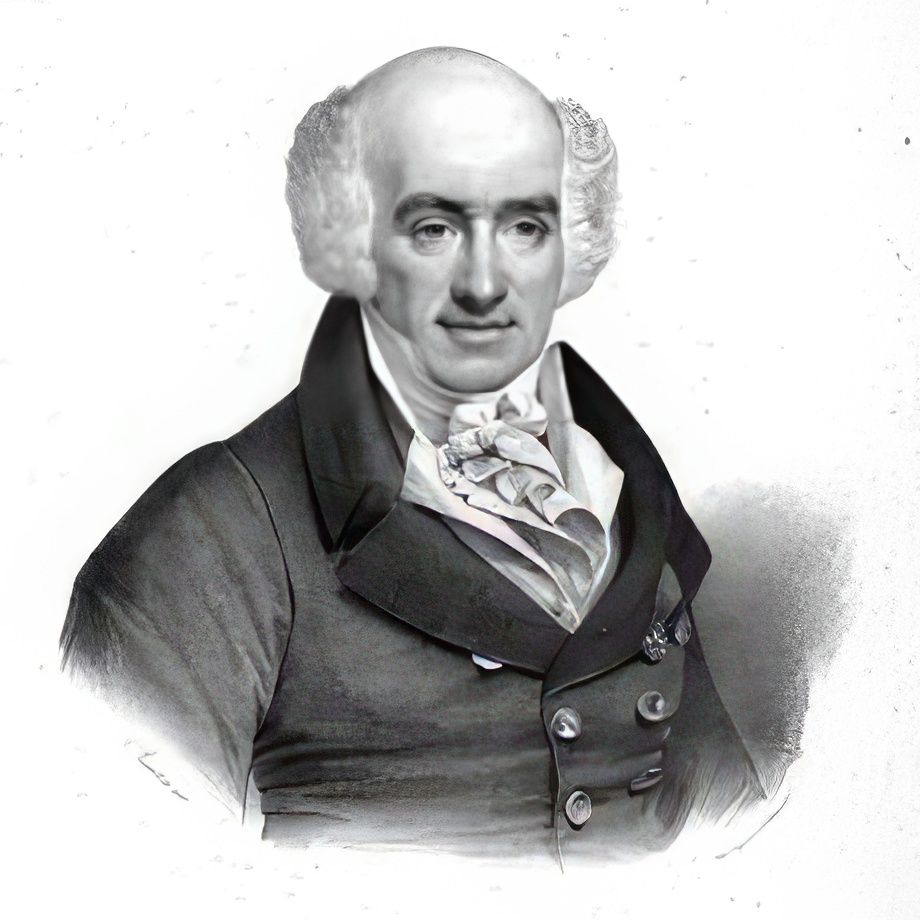
Giovanni Battista Viotti (1755-1824)
Download free sheet music from Giovanni Battista Viotti.
Discover the music of the "father of modern violin playing," a composer who revolutionized violin technique and laid the groundwork for the great Romantic concertos. This page offers a collection of works by Giovanni Battista Viotti, available as high-quality, printable PDF files. A celebrated virtuoso of the Classical era, Viotti’s compositions are prized for their grand scale, dramatic power, and lyrical beauty. Here you can find the scores for his groundbreaking violin concertos, including his masterpiece, the Concerto No. 22 in A minor, as well as his
The Father of Modern Violin Playing
When the 26-year-old Giovanni Battista Viotti made his debut at the prestigious Concert Spirituel in Paris in 1782, the audience was thunderstruck. The Parisian public was accustomed to a style of violin playing that was elegant and charming, but Viotti offered them something entirely new. His playing was grand, powerful, and intensely dramatic, filled with a heroic passion that was completely revolutionary. He instantly became the undisputed king of the Parisian violin scene, a sensation who overshadowed all his rivals. This dramatic arrival announced the dawn of a new era. Viotti was not just a performer; he was a visionary who would establish the techniques and compositional forms that would define violin playing for the next century and profoundly influence composers like Beethoven and Brahms.
The Prodigy from Piedmont
Giovanni Battista Viotti was born in a small village in the Piedmont region of Italy. He was a child prodigy on the violin, and his talent was so remarkable that he came to the attention of local nobility. He was taken into the household of Prince Alfonso dal Pozzo della Cisterna in Turin, who arranged for him to study with the great violinist Gaetano Pugnani. Pugnani was himself a student of Tartini, which gave Viotti a direct connection to the great Italian violin tradition of the Baroque. After several years of intense study, Viotti and Pugnani embarked on a grand concert tour of Europe, which eventually led the young virtuoso to Paris.
The Conquest of Paris
Viotti’s arrival in Paris in 1782 was a turning point in the history of the violin. He was the perfect artist at the perfect time. The violin bow had recently been perfected by the French maker François Tourte, creating a tool that was stronger and more flexible than the old Baroque bow. The Tourte bow allowed for a more powerful, sustained, and articulate sound, and Viotti was its greatest apostle. His broad, sonorous tone and dramatic, declamatory style were a revelation.
After his sensational debut, he became the favorite musician of Queen Marie Antoinette and a central figure in the musical life of pre-revolutionary Paris. He also became a highly influential teacher, and his pupils, including Pierre Rode and Rodolphe Kreutzer (the dedicatee of Beethoven’s famous sonata), would go on to disseminate his style across Europe, solidifying what became known as the "Paris School" of violin playing.
Flight to London: The Impresario and Winemaker
At the height of his fame, Viotti abruptly stopped playing public concerts and focused on opera, founding a new opera house, the Théâtre de Monsieur, in 1789. His new career, however, was cut short by the French Revolution. As a musician with royal connections, he was in a dangerous position, and in 1792 he fled to London.
In London, he quickly reestablished himself, making a triumphant concert debut and becoming the artistic director of the Italian opera at the King's Theatre. But his life was again disrupted by political turmoil. In 1798, he was accused of being a revolutionary agent for the French Jacobins and was ordered to leave the country. Though the charges were baseless, he was forced into exile near Hamburg for several years. When he was finally able to return to London, he abandoned his musical career and, in a disastrous business move, invested his entire fortune in a wine-importing business, which eventually failed and left him in financial ruin.
The Composer: Architect of the Violin Concerto
Viotti was a prolific composer, and his most important legacy lies in his 29 violin concertos. These works form a crucial bridge between the elegant concertos of Mozart and the heroic Romantic concertos of Beethoven and Brahms. Viotti expanded the scale of the concerto, giving it a new, almost symphonic grandeur. He wrote for a larger orchestra and gave it a more active, dramatic role. His concerto movements are longer, more structurally complex, and filled with a passionate, pre-Romantic intensity.
His Violin Concerto No. 22 in A minor is universally regarded as his masterpiece. It is a work of great emotional depth and dramatic power, and it was deeply admired by Johannes Brahms, who owned the manuscript and even urged the great violinist Joseph Joachim to perform it. It was Viotti's expansion of the concerto form and his rich, lyrical style that provided a direct model for Ludwig van Beethoven.
Exile and Final Years
After his wine business collapsed, Viotti was left impoverished. In 1819, he was able to return to Paris to take up a post as director of the Paris Opéra, but the institution was in administrative chaos, and he was forced to resign in 1821, saddled with the opera's debts. He returned to London, where he spent his final years in the company of friends. He died in 1824, a man whose revolutionary musical contributions had been somewhat obscured by his turbulent and often unlucky life. Today, he is revered not only for his beautiful music but as the foundational figure of modern violin playing.
References and Further Reading
White, Chappell. Giovanni Battista Viotti: A Thematic Catalogue of His Works. Pendragon Press, 1985.
Giazotto, Remo. Giovan Battista Viotti. Edizioni Curci, 1956 (Italian).
Schwarz, Boris and Chappell White. "Viotti, Giovanni Battista." In The New Grove Dictionary of Music and Musicians, 2nd ed., edited by Stanley Sadie and John Tyrrell. Macmillan Publishers, 2001.
Follow us : 


Sheet Music International - Copyright 2026 all rights reserved
| English: Sheet Music (PDF) | Free Scores | French: Sheet Music (PDF) | Free Scores | Greek: Sheet Music (PDF) | Free Scores |
| German: Sheet Music (PDF) | Free Scores | Spanish: Sheet Music (PDF) | Free Scores | Portuguese: Sheet Music (PDF) | Free Scores |
| Italian: Sheet Music (PDF) | Free Scores | Russian: Sheet Music (PDF) | Free Scores | Norwegian: Sheet Music (PDF) | Free Scores |
| Ukrainian: Sheet Music (PDF) | Free Scores | Polish: Sheet Music (PDF) | Free Scores | Dutch: Sheet Music (PDF) | Free Scores |