Your Request is under process, Please wait.

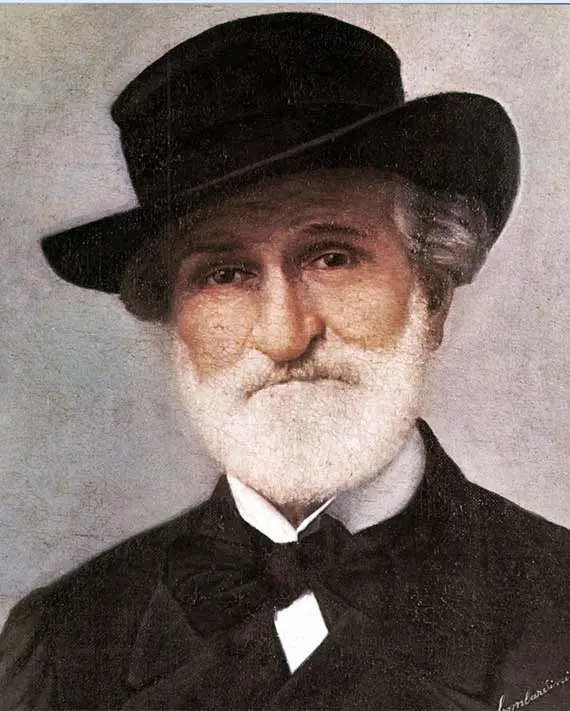
Giuseppe Verdi’s Rigoletto, which premiered in 1851, is one of the most significant and revolutionary works in the history of opera. It marks the beginning of his celebrated "middle period" and is the first of the incredible trio (Rigoletto, Il trovatore, La traviata) that cemented his international fame.
Based on a controversial play by Victor Hugo, the opera is a dark, intense, and emotionally devastating psychological drama. Verdi himself considered it his finest work, and it is easy tosee why. The opera famously had to overcome intense battles with the censors, who were horrified by its
...The Curse That Almost Wasn't
Giuseppe Verdi knew he was playing with fire when he chose Victor Hugo's Le roi s'amuse as the subject for his next opera. Hugo's play had been banned in Paris after a single performance, deemed dangerously anti-monarchical and morally corrupt. Verdi and his librettist, Francesco Maria Piave, initially titled their opera La maledizione (The Curse). The Austrian censors, who controlled Venice, took one look at the libretto and immediately banned it, calling it a work of repugnant immorality and obscene triviality. Verdi, who believed this was the greatest story he had ever set, refused to give up. In a fury, he wrote to the theater, You must either get the libretto approved as is, or I will not write the opera. A frantic negotiation began. The censors agreed to allow the work only if the king was demoted to a duke, the setting was moved from France, and the famously scandalous "sack scene" was altered. Verdi and Piave reluctantly agreed, and Triboletto—later changed to Rigoletto—was born.
A New World of Dramatic Realism
Rigoletto is a seismic shift in Verdi's career. He breaks decisively from the grand, chorus-heavy "poster art" style of Nabucco and I Lombardi. This is a tight, fast-paced, and deeply personal psychological thriller. For the first time, Verdi focuses on a character from the margins of society. The opera’s protagonist is not a king or a warrior, but a deformed, embittered jester. This focus on an outcast—a man whose physical ugliness masks a deep capacity for love—was revolutionary. Verdi and Piave also streamlined the action into a perfectly constructed drama where every single scene and musical number serves to advance the plot or reveal character. There are no wasted notes.
The Tinta of the Opera
Verdi always spoke of the tinta, or unique dramatic color, of each of his operas. The tinta of Rigoletto is one of darkness and violent contrast. The score is dominated by a sense of impending doom, established in the dark, brass-heavy prelude that introduces the "curse" motif. This gloom is then violently punctuated by the bright, frivolous, dance-band music of the Duke's court. Verdi uses this banda music not as mere background, but as a dramatic tool, a sound of shallow, heartless revelry that contrasts sickeningly with Rigoletto’s plotting and, later, Gilda’s abduction.
Rigoletto: A Baritone of Tragic Stature
The title role is arguably the greatest, and certainly one of the first, of the true "Verdi baritones". He is a character of profound contradictions. In court, he is a venomous sycophant, his music full of sharp, staccato, cackling phrases as he mocks the courtiers he despises. But in the presence of his daughter, Gilda, his music transforms, becoming warm, broad, and suffused with a desperate, loving tenderness. His great monologue in Act II, Cortigiani, vil razza dannata (Courtiers, vile, damned race!), is a masterpiece of psychological writing. It moves from explosive, declamatory rage to a pathetic, weeping plea as he begs the courtiers to return his daughter. Verdi creates a fully human, tragic figure that towers over all previous operatic protagonists.
Gilda: From Innocence to Sacrifice
Gilda’s musical journey is one of the opera’s most brilliant strokes. We first meet her as an innocent girl, sheltered from the world. Her music is light and airy, culminating in the famous coloratura aria Caro nome (Sweet name). This aria, with its delicate filigree and bird-like trills, is not just a vocal showpiece; it is a portrait of a young girl’s first, breathless infatuation. However, after her abduction and assault by the Duke, her music changes completely. Her vocal lines become longer, more lyrical, and weighted with sorrow, culminating in her decision to sacrifice her own life for the Duke. She evolves from a girl into a tragic woman.
The Duke: Charming, Amoral, and Unforgettable
The Duke of Mantua is one of Verdi’s most troubling and brilliant creations. He is a cynical, amoral predator, yet Verdi gives him the most beautiful and memorable music in the opera. His opening aria, Questa o quella (This woman or that one), perfectly establishes his carefree, faithless philosophy. And in Act III, he delivers La donna è mobile (Woman is fickle), perhaps the most famous tenor aria ever written. The tune is deliberately simple, catchy, and "populist". Verdi knew it was a hit; he famously forbade the tenor from whistling it outside of rehearsals to prevent it from leaking before the premiere. This musical charm is precisely what makes the Duke so dangerous: he is seductive, not monstrous, and his irresistible melodies are the very instrument of his corruption.
A Substance Beyond Superficiality
The opera’s blend of popular melody and profound drama was not lost on later composers. While some "elite" critics of the 20th century dismissed La donna è mobile as superficial, Igor Stravinsky, one of the giants of modernism, famously defended it. Stravinsky stated, I say that in the aria La donna è mobile, for example, which the elite thinks only brilliant and superficial, there is more substance and feeling than in the whole of Wagner's Ring cycle. This striking praise highlights the genius of Verdi's construction: a simple tune that perfectly reveals a complex character and, at the same time, functions as a critical, devastating plot device in the opera's finale.
The Curse Motif
The entire opera is framed by the maledizione (curse). It is the first thing we hear in the prelude and the last word Rigoletto screams in the finale. The curse is first hurled at Rigoletto by Count Monterone, whose daughter the Duke has dishonored. Rigoletto, who had mocked Monterone, is deeply shaken. The "curse" theme is a stark, powerful, C minor brass motive that re-appears at key moments in the drama, such as when Rigoletto discovers Gilda has been abducted. It is the opera's fatalistic engine, a dark thread that pulls Rigoletto from his initial act of cruelty to his final, devastating punishment.
The Criminal Underworld: Sparafucile
With Rigoletto, Verdi introduces a new level of realism, taking the audience into the seedy, criminal underworld. The assassin Sparafucile is a terrifying creation. His music is sparse, low, and chilling. When he first introduces himself to Rigoletto in Act I, their duet is set in the darkest orchestral colors, underpinned by a solo cello and contrabass. Sparafucile's music is almost static, and he repeatedly intones his own name, "Sparafucil," on a low F, a note that sounds like it is emerging from the grave. This is a world of professional, business-like evil, a stark contrast to the glittering, aristocratic evil of the court.
The Quartet: Four Characters, One Masterpiece
The quartet in Act III, Bella figlia dell'amore (Beautiful daughter of love), is widely considered one of the greatest ensembles in all of opera. It is a sublime moment of musical and dramatic genius, where four characters express their individual, conflicting emotions simultaneously. We hear the Duke's seductive, lyrical line as he woos Maddalena; Maddalena’s flirtatious, laughing, staccato replies; Gilda’s heartbreaking, sobbing line as she witnesses the betrayal; and Rigoletto’s dark, vengeful muttering as he comforts his daughter and plots his revenge. Each musical line is perfectly in character, yet they all weave together into a flawless, complex, and beautiful whole.
The Storm and the Sack
The opera's finale is a masterpiece of theatricality. As Rigoletto waits for Sparafucile to murder the Duke, a storm gathers. Verdi creates this storm in the orchestra with rumbling strings and flashes of piccolo, but he also adds a humming, wordless male chorus offstage to simulate the sound of the wind. This was a wholly original effect. Against this backdrop, Gilda, who has returned to the inn, overhears Sparafucile and Maddalena plotting. In a heart-wrenching trio, she voices her decision to die, her voice blending with the storm and the assassins' plotting. The final scene, where Rigoletto opens the sack expecting to find the Duke's body, only to find his own dying daughter, is one of the most powerful and devastating curtain-falls in all of drama.
Act I
Scene 1: The Duke's palace in Mantua A lavish ball is in progress. The licentious Duke of Mantua boasts of his philosophy of pleasure and his new romantic conquest: a beautiful, unknown girl he has been secretly visiting. He then flirts with the Countess Ceprano, enraging her husband. Rigoletto, the Duke's hunchbacked jester, enters and cruelly mocks the Countess's husband. Rigoletto suggests the Duke simply abduct the Countess. The courtiers, who hate Rigoletto for his sharp tongue, are furious. The party is interrupted by the elderly Count Monterone, who storms in to denounce the Duke for dishonoring his daughter. Rigoletto, to the Duke's amusement, mocks the old man. Monterone, enraged, turns on both the Duke and the jester and proclaims a terrible curse upon them. Rigoletto is visibly terrified by the curse.
Scene 2: A secluded street outside Rigoletto's house Rigoletto, still brooding on the curse, returns home. He is approached by Sparafucile, a professional assassin, who offers his services. Rigoletto inquires about his rates and files the man's name away for future reference. He then enters his house to greet his daughter, Gilda, whom he keeps hidden from the world. Their duet reveals his two-sided nature: his deep, almost obsessive love for his daughter, and his bitterness toward the world that mocks his deformity. He forces Gilda to promise she will never leave the house. Unbeknownst to him, the Duke, disguised as a poor student, has been watching. As Rigoletto leaves, the Duke slips into the garden. He and Gilda declare their love for each other. He tells her his name is "Gualtier Maldè". After he leaves, Gilda sings the rapturous aria Caro nome, reflecting on her newfound love. Meanwhile, the vengeful courtiers have gathered outside, believing Gilda to be Rigoletto's mistress. They plan to abduct her. They trick Rigoletto, who has returned, into helping them, telling him they are abducting Countess Ceprano. They blindfold him and have him hold the ladder. Only when he hears Gilda's cries from inside the house does he tear off the mask and realize what has happened. He collapses, crying, The curse!
Act II
A room in the Duke's palace The Duke is distraught, having returned to Gilda's house to find her gone. His courtiers then enter and joyfully tell him how they abducted Rigoletto's "mistress" and brought her to the palace. Realizing it is Gilda, the Duke is overjoyed and rushes off to her room. Rigoletto soon enters, feigning indifference while desperately searching for any sign of his daughter. When he finally realizes she is in the Duke's chambers, his facade breaks. He explodes in a furious tirade, Cortigiani, vil razza dannata, first cursing the courtiers, then pathetically begging them to return his daughter. Gilda emerges, in tears, and confesses her shame to her father. As they are left alone, Monterone is led past on his way to execution. He stops before a portrait of the Duke and laments that his curse was in vain. Rigoletto steps forward and, in a thunderous duet, swears a terrible oath of vengeance.
Act III
A remote inn on the banks of a river Rigoletto and Gilda are outside Sparafucile's inn. Rigoletto has brought Gilda here to prove how unfaithful the Duke is. Inside, the Duke, disguised as a soldier, sings his cynical aria La donna è mobile (Woman is fickle). He then begins to flirt with Sparafucile's sister, Maddalena. Rigoletto forces Gilda to watch as the Duke seduces Maddalena in the famous quartet, Bella figlia dell'amore. Heartbroken, Gilda finally agrees to flee the city. Rigoletto orders her to dress as a man and ride to Verona, saying he will follow. Once she is gone, Rigoletto pays Sparafucile half his fee to murder the man inside and put his body in a sack. A storm gathers. Gilda, unable to leave, returns in her male disguise and overhears Maddalena, who has become smitten with the Duke, begging her brother to spare his life. Sparafucile refuses, but then agrees to a compromise: if another traveler arrives before midnight, he will kill them instead and put their body in the sack. Gilda, in a final act of love, decides to sacrifice herself. She knocks on the door. She is stabbed and put in the sack. At midnight, Rigoletto returns. Sparafucile gives him the sack. Rigoletto gloats, but just as he is about to throw the sack into the river, he hears the Duke's voice from inside the inn, singing La donna è mobile. In terror, he rips open the sack and finds his daughter. Gilda revives long enough to beg his forgiveness, then dies. Rigoletto, screaming in agony, cries out, Ah! The curse!

Follow us :


Sheet Music International - Copyright 2026 all rights reserved