“Vedi! le fosche notturne spoglie” (Anvil Chorus) (from Il trovatore, 1853)
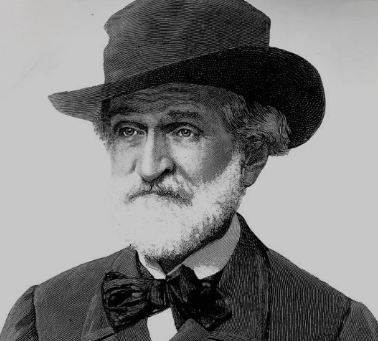
Giuseppe Verdi (1813-1901)
Few choruses in opera are as instantly recognizable by their sound as by their melody. Amidst a powerful orchestra and a full-throated choir, an unmistakable sound rings out—the sharp, rhythmic, percussive clang of hammer striking steel. This is the famous “Anvil Chorus” from Giuseppe Verdi’s Il trovatore, one of the most thrilling and atmospheric scenes in the entire repertoire.
The chorus appears early in Act II of an opera that is legendary for its gloriously, famously convoluted plot. A whirlwind of switched babies, a vengeful curse, feuding nobles, and long-lost brothers fighting on opposite sides of a civil war, Il trovatore is a high-stakes drama packed with an almost unbelievable number of hit tunes. The great tenor Enrico Caruso once joked that all it took for a successful performance was “simply the four greatest singers in the world.” But amidst the star-crossed lovers and vengeful nobles, Verdi takes a moment to paint a vivid portrait of an entire community.
The scene is a gypsy encampment nestled in the mountains of Biscay, Spain. The time is just before dawn. As the last vestiges of night fade, the gypsy men and women rise and begin their day’s work as blacksmiths. The chorus is their work song, a celebration of their nomadic life and their trade. “Vedi! le fosche notturne spoglie” (“See! The gloomy nocturnal clouds are vanishing”), they sing, as they stoke their fires and prepare for the day.
What makes the scene a stroke of theatrical genius is Verdi’s use of realism. The gypsies don’t just sing about their work; we hear them doing it. Written into the score are actual anvils, struck in time with the music, creating a powerful, industrial rhythm that drives the piece forward. It’s a sound of heat and labor—a sound that feels particularly potent here in the desert—that grounds the high drama of the opera in the tangible world of muscle and steel. The chorus sings of the simple pleasures that make their hard work worthwhile: the beauty of the gypsy woman and the life-giving power of a good glass of wine.
This moment of communal energy and good cheer is as brilliant for its dramatic placement as for its music. The leader of this gypsy band is the old woman Azucena, the keeper of the opera’s darkest secrets. Immediately after this vibrant chorus concludes, she will draw the others near the fire and sing her terrifying aria, “Stride la vampa” (“The flames are roaring!”), recounting the horrific memory of her mother being burned at the stake.
The “Anvil Chorus,” then, serves as a masterful dramatic foil. It is the bright, industrious, and life-affirming “before” to the dark, obsessive, and death-haunted “after.” It is a snapshot of a community, a celebration of labor, and a moment of vibrant life in an opera otherwise consumed by vengeance and fate, proving Verdi’s unparalleled ability to capture an entire world in just a few minutes of unforgettable music.