Your Request is under process, Please wait.

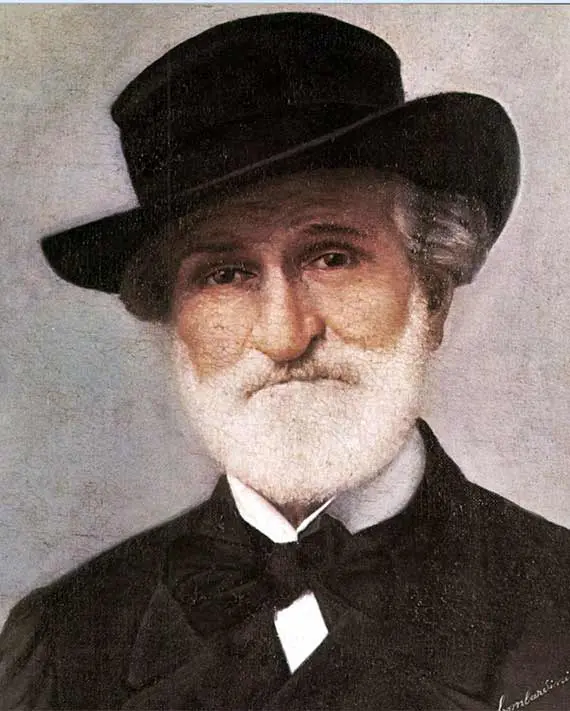
After completing his tragic masterpiece Otello in 1887, the world assumed Giuseppe Verdi, then in his seventies, had laid down his pen for good. He was the undisputed king of Italian opera, a national icon who had earned his retirement. But his brilliant librettist, Arrigo Boito, had one more idea. He tempted the old master with a perfect comic libretto based on Shakespeare’s The Merry Wives of Windsor. Verdi, who had longed to write a successful comedy ever since his lone attempt, Un giorno di regno, failed disastrously over fifty years earlier, simply couldn't resist.
The result, which
...After the premiere of Otello in 1887, Giuseppe Verdi, rich, revered, and approaching his 74th birthday, declared his career was over. He retreated to his farm at Sant'Agata, content to be a gentleman farmer. But his librettist, Arrigo Boito—a brilliant composer in his own right and the man who had coaxed Otello out of him—knew that the old master still had music to write. Boito had long dreamt of a great Italian comic opera based on Shakespeare, and he began to secretly craft a libretto from The Merry Wives of Windsor. He knew Verdi had a lifelong love for Shakespeare and a long-held desire to write a comedy. When he finally presented the draft, Verdi was overjoyed, writing, "Amen; so be it! So let's do Falstaff!… Let's not think of obstacles, of age, of illnesses!" He insisted he was writing it only for his own amusement, with no premiere in mind, but the "project" consumed him for the next three years. The result was not just a successful comedy; it was a revolutionary final testament.
Boito, Shakespeare, and the Italian Soul
Arrigo Boito's libretto is widely considered one of the most masterful in all of opera. It is a brilliant feat of literary alchemy. He skillfully condensed the sprawling plot of The Merry Wives of Windsor but elevated its central character by weaving in the more philosophical and poetic dimensions of Falstaff from Shakespeare's Henry IV, Parts 1 and 2. This gives Verdi’s Falstaff a depth beyond that of a mere buffoon. Boito’s text is a masterpiece of speed, wit, and linguistic dexterity, using intricate rhyme schemes and rapid-fire dialogue that all but demanded a new kind of musical setting. It gave Verdi the perfect vehicle to move beyond the operatic conventions he himself had perfected and invent a new, seamless, and conversational style.
A New Musical Language: A World Away from Aida
Listeners familiar with Rigoletto or Aida are often stunned when they first hear Falstaff. The traditional, full-stop arias and cabalettas are gone. In their place is a continuous, "through-composed" musical stream that perfectly mirrors the quicksilver dialogue. Verdi employs a dazzling, lightning-fast parlando style, where the vocal lines mimic the natural rhythms and inflections of speech, while the orchestra provides the melody, commentary, and punchlines. The music is a kaleidoscope of brief, brilliant melodic fragments that appear, combine, and vanish in an instant. The entire score is a marvel of economy and precision; there is not a single wasted note. It is the work of a master who no longer needs to prove anything and is simply reveling in his own craft.
The Orchestra as Protagonist
In Falstaff, the orchestra is arguably the main character. It is no longer a "big guitar" simply supporting the singers; it is a witty, agile, and independent commentator on the action. The orchestration is light, transparent, and endlessly inventive. Verde uses glittering woodwind textures to illustrate the women's laughter, sly trills to depict their plotting, and sudden, rude brass outbursts to punctuate Falstaff’s pomposity. Listen for the delicate, high-register writing for the strings and winds in Act III’s forest scene, or the lumbering, groaning theme for the cellos and basses that introduces the fat knight himself. The score has a symphonic complexity that invites comparisons to Mozart's Le nozze di Figaro and even the masterful orchestration of Richard Wagner, a composer Verdi was often pitted against.
Sir John: Baritone in Body and Soul
Verdi’s Falstaff is one of the greatest baritone roles ever written. He is far more than a simple comic victim. He is vain, gluttonous, and deluded, but he is also charming, intelligent, and, in the end, possessed of a profound, philosophical resilience. His music captures every facet of this complex personality. We hear his swagger in his pompous declarations, his genuine (if absurd) lyricism in his attempts at wooing, and his comical rage when his plans go awry. His two great monologues are highlights: the "Honor" monologue in Act I, a brilliant, cynical deconstruction of the concept, and his monologue in Act III, Mondo ladro (Thieving world), where, soaked and humiliated, he reflects on the world's wickedness before a good glass of wine restores his spirits.
The Merry Wives: Laughter in Four-Part Harmony
The true engines of the plot are the women: Alice Ford, Meg Page, Mistress Quickly, and Alice's daughter, Nannetta. They are smart, resourceful, and entirely in control. Their music is characterized by light, bubbling, and rapid ensembles. When they first discover Falstaff has sent them identical love letters, their indignation and amusement are expressed in a sparkling quartet. This "women's committee" operates with a musical precision and unity that constantly outwits the bumbling, disorganized men. Mistress Quickly, in particular, gets a wonderful comic scene, where her deep, formal "Reverenza!" (Your reverence!) to Falstaff is set to music that is both prim and dripping with mockery.
Ford's Jealousy: The Eye of the Storm
Amidst all the laughter, Verdi inserts a single, powerful moment of "old-fashioned" tragic drama: Ford's jealousy monologue, È sogno? o realtà? (Is it a dream? or reality?). Convinced by Falstaff's boasts that his wife is unfaithful, Ford explodes in a dark, violent, and brooding aria that would not feel out of place in Otello. This is a masterstroke. It provides a necessary dramatic anchor, a flash of real, dangerous passion that raises the stakes of the comedy. It also demonstrates that Verdi, even while writing a comedy, had not forgotten the dark, obsessive passions that defined his greatest tragedies. The contrast makes the surrounding laughter even more brilliant.
Fenton and Nannetta: The Lyrical Heart
Floating above the chaos of plots and counter-plots are the two young lovers, Fenton and Nannetta. Verdi deliberately sets their music apart from everyone else's. While the other characters scheme in rapid parlando, the lovers sing in high, soaring, lyrical phrases. Their music is sweet, pure, and suspended in time, a heartfelt nod to the romantic style of Verdi's own youth. Their stolen kisses are punctuated by delicate string phrases, and Nannetta's exquisite aria in the final scene, Sul fil d'un soffio etesio (On the breath of a gentle breeze), is a moment of pure, moonlit magic. They represent the genuine, uncomplicated love that triumphs amid the folly of the adult world.
The Final Fugue: "Tutto nel mondo è burla"
The opera's climax is not a grand, passionate aria, but the most academic of all musical forms: a fugue. After Falstaff has been tormented in Windsor Great Park and all identities are revealed, the entire cast joins together for a brilliant, complex, ten-voice fugue on the text "Tutto nel mondo è burla" (All the world is a joke). It is perhaps the most astonishing ten minutes in all of Verdi's work. Here, the 79-year-old composer uses the most "learned" form of Western music to express the ultimate comic philosophy: that life is a farce, and the only sane response is to laugh at it, and at ourselves. It is Verdi’s final, magnificent artistic statement, a joyful, life-affirming, and profoundly wise farewell to the stage.
Act I
Scene 1: The Garter Inn Sir John Falstaff, a portly and penniless knight, is drinking at the Garter Inn with his two thuggish companions, Bardolfo and Pistola. Dr. Caius bursts in, accusing Falstaff of robbing him and Bardolfo and Pistola of getting him drunk. Falstaff nonchalantly dismisses him. After Caius storms out, Falstaff reveals his new plan to restore his fortunes: he will seduce two wealthy married women, Alice Ford and Meg Page. He has written identical love letters to both. He orders Bardolfo and Pistola to deliver them, but they refuse, claiming it is beneath their "honor". Falstaff, furious, delivers his famous "Honor" monologue, mocking the concept as nothing but a word, before chasing them out of the inn with a broom.
Scene 2: Ford's garden Alice Ford and Meg Page are together, comparing the identical love letters they received from Falstaff. They are joined by Mistress Quickly and Alice's daughter, Nannetta. The four women are highly amused and indignant, and they resolve to teach the insolent knight a lesson. Meanwhile, Ford's jealous husband, has been warned of Falstaff's plan by the disgruntled Bardolfo and Pistola. Ford, accompanied by Dr. Caius (whom he intends for Nannetta to marry) and Fenton (whom Nannetta actually loves), also plots his own revenge. The women decide to send Mistress Quickly to Falstaff to arrange a rendezvous. In the ensuing confusion, Nannetta and Fenton manage to steal a few quick kisses.
Act II
Scene 1: The Garter Inn Bardolfo and Pistola, now secretly in Ford's pay, beg Falstaff's forgiveness. Mistress Quickly arrives and, with great comic formality, delivers a message: Alice Ford will receive him at her home that very day, between two and three o'clock, when her husband is always out. She adds that Meg Page is also jealous and wants a meeting. Falstaff is triumphant. Moments later, a "Signor Fontana" (Ford in disguise) is introduced. He claims to be in love with Alice, but says she is too virtuous. He offers Falstaff a large bag of money to seduce her, hoping that once her virtue is compromised, she might be willing to accept "Fontana" as well. Falstaff gleefully accepts, boasting that he already has a rendezvous with Alice in a few minutes. Ford is left alone, consumed by a furious, jealous rage.
Scene 2: A room in Ford's house The women prepare their trap. Alice and Meg are plotting, while Nannetta cries because her father insists she marry the old Dr. Caius. Alice reassures her. They have a large laundry basket and a screen ready. Mistress Quickly announces Falstaff's arrival. Alice begins to flirt with him, but they are soon interrupted by Mistress Quickly, who announces that Meg Page is at the door. Falstaff, panicked, hides behind the screen. Meg enters, and the "interruption" is followed by a real one: Quickly rushes in to announce that a furious Ford has arrived with a band of men to search the house. As Ford and his men begin to tear the room apart, the women hide Falstaff inside the massive laundry basket. In the chaos, Nannetta and Fenton slip behind the screen for a secret kiss. Ford, hearing the sound, assumes Falstaff is behind the screen and knocks it over, only to discover his daughter and his rival, Fenton. He is enraged, but Alice quickly orders her servants to empty the dirty laundry—and Falstaff—out the window and into the River Thames below. The crowd rushes to the window to laugh at the sputtering knight.
Act III
Scene 1: Outside the Garter Inn A wet and shivering Falstaff curses the wicked world. He orders a glass of mulled wine, which slowly restores his spirits. Mistress Quickly arrives again, convincing the skeptical knight that it was all a mistake. She gives him a new note from Alice, asking him to meet her at midnight in Windsor Great Park by Herne's Oak. He must come disguised as the "Black Huntsman," a ghostly figure from local legend. Falstaff, his vanity restored, agrees. The women, Ford, and all the others have been hiding and listening. They plan the night's final masquerade. Ford, still plotting, secretly tells Dr. Caius to come dressed as a monk; he will marry Caius to Nannetta, who will be disguised as the Queen of the Fairies. Mistress Quickly overhears this and plots a counter-move.
Scene 2: Windsor Great Park, at midnight Fenton arrives and sings a lovely aria. The women arrive and disguise him as a monk. Nannetta is dressed as the Queen of the Fairies, and she sings her beautiful aria, Sul fil d'un soffio etesio. Falstaff arrives, wearing antlers. Just as he begins to embrace Alice, he is interrupted by the disguised townspeople, who emerge dressed as nymphs, elves, and demons. They surround Falstaff, accusing him of sacrilege, and proceed to pinch, poke, and torment him mercilessly. In the chaos, Falstaff recognizes Bardolfo by his glowing red nose and realizes he has been duped. He takes the joke in good stride. Ford then calls for the wedding. He brings forward Dr. Caius (as a monk) and the "Queen of the Fairies". Alice brings forward another couple, also in masks. Ford performs a double wedding. When everyone unmasks, he is horrified to find he has married Dr. Caius to Bardolfo (who was disguised as the "Queen") and, thanks to the second couple, has unwittingly blessed the marriage of Nannetta and Fenton. With everyone fooled, Falstaff leads the entire company in a magnificent final fugue, "Tutto nel mondo è burla" (All the world is a joke).

Follow us : 


Sheet Music International - Copyright 2025 all rights reserved
| English: Sheet Music (PDF) | Free Scores | Français: Partitions (PDF) | Musique gratuite | Ελληνικά: Παρτιτούρες (PDF) | Δωρεάν μουσική |
| Deutsch: Noten (PDF) | Kostenlose Partituren | Español: Partituras (PDF) | Música impresa | Português: Partituras (PDF) | Música gratuita |
| Italiano: Spartiti (PDF) | Partiture musicali | Русский: Ноты (PDF) | Бесплатные партитуры | Norsk: Noter (PDF) | Gratis noter |
| Українська: Ноти (PDF) | Безкоштовні партитури | Polski: Nuty (PDF) | Darmowe nuty | Nederlands: Bladmuziek (PDF) | Gratis partituren |