Your Request is under process, Please wait.

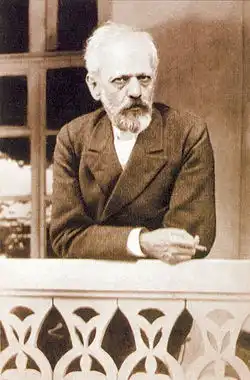
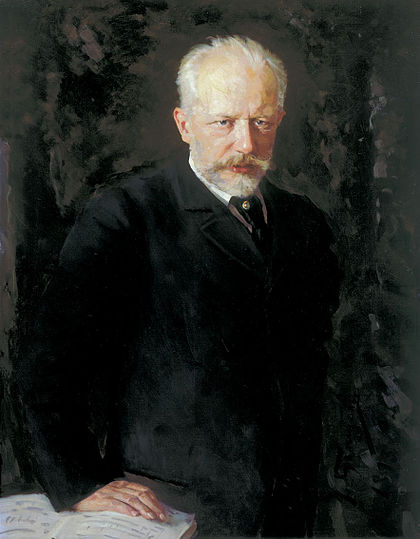
Pyotr Ilyich Tchaikovsky’s Cherevichki (The Tsarina's Slippers) is a magical, wintry, and brilliantly comic fairy tale. It is the mature composer's loving "revision" of his own earlier, "failed" opera, Vakula the Smith. This final version, which premiered in 1887, is a work of pure, unadulterated charm, a complete departure from the dark, psychological dramas of Eugene Onegin or The Queen of Spades. Based on Nikolai Gogol’s folk tale Christmas Eve, the opera is a fantastical love story.
The blacksmith, Vakula, must win the heart of the vain beauty, Oxana, who declares she will only marry
...A Composer's "Revenge": The Perfecting of a "Failure"
Tchaikovsky was a notoriously, almost pathologically, self-critical composer. In 1874, he had entered a competition with his new opera, Vakula the Smith. He was so confident in his work that he famously "forgot" the competition had been postponed, submitting his score a full year early. He won the prize, but the 1876 premiere was a resounding "failure." The audience and critics found it "cluttered," "too dense," and, most of all, too "Wagnerian" (a common insult at the time) in its use of heavy, symphonic orchestration. Tchaikovsky was humiliated. But, unlike the "blunders" of other composers (like Puccini’s Edgar), he knew the score contained some of his best music. A decade later, in 1885, Tchaikovsky was no longer an "upstart"; he was the "master," the celebrated composer of Eugene Onegin and the 1812 Overture. He returned to Vakula, took a "red pen" to his own youthful "excesses," and, with the confidence of a mature genius, "ruthlessly" revised it. He lightened the orchestration, cut the "academic" counterpoint, and, most importantly, added new music, including the brilliant new aria for Vakula and the famous "Hopak." The result was Cherevichki—a work that is faster, lighter, more "lyrical," and infinitely more charming. It is a rare, fascinating glimpse of a "master" collaborating with his "younger self."
The "Gogol-in-Music" Tradition
Like Glinka’s Ruslan and Pushkin, the source material for Cherevichki is a "founding text" of Russian art: Nikolai Gogol's 1832 short story, Christmas Eve. This story, a perfect blend of "fantasy," "folk-horror," and "slapstick comedy," was a "holy grail" for Russian nationalist composers. It was a story that was "Russian" to its very core, set in the "exotic" and "magical" world of Gogol’s Ukraine (then "Little Russia"). Tchaikovsky was the first to successfully set it, but he was not the last. His great friend and rival, Nikolai Rimsky-Korsakov, would write his own brilliant opera on the exact same story just a few years later, in 1895. But the two operas are a perfect "test case" for their two composers. Rimsky-Korsakov's Christmas Eve is a "pagan" opera, a "symphonic poem" about the "winter solstice" and "mythology." Tchaikovsky’s Cherevichki is a human opera. He cares less about the "myth" and more about the "psychology"—the "loneliness" of Vakula, the "vanity" of Oxana, and the "real" human love story that is just "interrupted" by a few "comic demons."
The "Nationalist" Tchaikovsky
Tchaikovsky is often, and incorrectly, seen as the "Western" composer, the "Germanic symphonist" who was the "enemy" of the "nationalist" Mighty Handful (the group led by Balakirev and including Mussorgsky, Rimsky-Korsakov, and Borodin). Cherevichki is Tchaikovsky's definitive, "in-your-face" nationalist opera. He, like his rivals, set out to prove he could write a "true" Russian folk opera. But where the "Handful" often tried to build their music from the "DNA" of folk song (what Mussorgsky called "musical truth"), Tchaikovsky took a different approach. He, the great melodist, simply quotes the folk songs directly. The opera is a brilliant "collage" of authentic Ukrainian folk melodies, "kolyadki" (Christmas carols), and furious, folk-dance rhythms like the Hopak. He then weaves these "borrowed" folk tunes into his own, grand, "Tchaikovskian" symphonic style. The "folk" music is used for the "human" world, to paint a picture of the "real" village of Dikanka.
The "Magic" of the Devil
Like his "Handful" rivals, Tchaikovsky creates a "two-world" system: the "human" and the "fantastic." But Tchaikovsky's "fantastic" world is not the "serious" magic of Rimsky-Korsakov. It is comic. The opera's "supernatural" element is the Devil (Bes), a bumbling, "low-bass" buffo character who is more "annoying" than "terrifying." His "evil plan" is not to "damn" humanity, but to "steal the moon" (a brilliant orchestral effect) so that his "crush," the witch Solokha, can have a "dark" night for her "affairs," and, as a "petty bonus," to stop Vakula (Solokha's son) from meeting his beloved Oxana. The opera's greatest "comic" scene, a direct lift from Gogol, is the famous "lovers in the sacks." Solokha, a "merry" witch, is entertaining a string of lovers (including the Devil). When Vakula returns home, she "hides" each of them, one by one, in the empty coal sacks on her floor. Vakula, in a "foul mood," thinks the sacks are just "trash" and hauls them all, with their "groaning" contents, to his forge. This is a commedia dell'arte farce, set by Glinka and perfected by Tchaikovsky.
A "Singer's Opera"
Unlike the "declamatory" style of Mussorgsky’s Boris Godunov (which Tchaikovsky famously "hated" at first), Cherevichki is, above all, a "singer's opera." Tchaikovsky, the "Russian Mozart," believed in the "aria." He believed in "melody." The score is loaded with some of the most beautiful "hidden gems" in his entire catalogue. Oxana's "mirror" aria in Act I, "Ach, v zerkal'tse ya glyazhu," is a masterpiece of characterization—a sparkling, "coloratura" waltz that perfectly captures the "vain," "childlike" spirit of a girl who is "in love" with her own reflection. Vakula's great aria in Act III, "Slyshit li, devitsa" (Does she hear, my maiden), is a "full-throated," verismo-style lament of such power and passion that it rivals Lensky's aria from Eugene Onegin. This is Tchaikovsky's great "synthesis": he takes the "folk" setting of his "Handful" rivals and infuses it with the "lyrical, psychological, bel-canto passion" of his "Western" heroes, like Gounod and Bizet.
From the Village to the Court
The opera's most brilliant "set-piece" is the Act III "journey" and "arrival." Vakula, in despair, decides to "sell his soul" to the Devil in exchange for the "Tsarina's slippers." The Devil, delighted, agrees, and the two fly (in a "dazzling" orchestral interlude) from the "dark" village to the "impossibly bright" Imperial Palace in St. Petersburg. This scene is Tchaikovsky at his "ballet-master" best. He gives us a "spectacle," a "divertissement" in the grand, French style of Delibes. The court erupts in a massive, stately, "old-fashioned" Polonaise (a "nod" to his own Eugene Onegin). This is Tchaikovsky, the "master symphonist," showing off his "Western," "classical" credentials. The scene where the "rustic" Vakula, in his "peasant" clothes, stands before the "god-like" Prince Potemkin is a moment of pure, magical, "fish-out-of-water" comedy, a "nationalist" fairy tale where the "simple" man, through his "love," wins the "prize" from the "all-powerful" (and "benevolent") Tsarina. Cherevichki is, in the end, a "perfect" Christmas opera—a work of deep, nostalgic, and "magical" charm.
Act I: The Witch's Ride
A small village in Dikanka, Ukraine, on Christmas Eve. The witch, Solokha (who is also the blacksmith Vakula's mother), is in her hut. The Devil (Bes) arrives. He is in love with Solokha, but he is angry at her son, Vakula, who "painted" an "insulting" picture of him on the church wall. As a "petty revenge," the Devil decides to "steal the moon," and he flies up the chimney, causing a "magic snowstorm" and "total darkness." In the dark, Solokha's other "lovers"—the Mayor and the Priest—stumble around. In another part of the village, the wealthy widower, Chub, and his friend, Panas, decide that the storm is "too thick" to go to the tavern, so Chub will "instead" go to Solokha's (whom he is also "wooing"). This leaves Chub's beautiful, but vain, daughter, Oxana, alone. Oxana sings her "mirror" aria ("Ach, v zerkal'tse ya glyazhu"), admiring her own reflection. The blacksmith, Vakula, arrives. He is deeply in love with her, but she mocks him. "Prove your love!" she says. Her friends arrive, showing off their new "cherevichki" (slippers). Oxana, in a "capricious" fit, declares: "I will only marry Vakula... if he brings me the slippers... that the Tsarina herself wears!" Vakula, in despair, runs out.
Act II: The Lovers in the Sacks
In Solokha's hut. The Devil, having stolen the moon, has returned, and is "warming himself" by the fire with Solokha. Their "love scene" is interrupted by a knock. It is the Mayor. Solokha hides the Devil in an empty coal sack. She then "flirts" with the Mayor, but they are interrupted by another knock. It is the Priest. The Mayor, terrified of being "discovered," climbs into another sack. The Priest, too, is interrupted by a knock. It is Chub (Oxana's father). The Priest climbs into a third sack. Solokha is "wooing" Chub, when her son, Vakula, returns home, in a "black mood" after Oxana's "impossible" demand. He throws his mother out. Seeing the "heavy" sacks on the floor, he assumes they are just "coal" or "trash" for his forge. He slings all three (groaning) sacks over his shoulder and, in a rage, marches out, "to end it all." Outside, in the village square, he sings a lament. He sets the sacks down. The "carolers" arrive. In the confusion, the sacks are opened, and the three "lovers" (the Mayor, the Priest, and Chub) are "discovered" and humiliated, to the "delight" of the entire village.
Act III: The Flight to St. Petersburg
Vakula, in "total despair," feels he has nothing left. He decides he must get the "slippers," even if he has to "sell his soul" to the Devil. He finds the Devil (who had escaped from the sack) and, using his "blacksmith's" strength and a "holy" cross, he "tames" him. He "jumps" on the Devil's back and commands: "Fly me... to St. Petersburg! To the Tsarina's palace!" The orchestra erupts in a "magical" interlude as they fly through the night sky. The scene changes to the "impossibly grand" Imperial Palace. A "grand Polonaise" is in progress. Vakula, still "commanding" the Devil, "parks" him in a corner and joins a group of "fellow" Cossacks, who are waiting to see the Tsarina (Catherine the Great). "His Serene Highness" (Prince Potemkin) enters, announcing the Tsarina. Vakula, in his "simple, rustic" way, "falls" at the Tsarina's feet. Charmed by this "simple" devotion, she asks what he "desires." He "humbly" asks for a pair of her "little slippers." Amused by this "innocent" request, she "laughs" and grants his wish, presenting him with her "most beautiful" pair. Vakula, "ecstatic," bows, "jumps" back on the Devil, and "flies" home.
Act IV: The Return and the Wedding
Back in the village, on Christmas morning. The people are "grieving." It is rumored that Vakula, in his despair, has "drowned" himself. Oxana, "hearing" this, is "shattered." She realizes she has "gone too far" and that she "truly loves" him. She sings a "mournful" aria, "lamenting" her "cruelty." At that moment, Vakula, "covered in glory," returns. He "humbly" presents the "Tsarina's slippers" to Chub. Chub, "overwhelmed" by this "impossible" feat, "forgives" Vakula for the "sack" incident. Vakula, "emboldened," then turns to Oxana. He "presents" her with the slippers. Oxana, "overcome with love and shame," "refuses" them, "blushing," and says: "No... I... I... I love you, Vakula... without any slippers!" The opera ends in a "massive, joyous" chorus, as the entire village "celebrates" the "true love" of Vakula and Oxana, and the "magic" of Christmas.

Follow us : 


Sheet Music International - Copyright 2025 all rights reserved
| English: Sheet Music (PDF) | Free Scores | Français: Partitions (PDF) | Musique gratuite | Ελληνικά: Παρτιτούρες (PDF) | Δωρεάν μουσική |
| Deutsch: Noten (PDF) | Kostenlose Partituren | Español: Partituras (PDF) | Música impresa | Português: Partituras (PDF) | Música gratuita |
| Italiano: Spartiti (PDF) | Partiture musicali | Русский: Ноты (PDF) | Бесплатные партитуры | Norsk: Noter (PDF) | Gratis noter |
| Українська: Ноти (PDF) | Безкоштовні партитури | Polski: Nuty (PDF) | Darmowe nuty | Nederlands: Bladmuziek (PDF) | Gratis partituren |