Your Request is under process, Please wait.

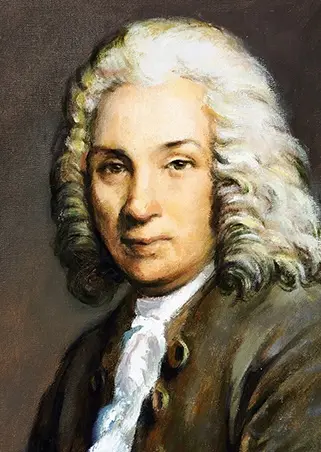
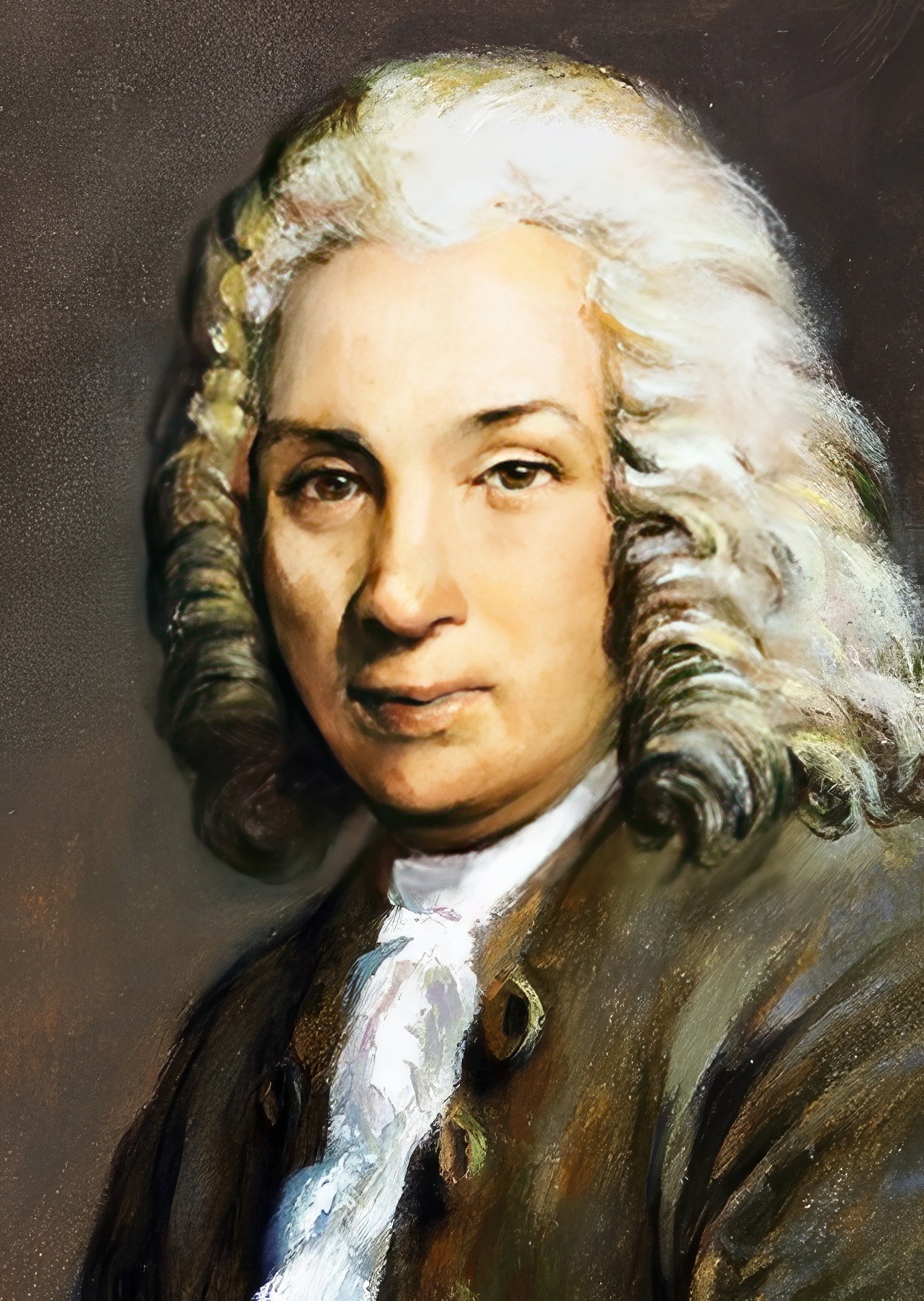
Carl Stamitz (1745-1801)
Download free sheet music from Carl Stamitz.
Discover the graceful and virtuosic music of Carl Stamitz, a leading composer of the celebrated Mannheim School and one of the most brilliant instrumentalists of the Classical era. We offer a wide selection of his works, including his pioneering concertos for viola and clarinet, all available as high-quality, printable PDF files for free. Stamitz’s music is the epitome of the elegant style galant, filled with lyrical melodies, clear structures, and sparkling solo passages. Perfect for performers and students exploring the repertoire beyond Mozart and Haydn, these scores provide a
...The Roving Star of the Mannheim School
In the mid-18th century, the court of Elector Carl Theodor in Mannheim was home to the most famous orchestra in Europe. It was an ensemble celebrated not just for its precision, but for its revolutionary sound—a dynamic, electrifying style that captivated audiences. Visitors wrote of the orchestra’s astonishing crescendos that swelled like a "steamroller," its surging melodic lines that shot upwards like a "rocket," and its dramatic use of dynamics. This was the sound of the Mannheim School, a musical revolution that helped forge the language of the Classical era. And at the very heart of this revolution was the Stamitz family. Carl Philipp Stamitz was born into this world of musical ferment, the son of its founding genius. He would spend his life as a virtuoso ambassador, carrying the brilliant Mannheim style to every major capital in Europe.
Born into a Musical Revolution
Carl Stamitz was baptized in Mannheim on May 8, 1745. His father was none other than Johann Stamitz, the Bohemian violinist and composer who had built the Mannheim orchestra into an unstoppable force. Carl and his brother Anton grew up surrounded by some of the finest musicians of the age. He received his first lessons in violin and viola from his father. After Johann’s untimely death in 1757, Carl’s training was continued by Christian Cannabich, his father’s successor and a master of the Mannheim style.
By the age of 17, Carl was a salaried second violinist in this "army of generals," as the English critic Charles Burney famously called the orchestra. For nearly a decade, he sat within the ensemble, absorbing its unique approach to phrasing, articulation, and orchestral drama. This experience was his true education, providing him with an unparalleled understanding of instrumental color and effect that would define his later compositions.
The Life of a Traveling Virtuoso
Unlike his father, Carl Stamitz was not destined for a stable court position. In 1770, filled with ambition, he left the security of Mannheim to forge an independent career as a traveling virtuoso. This peripatetic lifestyle would define the rest of his days. His first major stop was Paris, where he quickly established himself as a leading soloist. He appeared frequently at the prestigious Concert Spirituel, dazzling audiences with his performances on the violin, viola, and the viola d'amore. For a time, he served as court composer to Duke Louis of Noailles, and it was in Paris that he began to publish his symphonies and concertos in earnest.
In 1777, Stamitz moved to London, another of Europe’s great musical capitals. He continued his successful career as a performer, but his restless nature soon led him onward. For the next decade and a half, he was almost constantly on the move, a true roving star. He spent significant time in The Hague, performing at the court of William V, Prince of Orange. It was here, in 1783, that an apocryphal but tantalizing story places him performing a concert alongside a 12-year-old prodigy on the fortepiano: Ludwig van Beethoven. From the Netherlands, he embarked on a series of extensive tours throughout Germany and Eastern Europe, giving concerts in Leipzig, Berlin, Prague, and St. Petersburg, always performing, composing, and searching for the next lucrative commission or stable appointment.
A Pioneer of the Concerto
Carl Stamitz’s life as a traveling virtuoso directly shaped his compositional output. While he composed over 50 symphonies and a great deal of chamber music in the polished Mannheim style, his most significant and enduring contributions were his concertos. He wrote at least 60 of them, designed to showcase his own prodigious talents on a variety of instruments.
He was a key figure in the development of the sinfonia concertante, a popular hybrid genre that combined the scale of a symphony with the soloistic display of a concerto for two or more instruments. His works in this form are particularly charming, allowing for delightful conversational passages between the soloists.
Stamitz’s most important legacy, however, lies in his concertos for instruments that were, at the time, rarely given a solo spotlight. As a brilliant violist himself, he understood the instrument’s warm, expressive potential. His Viola Concerto in D major, Op. 1, is a landmark work and one of the first truly great concertos in the instrument’s repertoire. It remains a cornerstone for all aspiring violists today.
He was also one of the earliest champions of the clarinet. He wrote at least eleven concertos for the instrument, exploiting its rich, mellow tone and agile capabilities. These works, which predate the famous clarinet concerto by Wolfgang Amadeus Mozart, are masterfully written and remain beloved staples of the clarinet repertoire. In his concertos, Stamitz perfected the elegant, songful, and technically brilliant language of the Classical style galant.
Final Years and Obscurity
The final decade of Stamitz’s life was marked by a sad decline. His itinerant lifestyle had not brought him financial security, and his musical style began to seem old-fashioned as the more complex and emotionally profound works of Joseph Haydn and Mozart came to dominate the European musical landscape. The revolutionary Mannheim sound that had once seemed so new was now standard practice.
After years of fruitless searching for a stable post, he finally took a modest position as a teacher and conductor at the University of Jena in 1795. His final years were plagued by debt and obscurity. In a desperate attempt to solve his financial troubles, he is said to have dabbled in alchemy, hoping to turn base metals into gold. He died in Jena in November 1801, so impoverished that his possessions had to be sold to pay his creditors. It was a tragic end for a man who had once been one of the most celebrated musical stars in Europe, a virtuoso who carried the fire of the Mannheim revolution to the world.
Burney, Charles. Music, Men, and Manners in France and Italy, 1770. Edited by H. Edmund Poole. The Folio Society, 1969.
Cooper, B. A. R., and E. K. Wolf. "Stamitz." In Grove Music Online. Oxford University Press, 2001.
McVeigh, Simon. Concert Life in London from Mozart to Haydn. Cambridge University Press, 1993.
Newman, William S. The Sonata in the Classic Era. W. W. Norton & Company, 1963.
Wolf, Eugene K. The Symphonies of Johann Stamitz: A Study in the Formation of the Classic Style. Bohn, Scheltema & Holkema, 1981.

Follow us : 


Sheet Music International - Copyright 2025 all rights reserved
| English: Sheet Music (PDF) | Free Scores | Français: Partitions (PDF) | Musique gratuite | Ελληνικά: Παρτιτούρες (PDF) | Δωρεάν μουσική |
| Deutsch: Noten (PDF) | Kostenlose Partituren | Español: Partituras (PDF) | Música impresa | Português: Partituras (PDF) | Música gratuita |
| Italiano: Spartiti (PDF) | Partiture musicali | Русский: Ноты (PDF) | Бесплатные партитуры | Norsk: Noter (PDF) | Gratis noter |
| Українська: Ноти (PDF) | Безкоштовні партитури | Polski: Nuty (PDF) | Darmowe nuty | Nederlands: Bladmuziek (PDF) | Gratis partituren |