Your Request is under process, Please wait.
Severity: Warning
Message: fopen(/var/cpanel/php/sessions/ea-php72/ci_sessionb895799754f488bce42e5a37c35200912d6c1a40): failed to open stream: No space left on device
Filename: drivers/Session_files_driver.php
Line Number: 172
Severity: Warning
Message: session_start(): Failed to read session data: user (path: /var/cpanel/php/sessions/ea-php72)
Filename: Session/Session.php
Line Number: 143

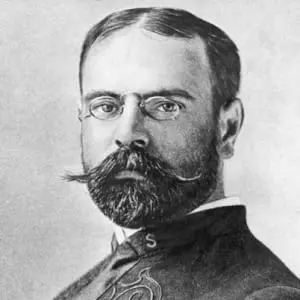
John Philip Sousa (1854-1932)
Download free sheet music from John Philip Sousa.
Experience the thrilling, patriotic, and unforgettable music of America's "March King." This page offers a complete library of works by John Philip Sousa, the composer who defined the sound of the American concert band. His marches are celebrated worldwide for their irresistible rhythm, brilliant melodies, and patriotic fervor. You can find high-quality, printable PDF scores for all of his most famous compositions, including the official National March of the United States, The Stars and Stripes Forever, the Marine Corps' own Semper Fidelis, and the ever-popular
...
 March, marching band, patriotic marches
The March King
In the winter of 1896, John Philip Sousa was on a steamship, crossing the Atlantic on his way home from a European vacation. He had just learned of the sudden death of his longtime band manager, and he paced the deck, troubled and homesick. Suddenly, above the rhythmic pulse of the ship's engines, a new sound began to form in his mind. "I began to sense the rhythmic beat of a band playing," he later wrote. "Throughout the whole tense voyage, that imaginary band continued to unfold the same themes, echoing and re-echoing the most distinct melody." He didn't write down a single note until he was back on American soil. The piece that had come to him fully formed was The Stars and Stripes Forever. This story of divine, patriotic inspiration is fitting for the man known to the world as "The March King," a composer and bandleader whose music became the very soundtrack of American optimism.
A Musician's Son in Civil War Washington
John Philip Sousa was born in Washington, D.C., just a short walk from the Marine Barracks. His father was a trombonist in the U.S. Marine Band, and young Philip grew up surrounded by military music. He was a talented and mischievous boy who began studying music at a young age. By age 13, he had developed a plan to run away and join a traveling circus band. When his father found out, he took decisive action: he enlisted his son as an apprentice musician in the U.S. Marine Band to keep him out of trouble. Sousa would spend the next seven years in the band, mastering several instruments and learning the fundamentals of arranging and conducting.
Leading the President's Own
After a period working as a civilian conductor and composer in Philadelphia, Sousa received the call that would define the first phase of his career. In 1880, at the age of just 25, he was appointed the 17th Leader of the United States Marine Band. Known as "The President's Own," the band was the nation's most prestigious military ensemble, but Sousa found its standards and repertoire to be lacking.
He threw himself into the work, imposing strict discipline, rewriting the instrumentation, and transforming the band into a world-class concert organization. He served under five presidents—Hayes, Garfield, Arthur, Cleveland, and Harrison—and his band became a celebrated feature of Washington social life. It was during this time that he began composing the marches that would make him famous, including The Gladiator, The Thunderer, and Semper Fidelis, which he dedicated to the officers and men of the Marine Corps and which remains the official march of the U.S. Marine Corps.
The Sousa Band and International Fame
By 1892, Sousa was a national celebrity, but he had grander ambitions. He resigned his commission and formed his own civilian concert band. The Sousa Band was an immediate and massive success. For the next four decades, it was the most popular musical organization in the country, and arguably the world. Sousa was a brilliant showman and a shrewd businessman. He toured relentlessly, playing to packed houses across the United States. He and his band eventually embarked on several world tours, bringing American music to audiences across Europe, Australia, and Africa.
Sousa became one of the first global music superstars. His concerts were not just recitals of marches; they were carefully crafted entertainments, featuring brilliant instrumental soloists, popular tunes, light classical works, and always, a healthy dose of his own patriotic compositions that would whip the audience into a frenzy. His most famous march from this period, The Washington Post (1889), became an international sensation, lending its name to a popular new dance, the two-step.
The Business of Music and the Sousaphone
Beyond his fame as a performer, Sousa was an important advocate for musicians and composers. In the early days of recorded music, composers received no royalties when their music was recorded and sold. Sousa famously disliked recordings, calling the phonograph a "machine" and the sound "canned music." In 1906, he testified before the U.S. Congress in support of a new copyright law that would ensure composers were compensated for their work, a crucial step in protecting artists' rights.
His practical-mindedness also led to the creation of a new instrument. For marching, he found the standard concert tuba (often called a "rain-catcher" for its upward-facing bell) to be cumbersome and its sound difficult to project. He worked with the instrument maker J.W. Pepper to develop a new type of bass tuba with an upward-facing bell that could be carried on the shoulder, which became known as the sousaphone. It remains a staple of marching bands to this day.
An American Icon
John Philip Sousa composed 137 marches, a dozen operettas, and numerous other works. He was a wealthy and beloved public figure up until his death in 1932 at the age of 77. More than any other composer, his music captured the energy, optimism, and patriotic spirit of America at the turn of the 20th century. His melodies are woven into the fabric of the nation's life, heard at parades, sporting events, and fireworks displays. In 1987, by an act of Congress, his masterpiece, The Stars and Stripes Forever, was officially designated the National March of the United States of America, cementing his legacy as an icon of American culture.
References and Further Reading
Bierley, Paul E. John Philip Sousa: American Phenomenon. Integrity Press, 2001.
Bierley, Paul E. The Works of John Philip Sousa. Integrity Press, 1984.
Sousa, John Philip. Marching Along: An Autobiography. Hale, Cushman & Flint, 1928.
Heslip, Malcolm. Nostalgic Happenings in the Three Bands of John Philip Sousa. Westerville, OH, 2002.
Follow us : 


Sheet Music International - Copyright 2026 all rights reserved
| English: Sheet Music (PDF) | Free Scores | French: Sheet Music (PDF) | Free Scores | Greek: Sheet Music (PDF) | Free Scores |
| German: Sheet Music (PDF) | Free Scores | Spanish: Sheet Music (PDF) | Free Scores | Portuguese: Sheet Music (PDF) | Free Scores |
| Italian: Sheet Music (PDF) | Free Scores | Russian: Sheet Music (PDF) | Free Scores | Norwegian: Sheet Music (PDF) | Free Scores |
| Ukrainian: Sheet Music (PDF) | Free Scores | Polish: Sheet Music (PDF) | Free Scores | Dutch: Sheet Music (PDF) | Free Scores |