Your Request is under process, Please wait.

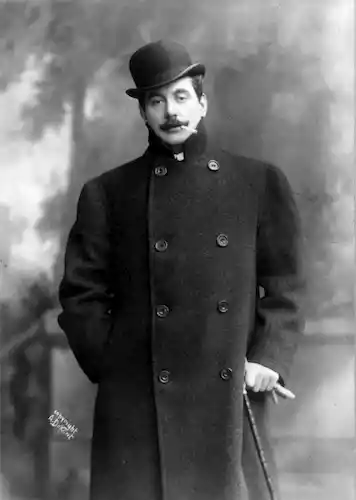
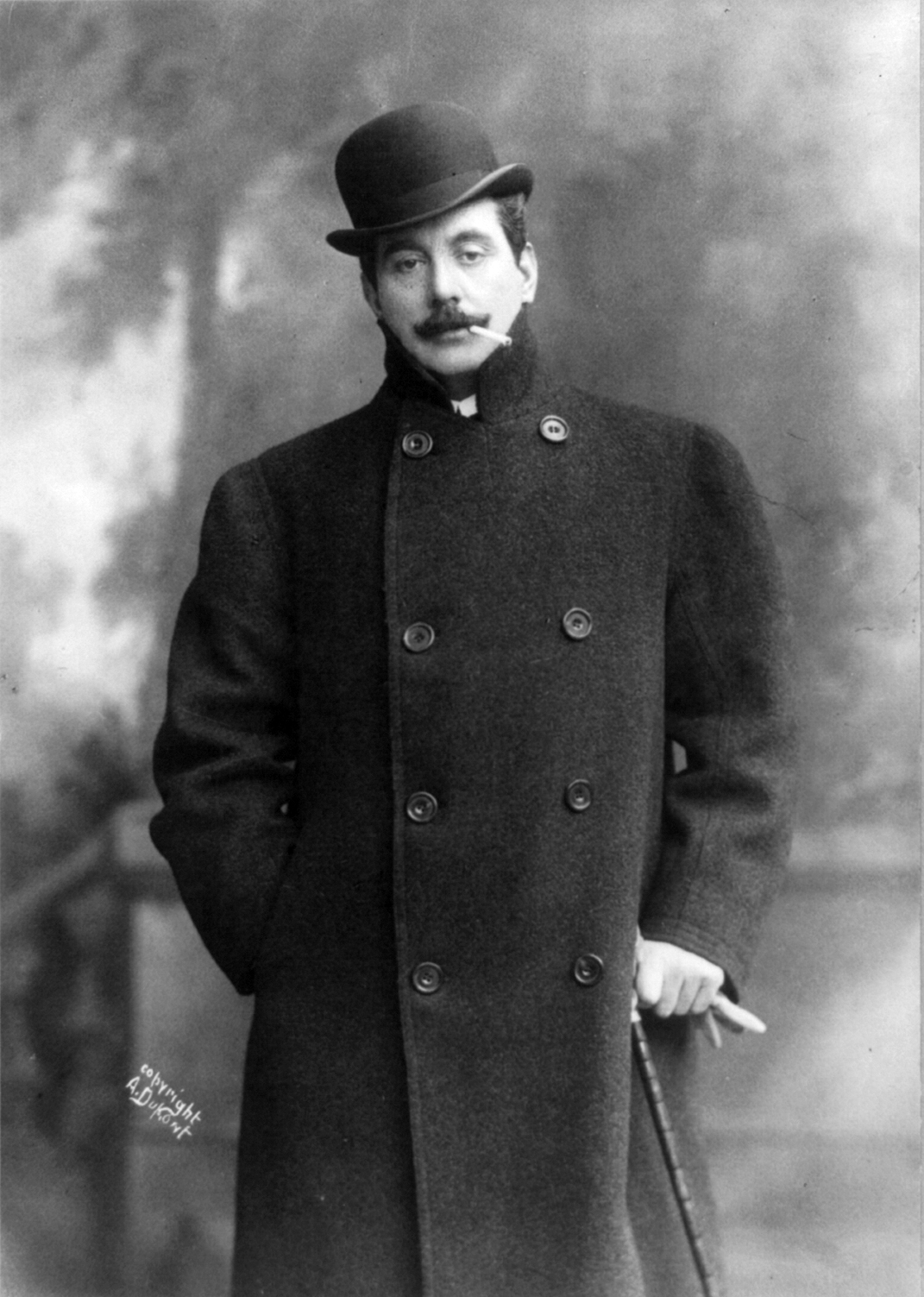
Giacomo Puccini (1858-1924)
Download high-quality, printable PDF sheet music from Giacomo Puccini, the undisputed master of Italian opera. This page is your ultimate resource for the soaring melodies and passionate drama that have made his works beloved around the world. Access instantly printable scores for iconic arias like "Nessun dorma" from Turandot, "O mio babbino caro" from Gianni Schicchi, and the heartbreaking solos from La bohème and Madama Butterfly. Whether you are a singer preparing for a role or a fan wanting to connect more deeply with the music, explore the life of this theatrical genius and
...The Walk That Changed Music History
In 1876, Giacomo Puccini was an uninspired 18-year-old, a reluctant student from a long line of church musicians, seemingly destined for a quiet life as an organist in his provincial hometown of Lucca. Then, one day, he heard that a performance of Giuseppe Verdi’s groundbreaking opera Aida was being staged in the nearby city of Pisa. With little money, he and two friends embarked on a 30-kilometer walk just to see the show. The experience was a revelation. The sheer dramatic power, the emotional intensity, and the theatrical grandeur of Verdi’s masterpiece struck him like a bolt of lightning. As he later recalled, "A door to a new musical world had opened for me." He walked back to Lucca a changed man, his path now crystal clear. He would not be a church organist; he would be a composer for the stage.
The Last Heir of Lucca
Giacomo Puccini was born into a musical dynasty. For over 120 years, his family had held the most important musical post in Lucca: maestro di cappella at the Cathedral of San Martino. His father, Michele, died when Giacomo was only five, and the city's musical authorities held the post for him, assuming he would inevitably follow in the footsteps of his father, grandfather, and great-grandfather. Puccini studied music but was a generally poor and undisciplined student, more interested in chasing girls and hunting than in mastering counterpoint. The organ loft bored him; his heart yearned for the theater.
After his life-altering experience with Aida, he dedicated himself to his studies with a newfound seriousness. With his mother’s support and a scholarship, he enrolled at the prestigious Milan Conservatory, the center of Italian operatic life. There, he studied with notable composers like Amilcare Ponchielli (famous for La Gioconda) and Antonio Bazzini. In Milan, he breathed the air of opera, absorbing the latest trends and honing his unique theatrical instincts.
From Milan to Manon Lescaut: The Forging of a Master
Puccini’s graduation piece, Capriccio sinfonico, an orchestral work, created a stir and caught the attention of Giulio Ricordi, the head of Italy's dominant music publishing house. Ricordi was a man of immense power and taste, the publisher who had guided Giuseppe Verdi to glory. He saw a spark of genius in the young Puccini and became his mentor, critic, champion, and surrogate father for the rest of his life.
Ricordi encouraged Puccini to enter a competition for a one-act opera. Though Puccini’s entry, Le Villi, did not win, Ricordi arranged for its successful premiere in 1884. His second opera, Edgar, was a failure, but Ricordi’s faith was unshaken. It was with his third opera, Manon Lescaut (1893), that Puccini finally had a runaway, international triumph. The opera was a passionate and daring adaptation of a story already set successfully by the French composer Massenet. By tackling the same subject and succeeding brilliantly, Puccini announced himself as a major force and the clear successor to the aging Verdi.
The Golden Age: La bohème, Tosca, and Madama Butterfly
Following the success of Manon Lescaut, Puccini entered the most productive and celebrated period of his career, producing the three operas that form the core of his legacy and remain among the most performed in the world.
La bohème (1896) is a tender, deeply moving portrait of the lives and loves of young, impoverished artists (bohemians) in the Latin Quarter of Paris. The opera masterfully balances lighthearted, comedic scenes with moments of overwhelming pathos, culminating in the tragic death of the fragile heroine, Mimì. Its score is a string of unforgettable melodies, including the famous arias "Che gelida manina," "Sì, mi chiamano Mimì," and the beloved duet "O soave fanciulla."
Tosca (1900), which premiered in Rome, was a stark contrast. Puccini himself called it a "shabby little shocker." It is a fast-paced, violent political thriller filled with lust, betrayal, torture, and murder, all unfolding with breathless intensity over a 24-hour period. Its raw, dramatic power and brilliant orchestration showcased a different side of Puccini's genius, producing iconic arias like the diva's prayer "Vissi d'arte" and the tenor's lament "E lucevan le stelle."
Madama Butterfly (1904) had one of the most famously disastrous premieres in opera history. The audience at La Scala hissed and jeered, and the opera was withdrawn after one night. Puccini, though devastated, knew the work had value. He revised it significantly, and its subsequent performances were a triumph. The opera tells the heartbreaking story of a young Japanese geisha who is callously abandoned by her American naval officer husband. Its exploration of cultural clash and devotion is one of Puccini's most emotionally potent creations, immortalized in the aria "Un bel dì vedremo" ("One fine day").
Perfectionism, Crisis, and the Final Masterpiece
Puccini was a notorious perfectionist and a slow, meticulous worker. He agonized over his libretti, often for years, and his output slowed considerably after his golden trio of operas. His life was also marked by personal crises, including a public scandal involving his wife's jealousy of a housemaid, which tragically ended in the maid's suicide.
Despite these challenges, he continued to evolve. He explored an American "Wild West" setting in La fanciulla del West (The Girl of the Golden West) and experimented with form in Il trittico (1918), a collection of three one-act operas that included the dark drama Il tabarro, the sentimental tragedy Suor Angelica, and the sparkling comedy Gianni Schicchi, which contains the universally beloved soprano aria "O mio babbino caro."
In his final years, Puccini embarked on his most ambitious project: Turandot, an opera based on a mythical fairy tale set in ancient China. He was fascinated by the story of the ice-cold princess Turandot and the prince, Calaf, who risks his life to win her love. He worked on it obsessively, aiming for a grand spectacle that would be the crowning achievement of his career. However, he was diagnosed with throat cancer. Racing against time, he worked feverishly on the final act but died before completing the final love duet.
At the opera's 1926 premiere at La Scala, his great friend and champion, the conductor Arturo Toscanini, conducted the score up to the point where Puccini had stopped writing. He then laid down his baton, turned to the audience, and said, "Here the opera ends, because at this point the Maestro died." It was a profoundly moving tribute to the composer's unfinished vision.
Legacy: The Voice of Verismo
Giacomo Puccini is the last and arguably most popular king of Italian opera. His works are staples of every opera house in the world, cherished for their magnificent, soaring melodies, their unerring sense of theater, and their profound emotional impact. While associated with the verismo (realism) movement, his style is more refined and lyrical. His true genius lay in his ability to create unforgettable characters, particularly his "piccole donne" (little women)—the vulnerable, suffering heroines like Mimì, Cio-Cio-San, and Liù—and to give their hopes and heartbreaks a voice that resonates with audiences everywhere.
Phillips-Matz, Mary Jane. Puccini: A Biography. Northeastern University Press, 2002.
Budden, Julian. Puccini: His Life and Works. Oxford University Press, 2002.
Carner, Mosco. Puccini: A Critical Biography. Holmes & Meier Publishers, 1992.
Greenfeld, Howard. Puccini: A Biography. G.P. Putnam's Sons, 1980.

Follow us : 


Sheet Music International - Copyright 2026 all rights reserved
| English: Sheet Music (PDF) | Free Scores | French: Sheet Music (PDF) | Free Scores | Greek: Sheet Music (PDF) | Free Scores |
| German: Sheet Music (PDF) | Free Scores | Spanish: Sheet Music (PDF) | Free Scores | Portuguese: Sheet Music (PDF) | Free Scores |
| Italian: Sheet Music (PDF) | Free Scores | Russian: Sheet Music (PDF) | Free Scores | Norwegian: Sheet Music (PDF) | Free Scores |
| Ukrainian: Sheet Music (PDF) | Free Scores | Polish: Sheet Music (PDF) | Free Scores | Dutch: Sheet Music (PDF) | Free Scores |