Your Request is under process, Please wait.

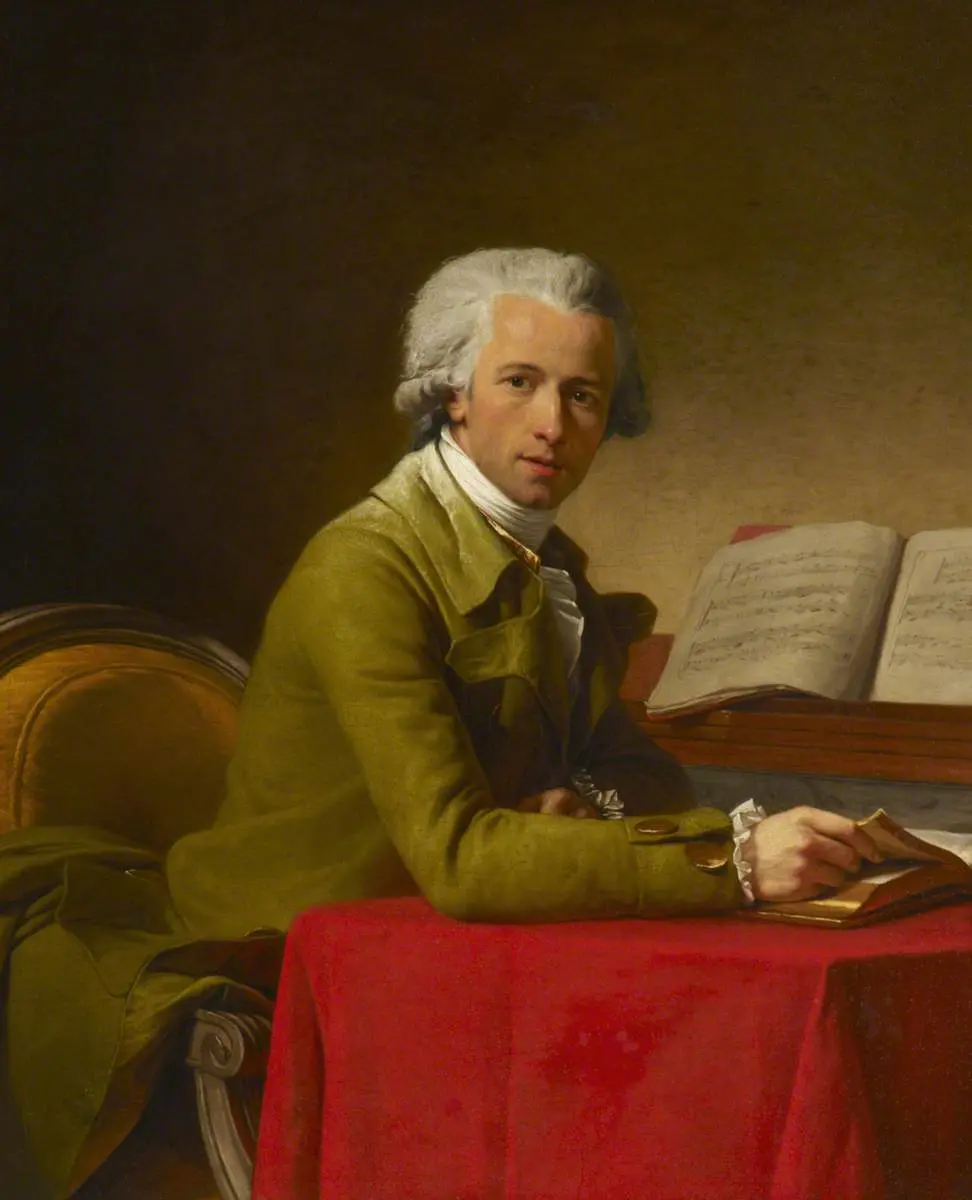
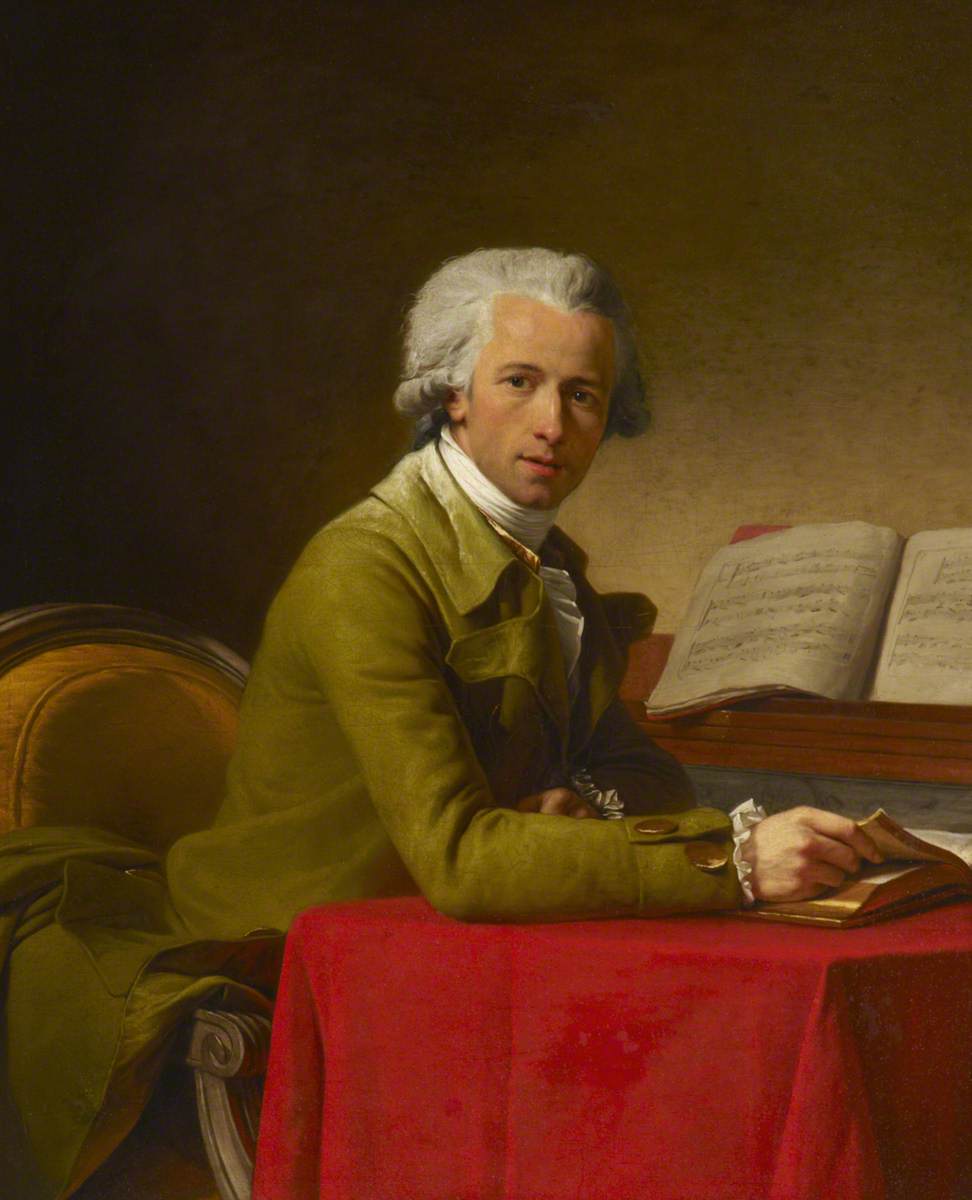
Ignaz Joseph Pleyel (1757 – 1831)
Download free sheet music from Ignaz Pleyel.
Discover the elegant and masterful compositions of Ignaz Pleyel, one of the most celebrated and multi-talented figures of the Classical era. Our digital library offers an extensive collection of his works, from charming string quartets to brilliant symphonies, all available as high-quality, printable PDF files. As both a favorite pupil of Joseph Haydn and a titan of music publishing and piano manufacturing, Pleyel's influence was immense. Our carefully prepared scores make it easy for musicians and ensembles to explore the accessible, melodious, and beautifully crafted music that
The Pupil Who Challenged His Master
In the winter of 1792, the concert halls of London were electric with anticipation, hosts to a musical showdown of epic proportions. On one side was the undisputed heavyweight champion of European music, Joseph Haydn, lovingly called "Papa Haydn," who was in the midst of his second triumphant visit to the city. On the other was the challenger: his own former student, Ignaz Pleyel. A concert promoter, hoping to capitalize on Haydn’s success, had invited Pleyel to lead a rival concert series. The London newspapers fanned the flames, billing the events as a battle between master and pupil. Yet, behind the sensational headlines, the "rivalry" was one of deep mutual respect. Haydn attended Pleyel’s concerts, Pleyel attended Haydn’s, and the two masters frequently dined together. Pleyel wrote, "He has been so good as to come to see me... He is always Papa Haydn to me." This remarkable episode reveals the stature Pleyel had achieved: a composer so popular and skilled that he could stand on the same stage as his legendary teacher, not as a mere imitator, but as a celebrated master in his own right.
From an Austrian Village to Haydn's Tutelage
Ignaz Joseph Pleyel was born in the small village of Ruppersthal in Lower Austria, the son of a schoolmaster. His prodigious musical talent was evident from a young age, attracting the attention of local nobility. This led to the pivotal moment of his youth when, around 1772, he was taken under the patronage of the Hungarian Count Ladislaus Erdödy. The Count recognized the boy’s potential and made an extraordinary investment in his future: he paid for Pleyel to study composition privately with the most famous musician in the region, Joseph Haydn, who was then serving the Esterházy court. For five years, Pleyel lived in Haydn’s household in Eisenstadt, becoming his star pupil. He learned the craft of composition directly from the source, absorbing Haydn's principles of form, melody, and orchestration. Haydn treated Pleyel like a son, and the student's admiration for his teacher was boundless. This apprenticeship shaped Pleyel’s musical voice, imbuing it with the clarity, balance, and graceful melody that were hallmarks of the mature Classical style. The relationship was so close that Haydn even helped Pleyel secure one of his first major professional posts.
Strasbourg and the Rise to Fame
After concluding his studies, Pleyel’s career began to flourish. Following a brief period in Italy, he secured the position of assistant Kapellmeister at the Strasbourg Cathedral in 1783, eventually rising to the lead role of maître de chapelle in 1789. This was a prestigious and stable appointment that gave him the freedom to compose prolifically. During his Strasbourg years, Pleyel’s fame skyrocketed across Europe. He wrote a vast number of works—symphonies, sinfonie concertanti, and especially string quartets—that were an immediate commercial success. His music was celebrated for being brilliant yet accessible, filled with beautiful melodies and crafted with unimpeachable technical skill. For a time in the late 1780s and early 1790s, Pleyel was arguably the most popular living composer in Europe. His works were published and performed more frequently than those of his contemporaries, including Wolfgang Amadeus Mozart and even his own teacher, Haydn. It was this immense popularity that led to his famous invitation to London in 1792 to lead the "Professional Concerts," the series that would run in parallel to Haydn’s. Though the London venture was a financial success and a personal triumph, Pleyel's life was about to be upended by the political turmoil sweeping across France.
Navigating the French Revolution
While Pleyel was in London, the French Revolution was entering its most radical and violent phase. As an employee of the Strasbourg Cathedral, a religious institution, and a foreigner, Pleyel fell under suspicion. Upon his return, he was arrested multiple times during the Reign of Terror. To save his life and prove his loyalty to the new French Republic, he was compelled to compose patriotic hymns and cantatas for revolutionary festivals. He bought land, became a naturalized French citizen, and managed to weather the storm. The ordeal, however, seems to have dampened his enthusiasm for a career dependent on aristocratic or church patronage. He saw a new path forward, not just as a composer, but as a businessman in the new, bourgeois society emerging from the revolution’s ashes. In 1795, he moved to the heart of this new world: Paris.
Maison Pleyel: The Publisher
In Paris, Pleyel embarked on the second great phase of his career by founding a music publishing house, "Maison Pleyel," in 1797. He leveraged his fame as a composer and his keen business sense to create one of the most important publishing firms of the early 19th century. He pioneered the publication of miniature study scores, making the masterworks of the classical era available to a wider audience of students and connoisseurs for the first time. His firm published the first complete edition of Haydn’s string quartets, a monumental project undertaken out of respect for his teacher. Maison Pleyel also published works by a who’s who of contemporary composers, including Luigi Boccherini, Muzio Clementi, and, most notably, an early French edition of Ludwig van Beethoven's piano sonatas and symphonies. His publishing house was instrumental in disseminating the Viennese classical style throughout Europe and cementing the legacies of its greatest masters. While he continued to compose during this period, his creative output slowed as his entrepreneurial activities took center stage.
Pleyel et Cie: The Piano Innovator
Having conquered the worlds of composition and publishing, Pleyel embarked on his third and perhaps most enduring venture. In 1807, he founded a piano manufacturing company, Pleyel et Cie. Although he was not a technical inventor himself, he had an exceptional ability to hire the best engineers and a clear vision for the type of instrument he wanted to create. Pleyel pianos quickly became famous for their distinctively clear, bright, and elegant tone, a stark contrast to the more powerful and robust sound of their main competitor, Érard. The Pleyel sound was particularly suited to the intimate atmosphere of the Parisian salon. The firm's reputation for quality and innovation grew, and Pleyel pianos became the instrument of choice for one of the world's greatest pianists: Frédéric Chopin. Chopin declared, "When I am in a bad mood, I play on an Érard piano and I find an easy, ready-made tone. But when I feel in form and strong enough to find my own sound, I must have a Pleyel." The endorsement cemented the Pleyel legend, and the Salle Pleyel, a concert hall opened by the company, became a premier venue in Paris.
Legacy
Ignaz Pleyel gradually withdrew from his business ventures, passing control to his talented son, Camille, who continued to build the company’s reputation. He retired to his country estate near Paris, where he died in 1831. Pleyel’s legacy is remarkable for its breadth. As a composer, he created a vast body of charming, well-crafted music that sits at the pinnacle of the Classical style. Though his fame was eventually eclipsed by that of Haydn, Mozart, and Beethoven, his works are being rediscovered and appreciated today for their melodic grace and formal perfection. As a publisher, he was a key figure in the dissemination of classical music. And as a piano manufacturer, he created an instrument that not only shaped the sound of the Romantic era but also remains a symbol of French musical craftsmanship. He was a true musical polymath: a gifted artist, a shrewd entrepreneur, and a pivotal figure in the transition from the age of court patronage to the modern musical world.
Benton, Rita. Ignaz Pleyel: A Thematic Catalogue of his Compositions. Pendragon Press, 1977.
Grout, Donald Jay, and Claude V. Palisca. A History of Western Music. W. W. Norton & Company, 2010.
Landon, H. C. Robbins. Haydn in England, 1791-1795 (Haydn: Chronicle and Works, Vol. 3). Indiana University Press, 1976.
Mathieu, Jean-Louis. The Pleyel Saga: A Dynasty of Piano Makers and Music Publishers. Translated by Laure de Vulpillières, Éditions des Abbesses, 2013.
Tyson, Alan. "Pleyel, Ignace Joseph." Grove Music Online. Oxford University Press, 2001.

Follow us : 


Sheet Music International - Copyright 2026 all rights reserved
| English: Sheet Music (PDF) | Free Scores | French: Sheet Music (PDF) | Free Scores | Greek: Sheet Music (PDF) | Free Scores |
| German: Sheet Music (PDF) | Free Scores | Spanish: Sheet Music (PDF) | Free Scores | Portuguese: Sheet Music (PDF) | Free Scores |
| Italian: Sheet Music (PDF) | Free Scores | Russian: Sheet Music (PDF) | Free Scores | Norwegian: Sheet Music (PDF) | Free Scores |
| Ukrainian: Sheet Music (PDF) | Free Scores | Polish: Sheet Music (PDF) | Free Scores | Dutch: Sheet Music (PDF) | Free Scores |