Your Request is under process, Please wait.

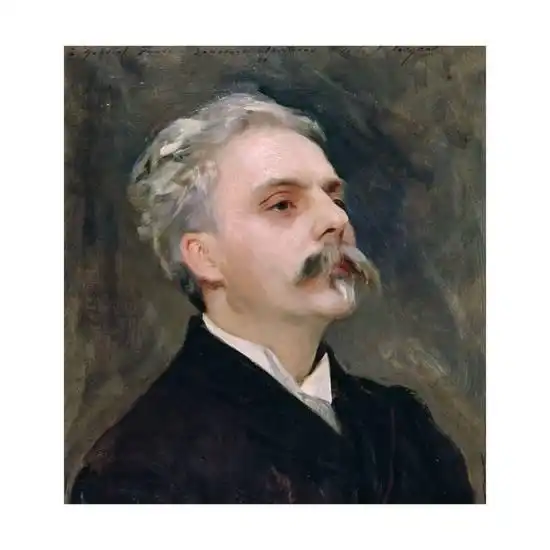
Gabriel Fauré’s Pénélope is a grand opera of profound intimacy. It is the composer's answer to the great legends of antiquity, but told with a uniquely French sensibility—a world away from the thundering gods of Richard Wagner. Based on the final, dramatic chapters of Homer's Odyssey, the opera is a poème lyrique that focuses not on the fantastical monsters of Ulysse's (Odysseus) journey, but on the profound, human drama of his return. It is a story of unwavering fidelity. Fauré, known as the "master of charms" and a genius of the intimate mélodie (art song), spent
...The "Anti-Wagnerian" Wagnerian
When Gabriel Fauré finally began Pénélope in 1907, he was 62 years old and the revered director of the Paris Conservatoire. He was a giant of French music, but he was a giant of the piano salon and the concert hall, not the opera house. His entire career had been built on the exquisite, subtle, and refined art of the mélodie (song), piano music, and chamber works. For him to take on a grand opera, a poème lyrique in three acts, was a monumental undertaking. He was, in many ways, the last composer one would expect to tackle the grand, heroic, post-Wagnerian opera. And that is precisely what makes Pénélope so unique. It is a French opera that fully absorbs the innovations of Richard Wagner—the "endless melody," the through-composed acts, and the use of leitmotifs—but completely strips them of their "teutonic" weight. Fauré’s opera is not about gods, magic rings, or philosophical manifestos; it is about human psychology, fidelity, and the nobility of the heart. It is a work that Claude Debussy (whose Pelléas et Mélisande is a far more radical rejection of Wagner) would have admired for its "Frenchness," its clarity, and its elegant restraint.
The Master of Charms Turns Epic
The libretto, by the young playwright René Fauchois, was a godsend for Fauré. It intelligently bypasses the decade-long, monster-filled journey of the Odyssey and focuses entirely on the climax: the final, tense days in the palace at Ithaca. This is a story of domestic drama, not high adventure. The drama is internal: Pénélope's stubborn hope, Ulysse's concealed rage. This was perfect for Fauré, allowing him to do what he did best: write music of profound psychological insight. The orchestra, larger than any he had ever used, becomes the opera's narrator and its emotional core. It is not the shimmering, impressionistic veil of Debussy; it is a rich, warm, and active participant. Fauré weaves a complex web of recurring themes—a "theme of the bow," a theme for Pénélope's fidelity, a theme for Ulysse. But unlike Wagner’s rigid system, these motifs are fluid, hints rather than signposts. The most Wagnerian element is the use of long, slowly building harmonic progressions that create an almost unbearable tension before resolving in a flood of sound.
A Score of Vocal Nobility
Fauré was a master of the human voice, but in the intimate form of the song. In Pénélope, he translates that intimacy onto a grand stage. There are no traditional, "park and bark" arias designed to stop the show and elicit applause. Instead, the opera flows in a seamless, "endless melody" that is more like a "sung conversation," a style known as mélodie lyrique. The vocal lines are long, soaring, and "aristocratic." They demand nobility of tone and perfect French diction over sheer vocal fireworks. Pénélope's music is a masterpiece of characterization. We hear her dignity in her long, arching phrases; we hear her loneliness in the somber, modal harmonies; and we hear her desperation in the rising, urgent music as she unpicks her tapestry. The role of Ulysse, written for a heroic tenor, is equally demanding, requiring a voice that can be both god-like in its power and tender in its reunion. The opera is, at its heart, a massive, two-hour duet, where the two protagonists are separated by circumstance for most of the drama, only to be united in the final, ecstatic climax.
A Story of Light and Hope
While Wagner’s Tristan und Isolde is a story of night, death, and a love that can only be consummated in the afterlife, Fauré’s Pénélope is a story of daylight, of steadfastness, and of a love that endures the trials of this world. It is, in many ways, an "anti-Tristan." The opera opens in darkness and shadow—the gloomy palace, the nighttime vigil, the queen's despair. It ends in a blaze of sunlight and C-major triumph as Ulysse, the king, reclaims his throne and his wife. It is a work of profound optimism and moral clarity, a celebration of virtues—patience, loyalty, and courage—that were perhaps seen as old-fashioned in the cynical, "modern" world of 1913. This is likely why the opera, though a critical success at its premiere (it was dedicated to his mentor, Camille Saint-Saëns), has remained a beloved rarity rather than a staple. It is not an opera of "action"; it is an opera of "being." It requires patience from the listener, but it rewards that patience with music of incomparable beauty and emotional honesty.
Act I: The Beggar at the Gate
In the royal palace at Ithaca, the hall is filled with Pénélope's rowdy, arrogant suitors, who feast and drink, demanding that she, after 20 years of waiting for her husband Ulysse, finally choose one of them as a new king. Pénélope’s attendants, weary of the long wait, secretly encourage the suitors. Pénélope herself, however, remains a pillar of dignity and sorrow. She has held them at bay with a ruse: she has promised to choose a husband only after she finishes weaving a burial shroud for her father-in-law, Laërte. The suitors, led by the arrogant Antinoüs, are growing impatient.
A "beggar" (Ulysse in disguise) arrives at the palace, seeking shelter. The suitors mock him and try to drive him away, but Pénélope, in a gesture of royal hospitality, welcomes him. As she speaks to the beggar, her old nurse, Euryclée, washes his feet and, in a moment of shock, recognizes a scar on his leg. It is Ulysse. He silences her with a look, commanding her to keep his secret. That night, Pénélope, alone, laments her fate and begins her secret ritual: she unpicks the shroud, undoing her day's work to stall for time. The suitors, led by Antinoüs, discover her ruse. They explode in anger, declaring that she must choose a new husband the very next day.
Act II: The Shepherd's Secret
On a moonlit hilltop overlooking the sea, Pénélope keeps her nightly vigil, praying for Ulysse's ship to appear. Her attendants, led by Cléone, try to comfort her. She is joined by the old shepherd, Eumée, who is also loyal to the absent king. The disguised Ulysse appears, having followed Pénélope. He gently speaks to her, claiming to be a traveler who once met Ulysse. He "reports" that Ulysse is alive, has suffered greatly, and will soon return. This "news" gives Pénélope the first spark of true hope she has had in years. Ulysse, deeply moved by her unwavering fidelity, advises her to propose a new challenge to the suitors: a contest of strength that only the true king could win. After she leaves, Ulysse reveals his true identity to the ecstatic Eumée, and they begin to plot their terrible, righteous vengeance.
Act III: The Bow and the Reunion
The grand hall of the palace. It is the day of the contest. The suitors are feasting, celebrating their "impending" wedding to the queen. Pénélope, resigned but with a new plan, enters and makes her announcement: she will marry the man who can string the great bow of Ulysse and shoot an arrow through twelve axes. One by one, the suitors—Antinoüs, Eurymaque, and the others—try and fail, unable to even bend the mighty bow. They curse the bow and their own weakness. The "beggar" then steps forward and humbly asks for a turn. The suitors mock him, but Pénélope, sensing something, allows it.
Ulysse takes the bow in his hands, strings it with ease, and, in a single, fluid motion, shoots the arrow perfectly through the axes. A stunned silence fills the hall. He then turns, arrow still nocked, on Antinoüs, the lead suitor, and shoots him dead. "Behold," he cries, "the beggar of Ithaca! Behold, Ulysse, your king!" He reveals his true identity as the loyal shepherds, led by Eumée, rush in and join the battle, slaughtering the rest of the terrified suitors. The opera ends not with the bloody battle, but in its aftermath. The hall is cleansed. Pénélope and Ulysse, finally alone after twenty years, are reunited in a long, ecstatic, and soaring musical duet. The sun rises, the people of Ithaca flood the palace, and the opera ends in a blaze of light and sound, hailing their true and rightful king.

Follow us : 


Sheet Music International - Copyright 2026 all rights reserved
| English: Sheet Music (PDF) | Free Scores | French: Sheet Music (PDF) | Free Scores | Greek: Sheet Music (PDF) | Free Scores |
| German: Sheet Music (PDF) | Free Scores | Spanish: Sheet Music (PDF) | Free Scores | Portuguese: Sheet Music (PDF) | Free Scores |
| Italian: Sheet Music (PDF) | Free Scores | Russian: Sheet Music (PDF) | Free Scores | Norwegian: Sheet Music (PDF) | Free Scores |
| Ukrainian: Sheet Music (PDF) | Free Scores | Polish: Sheet Music (PDF) | Free Scores | Dutch: Sheet Music (PDF) | Free Scores |