Your Request is under process, Please wait.

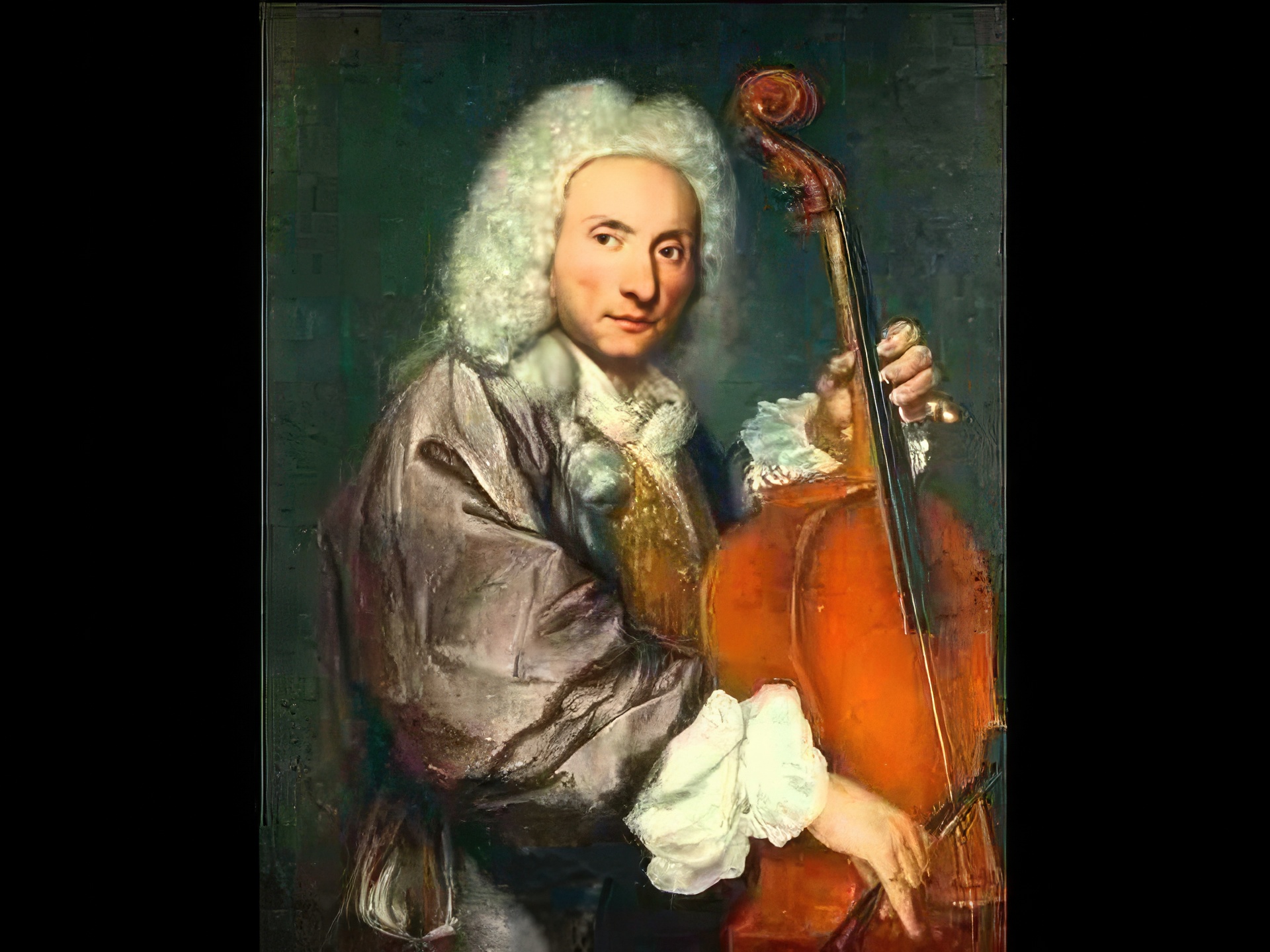
Giuseppe Torelli (1658-1709)
Download free sheet music from Giuseppe Torelli.
Explore the brilliant and historically significant music of Giuseppe Torelli, a pivotal composer of the Italian Baroque and a principal architect of the concerto. Our digital library offers a rich selection of his works—from his trailblazing violin concertos to his spectacular pieces for solo trumpet—all available as high-quality, printable PDF files, completely free. Torelli was a leading member of the Bolognese school, whose innovations in form and instrumental writing laid the essential groundwork for the next generation of masters, including Vivaldi. His music is a must for Baroque ensembles, trumpeters,
...The Father of the Concerto
In the late 17th century, the musical heart of Bologna was the magnificent Basilica of San Petronio. It was a space built for sonic grandeur, with two large organs facing each other across the nave and spacious galleries perfect for separating choirs of musicians. On feast days, this vast church would be filled with the brilliant, ceremonial sound of string ensembles punctuated by the festive splendor of valveless Baroque trumpets. It was in this spectacular acoustical laboratory that the composer and violinist Giuseppe Torelli began a series of experiments that would change the course of music history. By systematically separating and contrasting solo instruments against the full orchestra, he forged a new, dynamic musical form, becoming one of the first and most important composers to develop the solo concerto.
The Bolognese School and San Petronio
Giuseppe Torelli was born in Verona on April 22, 1658. While little is known of his earliest musical training, he was clearly a prodigious talent on the violin and viola. In 1684, he made a career-defining move to Bologna, a city with a thriving musical culture. He was quickly admitted to the prestigious Accademia Filarmonica, a testament to his already considerable skill. Two years later, he won a position as a viola player in the orchestra of the Basilica of San Petronio.
This was no ordinary church orchestra. Under the direction of Kapellmeisters like Giovanni Paolo Colonna, the San Petronio ensemble was one of the finest in Italy, renowned for its virtuoso string and trumpet players. It was the center of the "Bolognese School" of composition, which specialized in instrumental music. Here, Torelli was immersed in a culture of instrumental virtuosity and compositional innovation, providing the perfect environment for his own creative development.
Forging the Concerto
It was during his first period in Bologna, from 1684 to 1696, that Torelli made his most crucial contributions to musical form. Working alongside his contemporaries, he played a central role in the development of both the concerto grosso and the solo concerto. While the great Arcangelo Corelli in Rome was famously perfecting the concerto grosso (featuring a small group of soloists, or concertino, against the larger orchestra, or ripieno), Torelli was exploring this form while also pushing music in a more radical direction: toward the solo concerto.
In his published collections of the 1680s and 90s, one can trace the evolution of the form. He began publishing works titled Sinfonia or Concerto that increasingly featured soloistic passages for one or two violins. He was among the very first composers to write concertos for a single solo violin, creating a clear distinction between the virtuosic soloist and the accompanying orchestra.
Furthermore, Torelli was instrumental in establishing the three-movement (fast-slow-fast) structure that would become the standard for the concerto for the next two centuries. This format provided a balanced and dramatically satisfying framework for alternating between orchestral statements (ritornelli) and solo episodes. His works for trumpet were particularly groundbreaking. The trumpet players at San Petronio were famous for their skill, and Torelli wrote numerous pieces for them, treating the valveless natural trumpet not just as a ceremonial instrument but as a virtuosic solo voice capable of brilliant, athletic passagework.
Vienna and Ansbach: The Virtuoso Abroad
In 1696, financial constraints led to the temporary disbanding of the San Petronio orchestra, forcing its highly skilled musicians to seek employment elsewhere. Torelli, now a composer of considerable reputation, traveled north of the Alps. After a likely stop in Vienna, he secured a prestigious position in Germany as maestro di concerto at the court of Georg Friedrich II, the Margrave of Brandenburg-Ansbach.
At the musically sophisticated Ansbach court, Torelli was tasked with directing instrumental music and composing new works. He collaborated with the famous castrato Francesco Antonio Pistocchi, composing vocal and instrumental music for the court’s entertainment. This period was highly productive, and it was here that he likely composed many of his most famous trumpet sonatas and concertos. His time in Germany not only polished his own style but also served to export the latest Italian instrumental innovations directly into the heart of Europe, influencing the German composers who would later perfect the late Baroque style.
Return to Bologna and Final Works
By 1701, the orchestra at San Petronio had been reconstituted, and Torelli returned to Bologna to take up a post as a violinist. He would remain there for the rest of his life. In his final years, he focused on perfecting the violin concerto. His final and most important collection, the 12 Concerti musicali a quattro, Op. 8, was published posthumously in 1709, the year of his death.
This collection represents the pinnacle of his achievements. It contains six concertos for two violins (concerti grossi) and, more importantly, six concertos for solo violin. These latter works are arguably the first fully realized solo violin concertos ever published. They display a new level of virtuosity in the solo part and a mature handling of the three-movement form. This publication was a landmark that directly influenced the next generation of Italian composers, most notably Antonio Vivaldi, who would take the solo concerto form established by Torelli and elevate it to new heights of brilliance and popularity. The concertos of Johann Sebastian Bach and, indeed, the entire subsequent history of the genre, owe a foundational debt to Torelli’s pioneering work.
Giuseppe Torelli died in Bologna on February 8, 1709. His legacy is that of a true innovator. He was the "Father of the Concerto," a composer who codified the forms and established the stylistic conventions that would dominate instrumental music for generations.
Bukofzer, Manfred F. Music in the Baroque Era: From Monteverdi to Bach. W. W. Norton & Company, 1947.
Hutchings, Arthur. The Baroque Concerto. Charles Scribner's Sons, 1979.
Newman, William S. The Sonata in the Baroque Era. University of North Carolina Press, 1959.
Talbot, Michael. "Torelli, Giuseppe." In Grove Music Online. Oxford University Press, 2001.
Tarr, Edward H. The Trumpet. B. T. Batsford, 1988.
Follow us :


Sheet Music International - Copyright 2026 all rights reserved