Your Request is under process, Please wait.

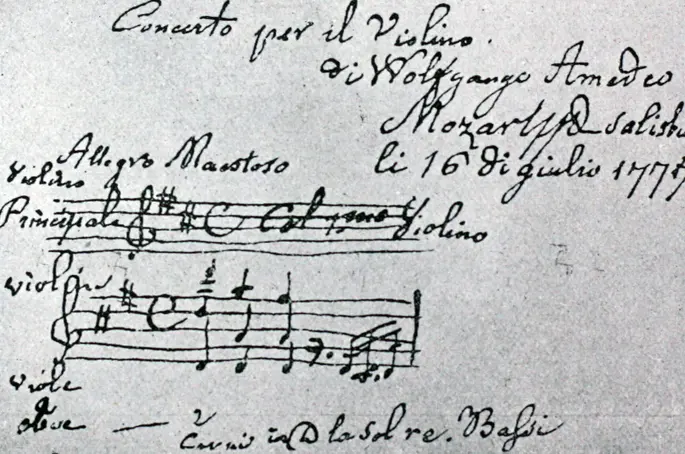
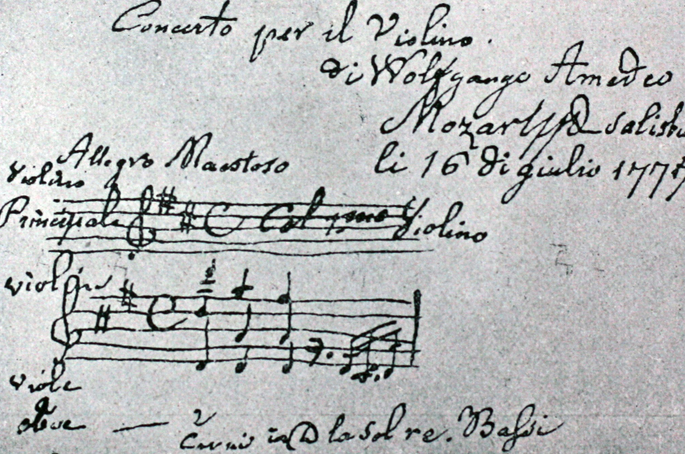
Wolfgang Amadeus Mozart’s Violin Concerto No. 2 in D major, K. 211, stands as an exceptionally bright and elegant entry in the composer's legendary 1775 output. Completed in Salzburg on June 14, 1775, this concerto reflects a period of immense personal growth and skyrocketing confidence for the nineteen-year-old master. Serving as court concertmaster to the demanding Archbishop Colloredo, Mozart wrote this piece both to fulfill his official court duties and to showcase his own formidable string talents. An amusing anecdote from this period reveals Mozart’s playful disdain for his employer's strict musical limits; he frequently wrote to his sister about
...

The Elegant Architecture: Galant Rhetoric and Italianate Lyricism in Mozart's D Major Concerto
The Golden Summer of 1775
The Stately Grace of the Allegro Moderato Exposition
The opening movement, marked Allegro moderato, immediately introduces the listener to a sound world of crystalline classical symmetry and courtly sophistication. The orchestral exposition begins with a proud, triadic main theme that feels decidedly majestic, bolstered by the clean punctuation of the horns and the rustic, bright coloring of the two oboes. This regal opening is deeply indebted to the formal symphonic structural designs popularized by Franz Joseph Haydn, yet Mozart instantly infuses the traditional Austrian formulas with his own trademark operatic lyricism. The orchestral strings maintain a crisp, detached bowing pattern that highlights the transparent textures of the galant style, avoiding the dense, heavy block writing of earlier Baroque masters like Johann Sebastian Bach. This spatial clarity ensures that when the secondary themes emerge in the dominant key of A major, their gentle, sighing motifs stand out in sharp relief against the underlying rhythmic drive, masterfully setting up the emotional parameters of the movement before the entrance of the main soloist.
Solo Dialogue and Brilliant Technical Innovation
When the solo violin enters, it completely upends the formal, military atmosphere of the opening theme by singing a highly decorated, rhythmically supple variant of the primary motif. Mozart demands an exceptional level of performance nuance here, requiring the soloist to shift on a dime from smooth, operatic cantabile lines to rapid, athletic string-crossings and precision double-stops. The development section, though relatively compact in comparison to the massive symphonic landscapes of late romantic composers like Johannes Brahms, showcases an incredible structural density. Mozart modulates restlessly through several closely related keys, using sharp dynamic contrasts and unexpected harmonic shifts to create a brilliant sense of narrative tension. The solo violin is forced to navigate complex sixteenth-note patterns that rocket up into the higher positions of the fingerboard, showcasing an instrumental athleticism that clearly looks forward to the works of Niccolò Paganini. The tension finally resolves into a pristine, satisfying recapitulation, paving the way for a standard, unmeasured pause where the performer can dazzle the audience with an improvised, highly stylistic classical cadenza.
The Interior Musings of the Andante
The second movement is a breathtakingly beautiful Andante in G major that shifts the focus of the concerto from aristocratic showmanship to deep, internal reflection. Structured much like an operatic love aria, this movement provides a pristine showcase for the soloist’s ability to project a rich, vocal tone over a transparent, hushed orchestral landscape. The accompaniment is uniquely delicate; the orchestral violins are muted throughout the movement, and the oboes are completely silenced, leaving only the warm, dark textures of the lower strings and the occasional, golden accent of the horns to support the solo line. This specific scoring technique highlights Mozart's innate understanding of acoustic balance, ensuring that the soloist's singing line is never drowned out by the ensemble. The melody unrolls in long, continuous phrases that require an impeccable sense of breath control and bow distribution, heavily drawing on the vocal traditions that Mozart had studied during his early encounters with Italian opera masters like Johann Christian Bach. It is an intensely moving movement that directly foreshadows the lyrical, heartbreakingly beautiful slow movements of his late piano concertos, proving that his early instrumental works contained profound emotional gravity.
The Dance Energy of the Allegro Rondeau
The concerto draws to a close with a highly spirited, dancing Allegro titled "Rondeau," a movement that bursts with rhythmic vitality, wit, and uninhibited joy. Using the traditional French rondo layout, the movement is built around a recurring, instantly memorable folk-like refrain that is passed back and forth between the solo violin and the full orchestra. This main theme features crisp, leaping intervals and rapid staccato ornaments that require a highly agile, flexible bow arm from the performer. Between each appearance of this central theme, Mozart inserts increasingly complex, adventurous solo episodes that travel down surprising harmonic pathways. These virtuosic episodes demand rapid-fire scales and precise intonation in the instrument's upper register, contrasting beautifully with the polite, structured nature of the recurring orchestral refrain. This brilliant play with audience expectation was a favorite device of Wolfgang Amadeus Mozart, who took great pleasure in setting up a predictable musical pattern only to disrupt it with a witty, completely unexpected solo intervention.
The Contrapuntal Depth and Lasting Legacy of K. 211
Beneath the sparkling, effortless surface of this final movement lies a sophisticated web of classical counterpoint that elevates the piece far beyond a simple courtly entertainment. The lower strings do not merely provide basic harmonic padding; instead, the cellos and violas routinely engage in imitative, conversational answers to the solo violin's phrases, displaying a rigorous contrapuntal logic that Mozart had honed through his early studies with Padre Martini in Bologna. This intellectual underpinning gives the movement a sturdy, highly satisfying sense of balance and structural integrity. Rather than concluding with a thunderous, dramatic display of orchestral volume, the concerto ends with a remarkably witty, quintessentially classical understatement, as the solo violin completes a final, dizzying run before the orchestra rounds out the work with a pair of brief, polite chords. Through its immaculate fusion of Austrian symphonic structure, fluid Italian lyricism, and sharp Salzburg wit, the Second Violin Concerto remains a seminal masterpiece that permanently redefined the expressive capabilities of the classical concerto form.
Follow us : 


Sheet Music International - Copyright 2025 all rights reserved
| English: Sheet Music (PDF) | Free Scores | Français: Partitions (PDF) | Musique gratuite | Ελληνικά: Παρτιτούρες (PDF) | Δωρεάν μουσική |
| Deutsch: Noten (PDF) | Kostenlose Partituren | Español: Partituras (PDF) | Música impresa | Português: Partituras (PDF) | Música gratuita |
| Italiano: Spartiti (PDF) | Partiture musicali | Русский: Ноты (PDF) | Бесплатные партитуры | Norsk: Noter (PDF) | Gratis noter |
| Українська: Ноти (PDF) | Безкоштовні партитури | Polski: Nuty (PDF) | Darmowe nuty | Nederlands: Bladmuziek (PDF) | Gratis partituren |