Your Request is under process, Please wait.

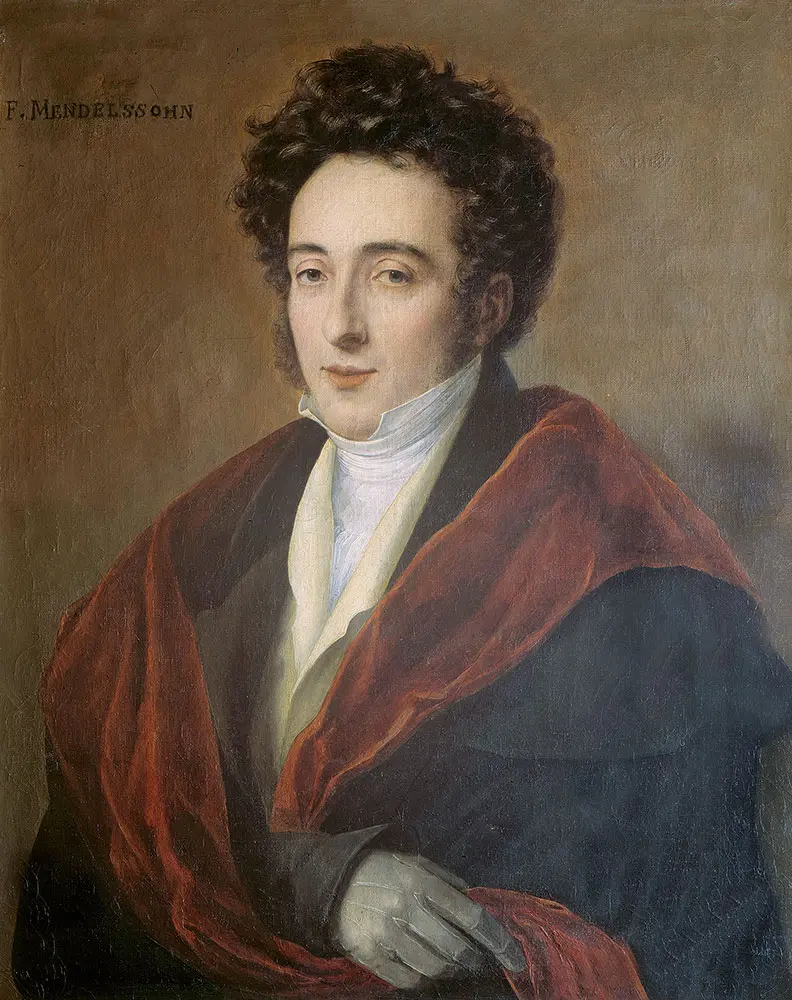
Felix Mendelssohn’s Symphony No. 1 in C minor is the brilliant announcement of a major symphonic voice, a work of such fire, confidence, and technical mastery that it is almost impossible to believe it was written by a boy of fifteen. While he had already composed thirteen symphonies for string orchestra as part of his rigorous childhood studies, this 1824 work was his first for full orchestra and the one he deemed his official "Opus 11." Deeply influenced by the dramatic minor-key works of Mozart and the orchestral flair of Weber, the symphony is a masterful synthesis of Classical
...The Prodigy Claims the Symphony
In May of 1829, a dashing 20-year-old Felix Mendelssohn made his London debut conducting the prestigious Philharmonic Society. The work he chose to present was his own First Symphony, a piece he had written five years earlier, at the age of fifteen. The English audience was captivated. The symphony’s fiery energy and brilliant craftsmanship brought the house down, and the third movement—a fierce, driving Menuetto—was so popular that the orchestra had to repeat it. For a later performance, the ever-practical Mendelssohn decided to give the audience something even more special. He replaced the original Menuetto with an orchestrated version of the gossamer Scherzo from his famous String Octet. This gesture was a triumph, cementing a lifelong love affair between Mendelssohn and the British public. This story perfectly frames the First Symphony: a work of astonishing youthful genius that was also a powerful and effective calling card on the international stage.
The Thirteenth Attempt is the Charm
To call this work Mendelssohn's "first" symphony is both true and slightly misleading. By 1824, he had already composed a staggering thirteen symphonies, known today as the "String Sinfonias." These early works, written between the ages of twelve and fourteen, were his private compositional laboratory—extraordinarily accomplished exercises in which he mastered the forms and contrapuntal techniques of Haydn, Bach, and Mozart. The Symphony in C minor, Op. 11, is therefore his thirteenth symphony in sequence, but it is the first to break free from the practice room. It was his first symphony for full orchestra, his first to be assigned an opus number, and his first grand, public statement in the genre that Haydn, Mozart, and Beethoven had defined.
Echoes of the Masters
The symphony is a brilliant synthesis of the music the young Mendelssohn most admired. The choice of C minor immediately places it in the great "Sturm und Drang" (storm and stress) tradition, evoking the dramatic intensity of works like Mozart's Symphony No. 40 in G minor and Beethoven's Fifth. Indeed, the rocket-like theme of Mendelssohn’s finale seems to be a direct homage to the finale of Mozart's G minor symphony. Throughout the work, one can also hear the influence of Carl Maria von Weber, particularly in the dramatic orchestral gestures and the prominent, lyrical writing for the clarinet. This is not the work of a mere imitator, but of a prodigious mind that had completely assimilated the language of the masters and was now beginning to speak with its own voice.
Movement I (Allegro di molto): A Storm of C Minor
The symphony opens with a powerful and dramatic statement. The first movement, Allegro di molto, is a tense and driving sonata form. The main theme is all coiled energy, characterized by sharp dotted rhythms and upward-striving leaps that create a sense of urgency and conflict. This is contrasted with a more lyrical second theme, introduced by the clarinet, which provides a brief moment of respite before the storm returns. The development section is a showcase of Mendelssohn’s contrapuntal skill, as he expertly fragments and weaves his themes into a complex and thrilling musical argument.
Movement II (Andante): A Song of Calm
After the drama of the first movement, the Andante in E-flat major offers a complete change of atmosphere. It is a movement of pure Classical grace and elegance. A beautiful, song-like melody is presented by the violins and then passed gently throughout the orchestra, with the woodwinds engaging in a particularly beautiful dialogue. The craftsmanship is exquisite, and the mood is one of serene, untroubled beauty. It is a lyrical interlude that demonstrates a maturity of expression far beyond the composer's fifteen years.
Movement III (Menuetto: Allegro molto): A Furious Dance
Although labeled a "Menuetto," the third movement bears little resemblance to the stately court dance of the 18th century. Instead, this is a scherzo in all but name—a fast, fierce, and rhythmically charged movement that returns to the stormy key of C minor. The driving energy and sharp accents give the music a powerful, almost aggressive quality. The central Trio section provides a brief contrast, a gentle, chorale-like passage for the woodwinds over pizzicato strings, before the furious dance returns to bring the movement to a forceful close.
Movement IV (Allegro con fuoco): A Fugitive Finale
The finale, marked Allegro con fuoco (fast, with fire), erupts with a powerful ascending theme that has been compared to a Mannheim rocket. The movement is a tour de force of energy and brilliant orchestration. Its most remarkable feature, however, is Mendelssohn's audacious use of counterpoint. At the heart of the movement, he builds a complex and thrilling fugue, a clear demonstration that he could wield the most academic of musical forms with the same dramatic flair as his romantic contemporaries. It was a bold statement from a young composer, proving he possessed not only a fiery imagination but also a rigorous intellect. After a final, dramatic struggle, the symphony concludes in a triumphant blaze of C major.
The First of Many
While the Symphony No. 1 may not possess the unique pictorialism of his later "Scottish" or "Italian" symphonies, it is a formidable achievement. It is a work of incredible energy, passion, and flawless craftsmanship that is much more than a simple piece of juvenilia. It is a powerful and compelling symphony in its own right, one that announced the arrival of a brilliant new voice in the symphonic tradition. With this work, the fifteen-year-old prodigy laid his claim to the genre, proving he was ready to carry the torch passed to him by the great masters he so revered.
Follow us : 


Sheet Music International - Copyright 2025 all rights reserved
| English: Sheet Music (PDF) | Free Scores | Français: Partitions (PDF) | Musique gratuite | Ελληνικά: Παρτιτούρες (PDF) | Δωρεάν μουσική |
| Deutsch: Noten (PDF) | Kostenlose Partituren | Español: Partituras (PDF) | Música impresa | Português: Partituras (PDF) | Música gratuita |
| Italiano: Spartiti (PDF) | Partiture musicali | Русский: Ноты (PDF) | Бесплатные партитуры | Norsk: Noter (PDF) | Gratis noter |
| Українська: Ноти (PDF) | Безкоштовні партитури | Polski: Nuty (PDF) | Darmowe nuty | Nederlands: Bladmuziek (PDF) | Gratis partituren |