Your Request is under process, Please wait.

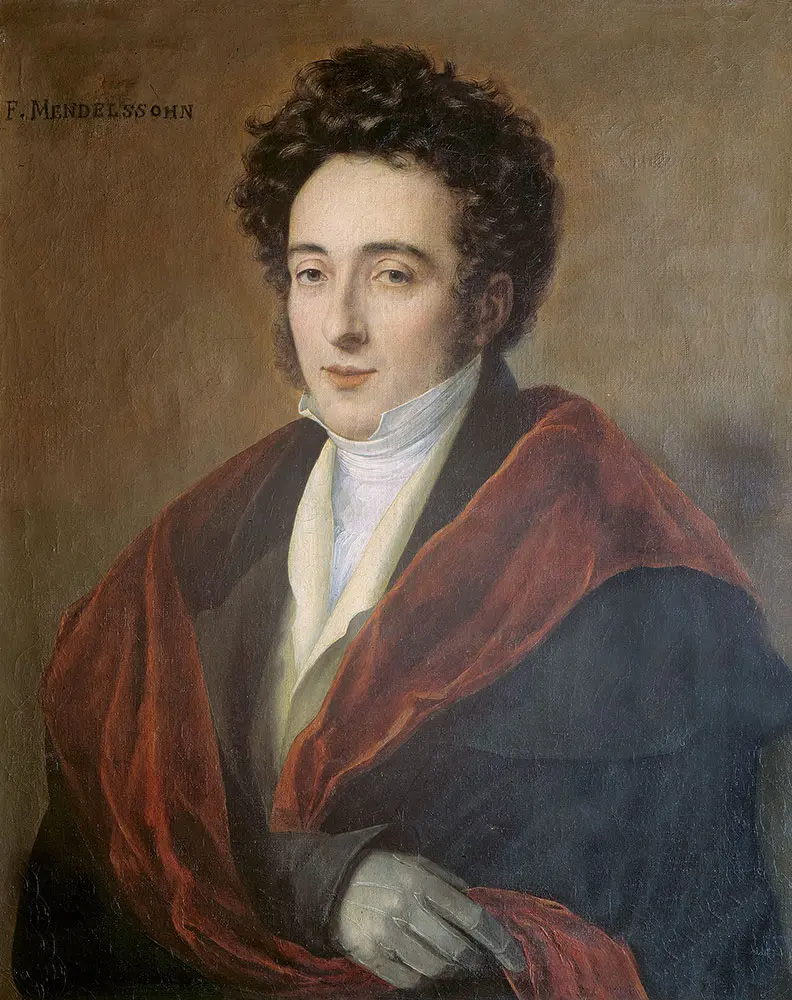
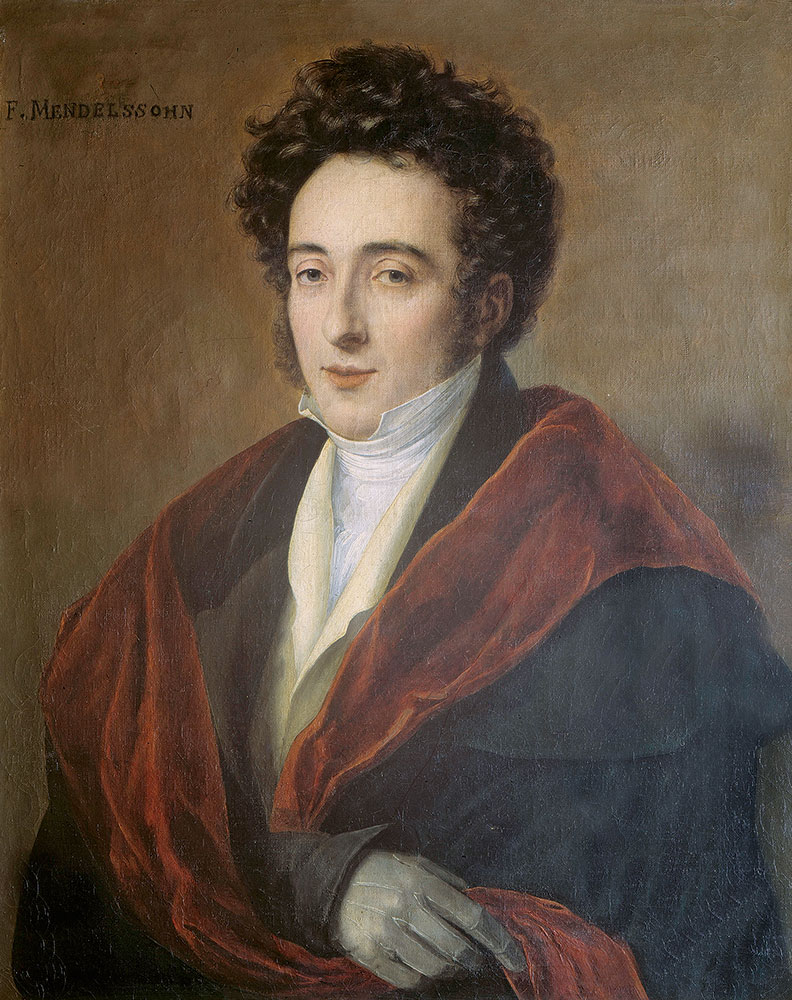
Felix Mendelssohn’s contributions to the string quartet genre stand as a crucial bridge between the Classical and Romantic eras. A prodigious talent, he approached the form with a deep reverence for his predecessors, particularly Ludwig van Beethoven, yet imbued it with his own unique voice characterized by lyrical grace, formal perfection, and a fairy-like lightness. His earliest quartets, written in his teens, are not mere student exercises but works of astonishing maturity and emotional depth, grappling with the monumental shadow of Beethoven's late works. He integrated cyclical forms and intense emotional questioning, as seen
...From Classical Grace to Romantic Anguish
The great conductor Hans von Bülow once famously, if somewhat unfairly, remarked that while he loved Johannes Brahms's music, he did not trust his character, and while he trusted Mendelssohn’s character, he did not love his music. This quip speaks to a long-held perception of Mendelssohn as a composer of polished, perhaps even superficial, perfection whose privileged upbringing shielded him from the deep suffering that supposedly fuels great art. While his life was indeed one of relative comfort, his music, and particularly his string quartets, tells a far more complex story. These six numbered works are not merely elegant sonic tapestries; they are intensely personal documents that trace a remarkable journey from a young prodigy’s ambitious dialogue with the ghost of Beethoven to a mature master’s devastating expression of personal tragedy. They reveal a composer who could balance rigorous classical structure with the deepest Romantic feeling, creating a body of work that is as intellectually satisfying as it is emotionally profound.
The Beethovenian Obsession
One cannot begin to understand Mendelssohn’s first two published quartets, Op. 13 in A minor and Op. 12 in E-flat major, without first understanding his profound reverence for Ludwig van Beethoven. Composed in 1827 and 1829 respectively, these quartets were written in the immediate aftermath of Beethoven’s death. The older composer's late quartets had just been published, and the teenage Mendelssohn absorbed them with an almost religious fervor. The A minor Quartet, Op. 13, is the more radical of the two, functioning as a direct homage to Beethoven’s Op. 95 "Serioso" and Op. 132. Mendelssohn borrows the technique of a slow, questioning introduction that returns at the work's conclusion, creating a powerful cyclical narrative. Furthermore, the quartet is built upon a three-note motive from his song "Ist es wahr?" ("Is it true?"), a question that permeates every movement. This use of a personal, autobiographical motto as the thematic seed for an entire work is a deeply Romantic gesture, one learned directly from Beethoven's use of "Muss es sein?" in his final quartet. The result is a work of startling passion and structural ingenuity that far exceeds what one would expect from an eighteen-year-old composer.
A Classicist's Discipline
Despite his youthful infatuation with Beethoven’s Romantic intensity, Mendelssohn was, at his core, a classicist. His musical education was steeped in the counterpoint of J.S. Bach and the formal clarity of Wolfgang Amadeus Mozart and Franz Joseph Haydn. This discipline tempered his Romantic impulses, giving his compositions a balance and poise that set him apart from more volatile contemporaries like Hector Berlioz. In his quartets, this manifests as a supreme command of form. His sonata-allegro movements are models of clarity, his developments logical yet imaginative, and his recapitulations immensely satisfying. His part-writing is flawless, creating textures that are both rich and transparent, where each of the four instruments contributes equally to the musical argument. This classical foundation prevents his emotional expression from ever becoming overwrought. Even in his most passionate moments, there is a sense of control and elegance, a belief that deep feeling is most powerfully conveyed through perfected form. He saw no contradiction between the structural integrity of the past and the emotional vocabulary of the present.
The Confident Master: The Opus 44 Triptych
If the early quartets show a young composer wrestling with his influences, the three quartets of Op. 44, written between 1837 and 1838, present the voice of a mature master in his absolute prime. Composed as a deliberate set, they showcase the full range of his style. The Quartet in D major, Op. 44, No. 1, is a brilliant and extroverted work, bursting with virtuosic energy and orchestral sonority. Its opening movement is a torrent of confident enthusiasm, while its scherzo is a tour de force of rhythmic vitality. In stark contrast, the Quartet in E minor, Op. 44, No. 2, is more introspective and lyrical, possessing a pathos and restless agitation that foreshadows the tragedy of his final quartet. Its passionate melodies and dramatic urgency make it one of his most beloved chamber works. Finally, the Quartet in E-flat major, Op. 44, No. 3, strikes a perfect balance between the other two. It is a work of warmth, grace, and effortless craftsmanship, recalling the poise of Mozart while remaining unmistakably Mendelssohnian in its melodic charm and rhythmic sophistication.
The Elfin Scherzo
No discussion of Mendelssohn is complete without paying tribute to his unique mastery of the scherzo. He essentially invented a new type of movement: the light, fleet-footed, "elfin" scherzo, characterized by rapid staccato passages, delicate textures, and a sense of magical, otherworldly fantasy. This style first appeared in his Octet for Strings and was immortalized in his Overture to A Midsummer Night's Dream. He brought this signature touch to the string quartet with unparalleled skill. The "Canzonetta" that serves as the second movement of the Quartet in E-flat major, Op. 12, is a perfect example. It replaces a traditional scherzo with a gentle, plucked serenade whose charming melancholy is interrupted by a scurrying, folk-like middle section. The scherzos of the Op. 44 quartets are more fiery and brilliant, demanding breathtaking virtuosity and ensemble precision, yet they never lose that sense of weightless, shimmering energy that is Mendelssohn's alone. These movements are the purest distillation of his musical personality: elegant, brilliant, and touched with magic.
A Requiem for Fanny: The Quartet in F minor, Op. 80
Mendelssohn’s final completed string quartet stands apart from all his other works. The String Quartet No. 6 in F minor, Op. 80, written in the summer of 1847, is a direct and unfiltered reaction to the sudden death of his beloved sister and musical confidante, Fanny Mendelssohn Hensel. The composer himself would be dead just two months after its completion. He subtitled the work "Requiem for Fanny," and it is one of the most raw and desperate pieces of music from the entire Romantic era. All the poise and elegant polish of his earlier style are burned away, replaced by violent tremolos, angular, gasping melodies, and a relentless, breathless pace. The opening movement is a storm of anguish, while the scherzo is not a fleet-footed dance but a syncopated, grimly obsessive convulsion. The heart of the work is the Adagio, a song of profound sorrow where the violin sings a lament over a pulsing, heart-like rhythm in the lower strings. The finale offers no solace, driving forward with a furious, tragic intensity until its abrupt and bleak conclusion. This is not the happy, well-adjusted Mendelssohn of popular imagination; this is a man laid bare by grief, channeling his despair into music of terrifying power.
Legacy in Chamber Music
Mendelssohn's string quartets occupy a vital place in the history of the genre. They successfully synthesized the formal perfection of the Classical era with the burgeoning emotionalism and individualism of the Romantic period. They demonstrated to composers like Robert Schumann and Johannes Brahms that the traditional forms established by Haydn, Mozart, and Beethoven were not outdated constraints but were still fertile ground for profound personal expression. While they may not possess the revolutionary fire of Beethoven's late quartets or the folk-inflected nationalism of later composers, their combination of intellectual rigor, melodic beauty, and emotional sincerity has secured their permanent place in the chamber music repertoire. They are the works of a complete musician, a man who respected the past, defined the present, and created music of enduring beauty and power.
Follow us : 


Sheet Music International - Copyright 2025 all rights reserved
| English: Sheet Music (PDF) | Free Scores | Français: Partitions (PDF) | Musique gratuite | Ελληνικά: Παρτιτούρες (PDF) | Δωρεάν μουσική |
| Deutsch: Noten (PDF) | Kostenlose Partituren | Español: Partituras (PDF) | Música impresa | Português: Partituras (PDF) | Música gratuita |
| Italiano: Spartiti (PDF) | Partiture musicali | Русский: Ноты (PDF) | Бесплатные партитуры | Norsk: Noter (PDF) | Gratis noter |
| Українська: Ноти (PDF) | Безкоштовні партитури | Polski: Nuty (PDF) | Darmowe nuty | Nederlands: Bladmuziek (PDF) | Gratis partituren |