Your Request is under process, Please wait.

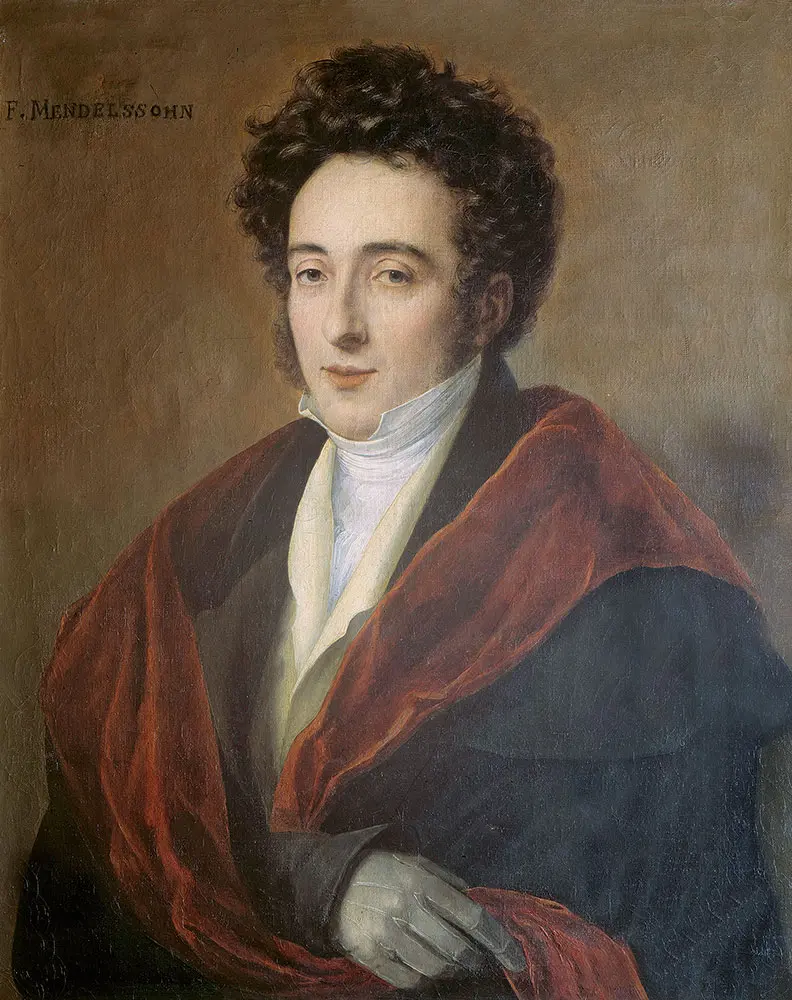
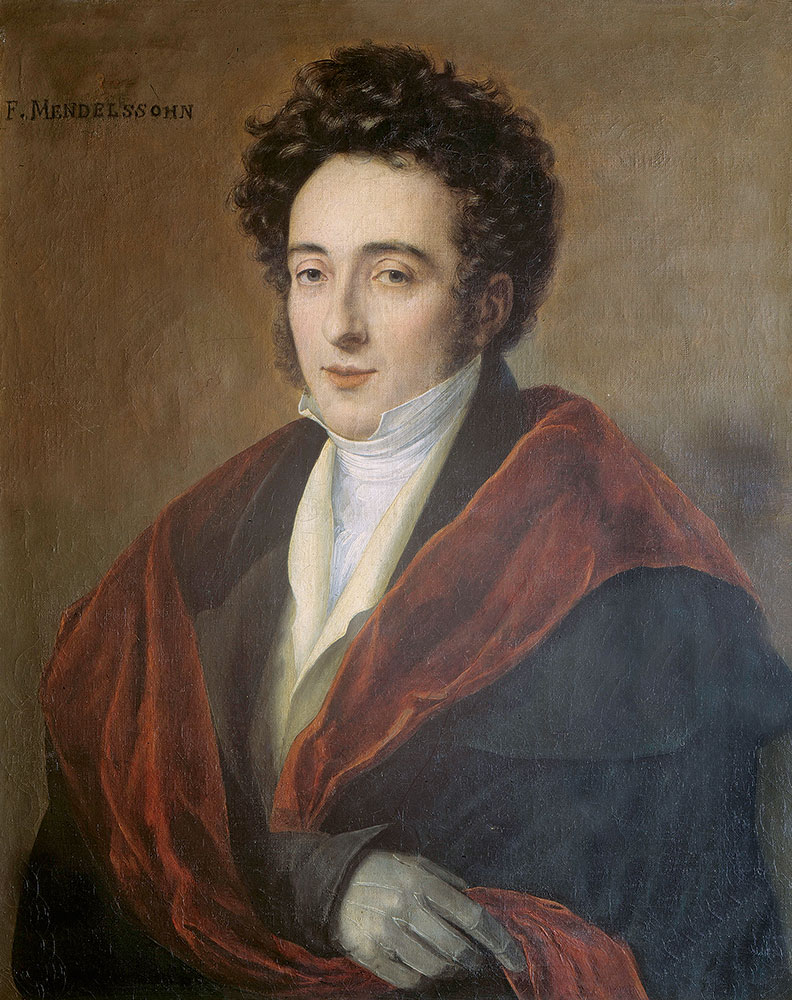
Composed when he was just fifteen years old, Felix Mendelssohn’s Concerto in A-flat major for Two Pianos is a work of astonishing scale, brilliance, and confidence. It is one of two grand double concertos he wrote as a teenager specifically to perform with his immensely talented older sister, Fanny, at the celebrated Sunday morning concerts held in the Mendelssohn family’s Berlin home. This context is key to understanding the work: it is a piece born of a unique musical partnership and designed for a sophisticated private audience. Lasting nearly forty minutes, the concerto is a massive and ambitious undertaking that
...A Grand Dialogue for Sibling Prodigies
Imagine the scene: a Sunday morning in 1824 in the grand salon of the Mendelssohn family home in Berlin. The room is filled with the city’s cultural elite—artists, poets, scientists, and musicians—gathered for one of the famous Sonntagsmusiken, or Sunday concerts. A small professional orchestra is assembled, and at two gleaming pianos sit the teenaged children of the house: the nineteen-year-old Fanny and her fifteen-year-old brother, Felix. They are about to premiere a new, massive concerto for two pianos, a work of dazzling brilliance and ambition composed by the young Felix specifically for them to perform together. This is the world from which the Concerto in A-flat major was born. It is not the product of a commission or a public debut, but rather a deeply personal work celebrating a unique familial and musical bond, showcasing the astonishing talents of two of the 19th century’s greatest prodigies.
A Work of Youthful Ambition
The most immediately striking feature of the A-flat concerto is its sheer scale. At a running time of nearly forty minutes, it is longer than many of the most famous piano concertos of the mature Romantic era. For a boy of fifteen to conceive of and execute a work of such length and complexity is simply staggering. Along with its slightly earlier sibling, the Concerto in E major for Two Pianos, this work proves that Mendelssohn's mastery of the grand concerto form was not a sudden development of his twenties but was already fully established in his early teens. The work reveals a young composer brimming with confidence, full of brilliant musical ideas, and possessing a complete technical command of both the piano and the orchestra.
Classical Roots, Romantic Spirit
The concerto stands as a fascinating bridge between the Classical and Romantic eras. Its formal architecture is pure Classicism, paying clear homage to the models of Wolfgang Amadeus Mozart, whose own Concerto for Two Pianos in E-flat major, K. 365, was surely an inspiration. Mendelssohn employs a traditional three-movement structure and a full-scale double-exposition sonata form in the first movement, where the orchestra introduces the themes before the soloists enter. However, the spirit of the music is unquestionably Romantic. The virtuosic keyboard writing, full of glittering passagework and dramatic flourishes, owes a debt to early Romantic masters like Carl Maria von Weber and Johann Nepomuk Hummel. The result is a work of Classical poise and elegance, infused with a new, youthful Romantic fire.
Movement I (Allegro vivace): A Grand Conversation
The lengthy first movement begins with a stately orchestral exposition that introduces the principal themes. The music is noble and confident, setting a grand stage for the soloists. When the two pianos finally enter, they do not present new material but rather take the orchestra’s themes and begin to elaborate upon them with dazzling creativity. The interplay between the two pianos is the heart of the movement. This is not a dramatic battle against the orchestra, but a brilliant and intricate conversation. The soloists engage in rapid-fire dialogue, tossing melodic fragments back and forth, echoing each other’s phrases, and joining together in powerful, unified statements. The writing is perfectly balanced, treating the two pianists as equal partners in a collaborative display of virtuosity.
Movement II (Andante): A Lyrical Interlude
After the grand scale of the opening, the slow movement provides a contrast of profound and intimate beauty. Set in the remote and magical key of E major, the Andante is a tender and lyrical song. It foreshadows the famous "Songs Without Words" that Mendelssohn would later compose, with the pianos spinning out long, expressive melodic lines. The two soloists share the beautiful theme, often with one playing the melody while the other provides a delicate, harp-like accompaniment of broken chords. The orchestra provides a soft, warm cushion of sound, allowing the pianos to sing with poetic grace. It is a movement of serene introspection, a moment of calm at the center of this epic work.
Movement III (Allegro vivace): A Joyful Rondo
The finale is a joyous and energetic rondo, bursting with the boundless optimism of youth. A playful and highly memorable rondo theme is announced by the pianos and returns several times, interspersed with contrasting episodes of brilliant virtuosic display. The writing for the soloists is at its most dazzling here, demanding perfect synchronization as they navigate intricate scales, interlocking arpeggios, and rapid-fire chords. The music is full of rhythmic vitality and good humor, a celebration of the sheer joy of music-making. It brings the grand concerto to a thrilling and utterly triumphant conclusion.
Rediscovery of a Teenage Masterpiece
For over a century, this concerto, like most of Mendelssohn’s astonishingly accomplished juvenilia, remained completely unknown to the public. Written for private performance, it was never published during his lifetime. Only in the mid-20th century were these early works rediscovered and finally published, offering a profound new insight into Mendelssohn’s development. The double concertos revealed that the genius behind the Octet and the Overture to A Midsummer Night's Dream did not appear from nowhere, but was the result of years of dedicated work and the creation of a string of ambitious, large-scale masterpieces. This concerto is a vital piece of that history, a dazzling testament to the prodigious talents of both Felix and Fanny Mendelssohn.
Follow us : 


Sheet Music International - Copyright 2026 all rights reserved
| English: Sheet Music (PDF) | Free Scores | French: Sheet Music (PDF) | Free Scores | Greek: Sheet Music (PDF) | Free Scores |
| German: Sheet Music (PDF) | Free Scores | Spanish: Sheet Music (PDF) | Free Scores | Portuguese: Sheet Music (PDF) | Free Scores |
| Italian: Sheet Music (PDF) | Free Scores | Russian: Sheet Music (PDF) | Free Scores | Norwegian: Sheet Music (PDF) | Free Scores |
| Ukrainian: Sheet Music (PDF) | Free Scores | Polish: Sheet Music (PDF) | Free Scores | Dutch: Sheet Music (PDF) | Free Scores |