Your Request is under process, Please wait.

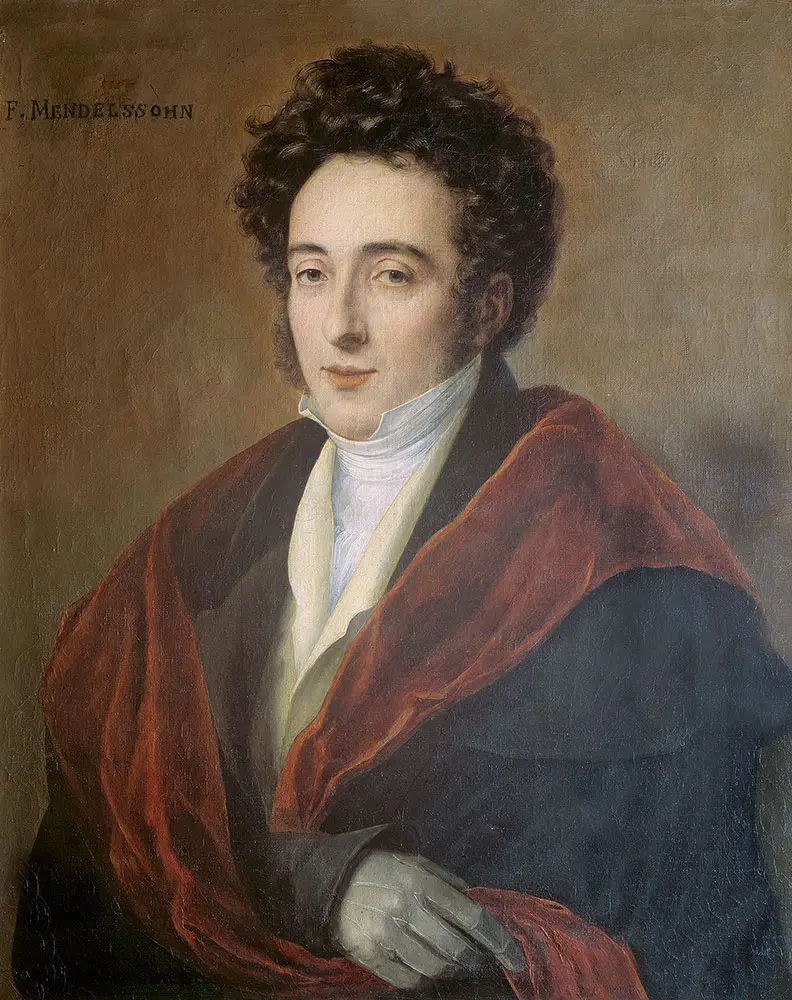
Felix Mendelssohn’s Overture to Ruy Blas is a compact masterpiece of dramatic fire, forged in a remarkable burst of reluctant genius. In 1839, Mendelssohn was asked to contribute music for a charity performance of Victor Hugo’s play Ruy Blas, with the proceeds benefiting the widows' fund of the Leipzig Orchestra. There was just one problem: Mendelssohn absolutely loathed the play, calling it "utterly trashy and beneath contempt." He initially refused to compose an overture for it, but, pressed by the organizers and motivated by the charitable cause, he relented. In an astonishing feat of inspiration and professionalism, he composed
...A Reluctant Masterpiece
In early March of 1839, Felix Mendelssohn found himself in a difficult position. A charity performance of Victor Hugo’s then-popular play, Ruy Blas, was being organized in Leipzig to raise money for the pension fund for widows of the Gewandhaus Orchestra, the very orchestra Mendelssohn directed. He was asked to provide a new overture for the occasion. Ordinarily, such a request would be an honor, but Mendelssohn had read the play and was thoroughly repulsed by it, privately describing it as "abominable" and "detestable." He flatly refused to attach his music to what he considered contemptible melodrama. However, the producers were insistent, and the cause was undeniably noble. Bowing to a sense of duty, Mendelssohn locked himself away and, in a creative fury lasting no more than three days, produced the brilliant overture we know today. The story goes that he finished it on a Friday for a Monday premiere, leaving the copyists to work frantically through the weekend. This overture is therefore a fascinating paradox: a work of profound dramatic integrity and thrilling inspiration, written in extreme haste for a story its composer could not stand.
Victor Hugo’s Melodrama
To understand the overture’s tempestuous character, it helps to know the basic plot of Hugo’s play. It is a tragic story of court intrigue set in 17th-century Spain. Ruy Blas, a gifted and intelligent commoner, is secretly in love with the lonely Queen. His master, the disgraced nobleman Don Salluste, seeks revenge on the Queen. He disguises his valet, Ruy Blas, as a nobleman named Don César and introduces him at court, hoping to expose the Queen to scandal. The plan works all too well: Ruy Blas’s natural talents allow him to rise to the rank of Prime Minister, and he and the Queen fall deeply in love. In the final act, however, Don Salluste returns to reveal the deception, leading to a tragic conclusion in which Ruy Blas poisons himself to save the Queen’s honor. The play’s themes of fate, doomed love, and violent conflict are the raw material for Mendelssohn's music.
An Overture of Stark Contrasts
Unlike many of his other overtures, Ruy Blas does not begin with a conventional slow introduction that gradually builds tension. Instead, it opens with a series of powerful, distinct musical ideas presented in quick succession, immediately establishing the dramatic conflict. The entire piece is built on the collision of three key elements: solemn, fateful brass chords; a restless, agitated string theme; and a soaring, passionate lyrical melody. The overture’s structure is a masterclass in dramatic compression, creating a whirlwind of emotion in under ten minutes.
The Opening Chords: A Statement of Fate
The work opens with three stark, powerful chords in the winds and brass. This is not a melody but a declamation—a statement of implacable fate that hangs over the entire drama. This motto is followed by a stormy, agitated passage in the strings, which is then answered by another set of solemn chords. This sequence repeats, cementing the chords as a recurring symbol of the tragic forces at play. Their grave and somber character immediately dispels any notion of a lighthearted drama, plunging the listener directly into the heart of the conflict.
The Main Allegro: Restless Agitation
After the introductory statements, the main body of the overture (Allegro molto) erupts with a nervous, breathless theme in the violins. This theme, with its rapid passagework and driving rhythm, propels the music forward with relentless energy. It perfectly captures the atmosphere of swirling court intrigue and the inner turmoil of the protagonist, Ruy Blas. This music is the engine of the overture, a depiction of constant motion and anxiety, rarely pausing for breath. Its minor-key agitation is the dominant mood of the entire piece.
The Lyrical Theme: A Doomed Romance
In stark contrast to the surrounding turmoil, Mendelssohn introduces a sublimely beautiful and passionate second theme. First heard in the woodwinds and later taken up by the cellos, this broad, lyrical melody is the overture’s emotional core. It is clearly the music of the doomed love between Ruy Blas and the Queen. It soars with an almost operatic intensity, a moment of profound beauty and tenderness in a world of danger and deception. However, its beauty is always tinged with a deep sense of melancholy, and it is constantly threatened by the return of the agitated first theme and the fateful brass chords.
Development and Conflict
The central section of the overture is a whirlwind of conflict where these three primary ideas collide. The agitated string music swirls and builds, while the fateful brass chords interject with grim authority. The beautiful love theme struggles to emerge from the chaos, appearing in fragmented form before being swept away again by the storm. Mendelssohn's writing here is incredibly tense and dramatic, using sharp dynamic contrasts and dense, powerful orchestration to create a sense of escalating crisis, mirroring the unraveling of Don Salluste’s vengeful plot in the play.
The Coda: A Tragic Conclusion
The overture drives towards a frantic and uncompromisingly tragic conclusion. The tempo accelerates into a breathless Presto, and the themes are thrown together in a final, desperate confrontation. The music builds to a furious climax, culminating in a series of powerful, hammering chords in C minor. There is no hint of triumph or redemption. Like the play it introduces, the overture ends in darkness and despair, a powerful musical depiction of Ruy Blas’s tragic death.
A Professional Masterpiece
The Ruy Blas Overture is a stunning testament not only to Mendelssohn’s genius but also to his consummate professionalism. To create a work of such formal perfection, dramatic intensity, and memorable melody in the space of a few days is an incredible feat. That he did so for a project he held in contempt is all the more remarkable. The overture immediately outshone the play it was written for and has become a beloved staple of the concert hall, its fiery energy and passionate lyricism making it a perennial favorite as a concert opener. It stands with the best theatrical overtures of composers like Carl Maria von Weber as a perfect example of Romantic drama in sound.

Follow us : 


Sheet Music International - Copyright 2025 all rights reserved
| English: Sheet Music (PDF) | Free Scores | Français: Partitions (PDF) | Musique gratuite | Ελληνικά: Παρτιτούρες (PDF) | Δωρεάν μουσική |
| Deutsch: Noten (PDF) | Kostenlose Partituren | Español: Partituras (PDF) | Música impresa | Português: Partituras (PDF) | Música gratuita |
| Italiano: Spartiti (PDF) | Partiture musicali | Русский: Ноты (PDF) | Бесплатные партитуры | Norsk: Noter (PDF) | Gratis noter |
| Українська: Ноти (PDF) | Безкоштовні партитури | Polski: Nuty (PDF) | Darmowe nuty | Nederlands: Bladmuziek (PDF) | Gratis partituren |