Your Request is under process, Please wait.

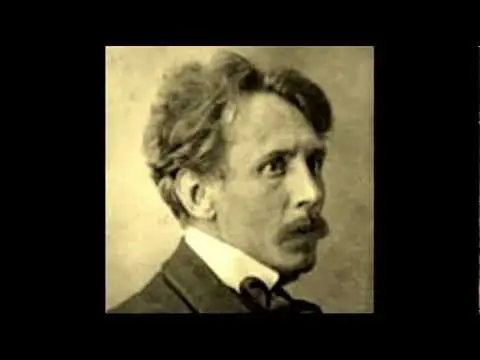
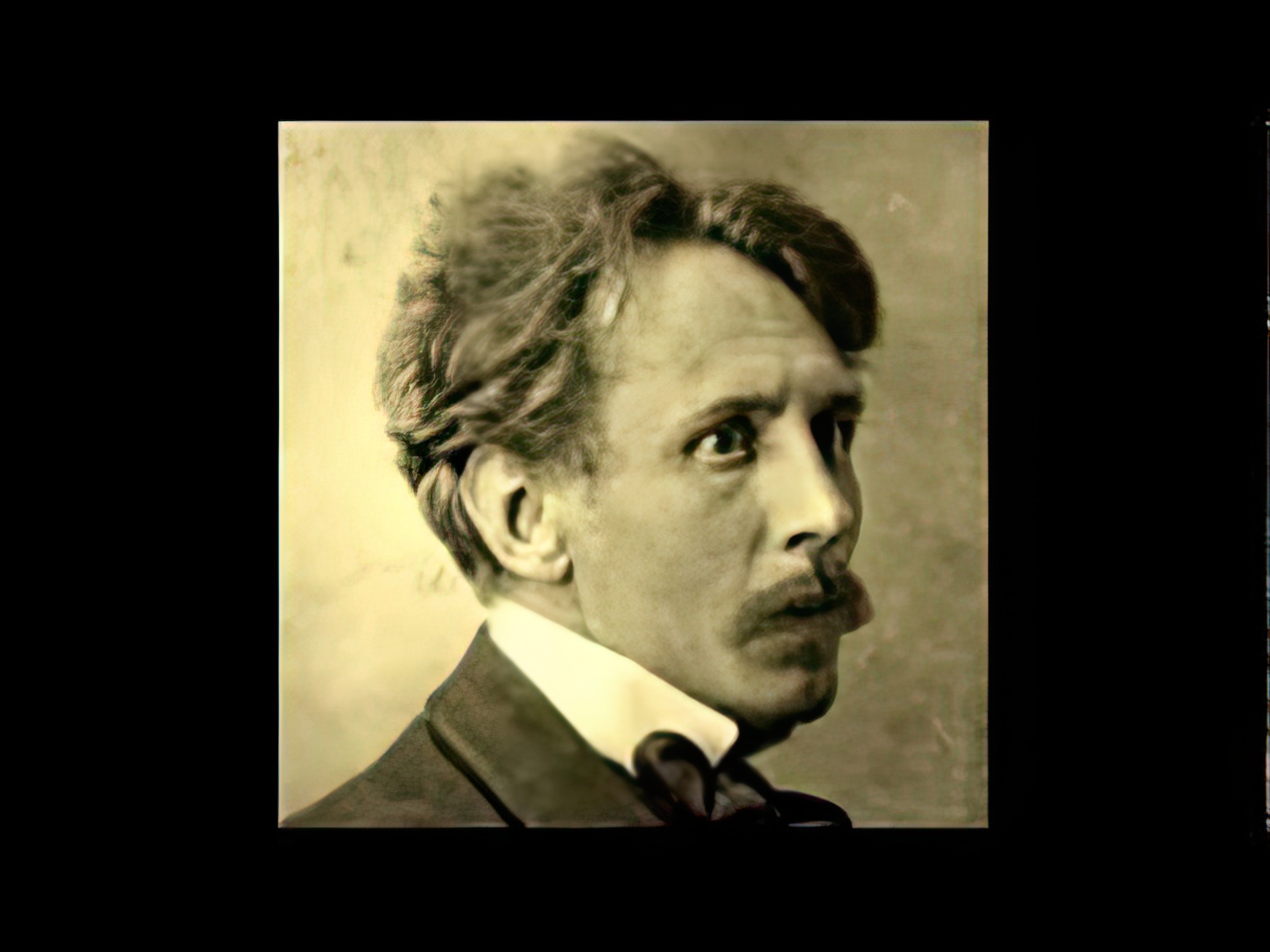
Jacques Féréol Mazas, a name synonymous with violin pedagogy, was far more than a mere writer of exercises. As a celebrated virtuoso and disciple of the great Pierre Baillot, Mazas embodied the elegance and brilliance of the 19th-century French violin school. His extensive travels across Europe as a soloist deeply informed his understanding of the instrument, but his most enduring legacy lies in his pedagogical works. Among these, his collections of duets for two violins stand as pillars of the repertoire, ingeniously bridging the gap between mechanical etudes and genuine musical performance. Unlike the dry, technical studies of some of
...From the Stage to the Studio: A Virtuoso’s Lasting Gift
Imagine the life of a traveling violin virtuoso in the early 1800s. Journeys were arduous, made by horse-drawn coach over rough roads, and concert halls were lit by the flickering, uncertain glow of gaslight. It was in this world that Jacques Féréol Mazas thrived, dazzling audiences from Paris to London, from Warsaw to Moscow. Yet, for all his success on the concert stage, Mazas seemed to grasp that true legacy was not merely in applause that faded with the night, but in knowledge passed from one generation to the next. Legend has it that during his tenure as a director of a music school in Orléans, he became acutely aware of the lack of material that was both technically sound and musically inspiring for his students. He saw them toiling away at exercises that built finger dexterity but starved the soul. It was this realization that spurred him to create what would become his masterwork: a comprehensive body of etudes and duets that taught the hand, the ear, and the heart in equal measure.
The Virtuoso-Pedagogue in Context
Jacques Féréol Mazas was a product of the esteemed Paris Conservatoire, where he was a star pupil of Pierre Baillot, one of the founding fathers of the modern French violin school. This lineage is critical to understanding his work. The French school prioritized elegance, clarity of tone, a sophisticated and varied bowing technique, and a certain lyrical refinement over the more overt pyrotechnics favored by figures like Paganini. Mazas’s career as a celebrated soloist, opera concertmaster, and chamber musician gave him a profoundly practical understanding of the instrument's demands. Unlike theorists who composed from an academic distance, Mazas wrote from experience. He knew precisely what a developing violinist needed to navigate the challenges of the orchestral and solo repertoire of his day. His duets, therefore, are not abstract drills but are filled with the real-world musical gestures of the Classical and burgeoning Romantic eras.
The French Violin School’s Influence
The pedagogical landscape of the early 19th century was dominated by the works of Mazas’s colleagues and predecessors, including Rodolphe Kreutzer, Pierre Rode, and his own teacher, Baillot. Together, their methods and etudes formed the bedrock of violin technique for the entire century and beyond. While Kreutzer’s caprices focused on foundational bowing and fingering patterns and Rode’s explored a more refined, concert-ready elegance, Mazas carved a unique niche. He synthesized their pedagogical rigor with a greater emphasis on melodic appeal and, crucially, on the interactive nature of chamber music. His duets stand apart because they are inherently social. They force the student out of the solitary practice room and into a musical conversation, making them an indispensable tool for developing the listening skills essential for any ensemble player. The style is quintessentially French: never heavy or overwrought, but always favoring clarity, balance, and expressive grace.
A Progressive Pedagogical Vision
Mazas was a systematic thinker, and his collections of duets are organized with brilliant pedagogical logic. The opus numbers are not random but represent a carefully structured curriculum. The journey often begins with Op. 38, the 75 Études spéciales, which are designed for the intermediate student. These are followed by sets like Op. 39, the 12 Petits Duos, which continue to build technique in a progressive manner. Later collections, such as Op. 70, 71, and 72 (Duos d'artistes), escalate significantly in difficulty, demanding a level of skill approaching that of a professional concert piece. This graduated approach allows a teacher to guide a student through the Mazas repertoire over several years, with each set of duets introducing new challenges while reinforcing old principles. He covers the complete gamut of violin technique in a logical, step-by-step fashion that prevents the student from feeling overwhelmed.
The Art of Musical Dialogue
The true genius of the Mazas Duets lies in their conversational structure. Mazas masterfully avoids the common pitfall of creating a "melody and accompaniment" texture, where one violin part is clearly more important than the other. Instead, he weaves a true dialogue. Melodic fragments are passed back and forth, harmonic responsibilities are shared, and rhythmic motives are imitated and developed by both players. The first violin might present a lyrical theme, which the second violin then answers, perhaps with a slight variation or from a different harmonic perspective. This forces the players to be acutely aware of each other. They must listen intently to match intonation, articulation, dynamics, and phrasing. It is in these duets that young violinists learn to lead and to follow, to blend their sound, and to breathe together musically—the absolute foundational skills of chamber music.
Harmonic and Melodic Style
The musical language of Mazas is firmly rooted in late Classicism, with hints of early Romanticism. The harmonic structures are clean, logical, and primarily based on the functional harmony one would find in the music of Mozart, Haydn, or early Beethoven. This clarity makes the duets exceptionally good for ear training, as the harmonic progressions are easy to follow and internalize. His melodies are models of elegant construction. They are typically vocal in character, with graceful contours, balanced phrasing, and an intuitive sense of direction. He often employs simple forms like binary or ternary form, giving the pieces a satisfying sense of architectural cohesion. This combination of predictable harmony and memorable melody makes the duets musically satisfying and allows the student to focus on technical and expressive refinement rather than struggling to decipher a complex modern idiom.
A Compendium of Violin Technique
Within his many sets of duets, Mazas systematically addresses every core aspect of violin playing. Bowing techniques are explored in exhaustive detail, from smooth legato and crisp détaché to the more advanced bouncing strokes of spiccato and the sharp bite of martelé. He writes passages that demand precise bow division, control of dynamics, and nuanced articulation. The left hand is given an equally thorough workout. The duets are filled with scales, arpeggios, and broken chords that build facility and fluency across all positions. Double-stops and chords are introduced gradually, training the hand to form correct shapes and the ear to hear pure intervals. Furthermore, Mazas incorporates the elegant ornamentation of his time, teaching the student how to execute trills, mordents, and gruppettos with stylistic appropriateness.
Opus 38: The Cornerstone
No discussion of Mazas is complete without singling out Op. 38, the Études spéciales. This collection is arguably the most famous and widely used of all his works. Divided into three parts of increasing difficulty, these 75 short duets serve as a veritable encyclopedia of intermediate technique. Each duet tends to focus on a specific technical problem—be it string crossings, a particular bowing pattern, or shifting to a new position—but always within a compelling musical framework. Number 30, for example, is a brilliant study in syncopation and rhythmic precision, while Number 58 is a beautiful cantabile piece perfect for developing tone and vibrato. Because they are duets, even the most exercise-like pieces feel collaborative and engaging, making them far more palatable to students than a book of solo etudes.
The Advanced Duets: Nearing the Concert Stage
While Mazas is often associated with intermediate repertoire, his later opus numbers contain works of considerable difficulty and artistic merit. The duets from Op. 70, 71, 72, and 85 are far more than mere studies. They are concert-worthy pieces that demand advanced technical facility, a sophisticated musical sensibility, and impeccable ensemble skills. These works feature extended passages in high positions, complex double-stopping, rapid string crossings, and intricate contrapuntal writing. They are longer, more developed compositions that showcase the full expressive and virtuosic potential of the two-violin combination. Playing these duets prepares a student for the demands of the professional chamber music repertoire, such as the duos of Spohr or Viotti, and even the string quartet literature of the great masters.
An Enduring and Indispensable Legacy
The reason the Mazas Duets have remained an unshakable component of violin pedagogy for nearly two centuries is simple: they work. They achieve the perfect synthesis of art and craft. They build technique methodically and comprehensively while simultaneously nurturing musicianship, expressivity, and the collaborative spirit. Mazas understood that a violinist is not just a technician but an artist, and that the path to artistry is paved with music that is a joy to play. In a world of often-monotonous technical exercises, his duets are a breath of fresh air—charming, intelligent, and profoundly effective. They teach students not only how to play the violin, but how to make music with others, a lesson that remains the most valuable of all.
Follow us :


Sheet Music International - Copyright 2026 all rights reserved