Your Request is under process, Please wait.

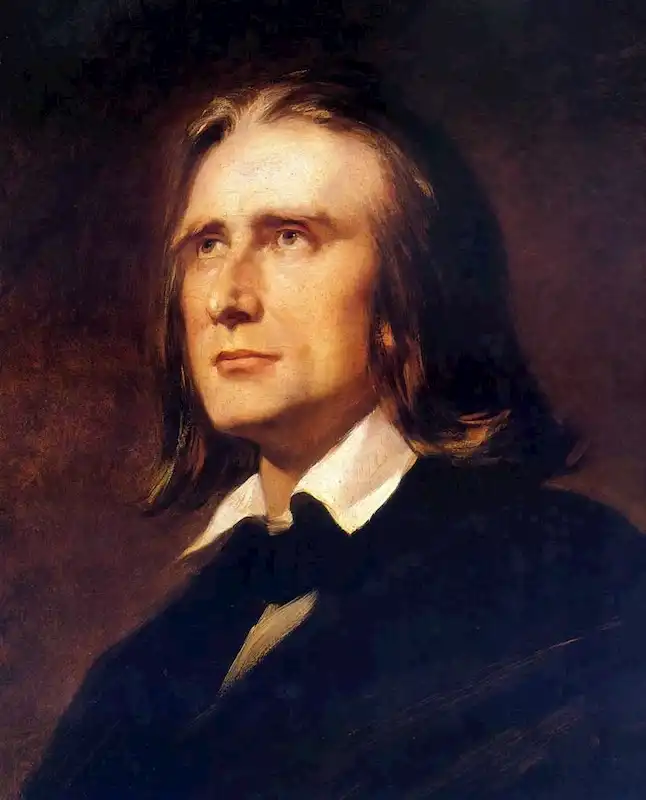
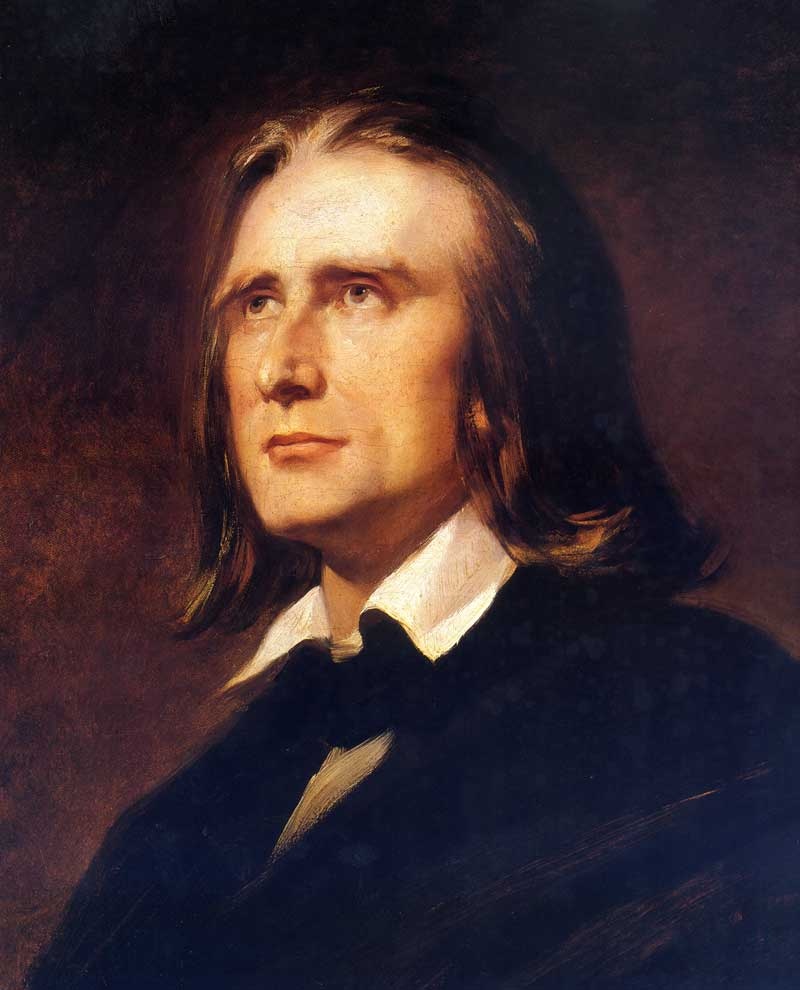
Franz Liszt was the 19th century’s first true rock star, a pianist of such demonic technical skill and charismatic showmanship that his concerts would whip audiences into a frenzy of swooning, screaming, and near-riotous adulation known as "Lisztomania. " His ultimate showstopper, the piece guaranteed to bring the house down, was the Hungarian Rhapsody No. 2. Composed in 1847, it is a brilliant and fiery evocation of the Hungarian Romani ("Gypsy") music that had fascinated Liszt since his childhood. The Rhapsody is a masterpiece of musical theater, beginning with a slow, brooding, and improvisatory introduction before erupting into a final
...Nationalistic Pride and Dazzling Virtuosity
In the entire repertoire of the piano, few works are as instantly recognizable, as viscerally exciting, or as central to the legend of the romantic virtuoso as Franz Liszt's Hungarian Rhapsody No. 2. Composed in 1847, at the height of the "Lisztomania" that swept across Europe, this rhapsody is the quintessential showpiece, a work of staggering technical difficulty and brilliant, theatrical flair. It is a powerful expression of Liszt's lifelong engagement with his Hungarian heritage and, more specifically, with the fiery, passionate, and improvisatory music of the Romani ("Gypsy") ensembles he had heard in his youth. It is a work that perfectly fuses the raw energy of a folk dance with the most sophisticated and dazzling pianism of the 19th century, a masterpiece that has captivated audiences for generations and has become an indelible part of our popular culture.
Liszt and Hungarian Nationalism
Though he spent most of his life outside of Hungary and never became fluent in the language, Franz Liszt was a fervent Hungarian patriot. In an age of rising nationalism, he sought to create a uniquely Hungarian national style of art music. He mistakenly believed that the music played by the itinerant Romani bands he so admired was the true folk music of the Hungarian people. While modern ethnomusicology has shown that this is not the case, this "Gypsy" style, with its characteristic scales, dramatic mood swings, and improvisatory freedom, became the foundation for Liszt’s vision of Hungarian music. The nineteen Hungarian Rhapsodies are the ultimate expression of this vision.
The Influence of the Verbunkos
The structure of the rhapsody is based on the verbunkos, a Hungarian recruiting dance that later evolved into the national dance form, the csárdás. This is a dance in two distinct sections: a slow, stately, and often melancholy introduction called the Lassan, followed by a wild, fast, and thrilling conclusion called the Friska. This dramatic contrast between the slow and the fast, the stately and the wild, forms the basic architectural plan for the Hungarian Rhapsody No. 2.
Musical Analysis: The Lassan
The rhapsody begins with a dramatic and powerful statement in C-sharp minor, a slow and brooding introduction that immediately establishes a mood of tragic grandeur. This leads to the main Lassan section, which is a masterpiece of improvisatory fantasy. The music has a free, almost unmeasured, quality, as if the pianist is inventing the music on the spot. The section is full of dramatic pauses, elaborate, quasi-vocal embellishments, and huge, crashing chords. Liszt brilliantly uses the piano to imitate the characteristic sounds of a Gypsy ensemble: the strumming of a guitar, the lyrical song of a violin, and, most famously, the shimmering, percussive sound of the Hungarian cimbalom (a hammered dulcimer).
Musical Analysis: The Friska
After a dramatic transition and a suspenseful pause, the rhapsody erupts into its famous Friska. The key shifts to a bright F-sharp major, and the mood becomes one of wild, almost delirious, celebration. The main theme is a simple, folk-like tune, but it is subjected to a series of variations of ever-increasing speed and technical difficulty. The pianist is required to unleash a torrent of brilliant passagework: lightning-fast scales, powerful octave passages, and huge, athletic leaps across the keyboard. The rhythm is relentless and infectious, a wild peasant dance that builds in a long, thrilling acceleration to a final, explosive climax that leaves the audience, and often the pianist, breathless.
A Pianistic Revolution
The Hungarian Rhapsody No. 2 is more than just a brilliant piece of music; it is a landmark in the history of piano technique. With this work, Liszt expanded the expressive and technical possibilities of the instrument in ways that other composers like Frédéric Chopin and Robert Schumann had only hinted at. His innovative writing—the massive chords that use the entire range of the keyboard, the brilliant imitation of other instruments, the sheer volume and speed demanded—helped to create the modern "orchestral" style of piano playing.
The Orchestral Version and Pop Culture Fame
The rhapsody’s immense popularity led Liszt, in collaboration with the flutist and composer Franz Doppler, to create an orchestral version in 1857. This brilliant transcription, with its colorful use of woodwinds and brass, became just as famous as the original piano version. It was this orchestral version that would eventually cement the rhapsody’s place in popular culture. Its use in countless cartoons, most famously in the Oscar-winning Tom and Jerry short "The Cat Concerto" and the Bugs Bunny classic "Rhapsody Rabbit," has introduced its unforgettable melodies to millions of people around the world, making it one of the most famous and universally recognized pieces of classical music in history.
The Ultimate Showpiece
While Liszt would go on to compose works of far greater philosophical depth and harmonic complexity, the Hungarian Rhapsody No. 2 remains his most perfect and exhilarating showpiece. It is a work of pure, unadulterated entertainment, a brilliant fusion of folk energy and high-Romantic virtuosity. It is a testament to the charismatic power of its composer and a timeless monument to the dazzling, unrestrained, and glorious sound of the piano.
Follow us : 


Sheet Music International - Copyright 2025 all rights reserved
| English: Sheet Music (PDF) | Free Scores | Français: Partitions (PDF) | Musique gratuite | Ελληνικά: Παρτιτούρες (PDF) | Δωρεάν μουσική |
| Deutsch: Noten (PDF) | Kostenlose Partituren | Español: Partituras (PDF) | Música impresa | Português: Partituras (PDF) | Música gratuita |
| Italiano: Spartiti (PDF) | Partiture musicali | Русский: Ноты (PDF) | Бесплатные партитуры | Norsk: Noter (PDF) | Gratis noter |
| Українська: Ноти (PDF) | Безкоштовні партитури | Polski: Nuty (PDF) | Darmowe nuty | Nederlands: Bladmuziek (PDF) | Gratis partituren |