Your Request is under process, Please wait.

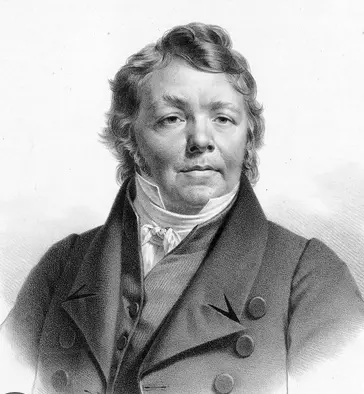
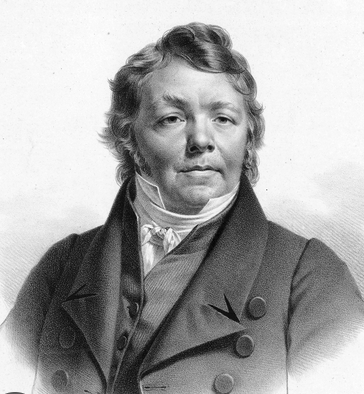
Johann Nepomuk Hummel (1778-1837)
Download free sheet music from Johann Hummel.
Discover the brilliant and elegant music of Johann Nepomuk Hummel, a pivotal figure bridging the Classical and Romantic eras. A celebrated piano virtuoso whose talent was so immense that he lived and studied with Wolfgang Amadeus Mozart as a child, Hummel became one of the most famous musicians in Europe. His compositions, known for their dazzling virtuosity and lyrical grace, represent the pinnacle of the late Viennese Classical style. From his iconic Trumpet Concerto to his brilliant piano concertos and sonatas, his work influenced a generation of composers, including
...The Last Great Master of the Viennese School
In 1786 Vienna, a father and his seven-year-old son approached the apartment of the most celebrated composer in the world, Wolfgang Amadeus Mozart. The father, a musician himself, pleaded with the master to hear his boy play the piano. Mozart, besieged by such requests, was reluctant but finally agreed. The child sat at the keyboard and played with such astonishing precision, grace, and musicality that Mozart was utterly captivated. He immediately turned to the father and made an incredible offer: he would take the boy into his own home, free of charge, to be his personal student. For the next two years, the young Johann Nepomuk Hummel lived with the Mozart family, absorbing the very essence of the Classical style from its greatest genius. This extraordinary apprenticeship was the start of a legendary career that would see Hummel become one of the greatest piano virtuosos of all time and a crucial link between the classicism of Mozart and the burgeoning romanticism of the 19th century.
Johann Nepomuk Hummel was born in Pressburg (now Bratislava) in 1778. His father, Johannes, was a violinist and music director. In 1786, the family moved to Vienna, where Johannes took a position as conductor at a popular theater. The city was the musical epicenter of Europe, and the young Hummel’s prodigious talent on the piano quickly became apparent. His fateful audition with Mozart changed his life. Living in the Mozart household, he was not just a student but a part of the family, playing duets with Wolfgang and absorbing his compositional techniques and elegant performance style through daily contact. This immersive education in the purest form of Viennese classicism became the unshakeable foundation of his entire artistic identity.
After two years, Mozart advised that it was time for the young prodigy to be presented to the world. In 1788, echoing the famous tours of the young Mozart himself, Hummel’s father took him on a grand concert tour of Europe that would last for four years. The young virtuoso performed in the great musical capitals, including Prague, Berlin, Copenhagen, and London, dazzling audiences and royalty with his brilliant and refined playing. While in London, he had the good fortune to study with the celebrated pianist and composer Muzio Clementi, who helped to further polish his already formidable technique. This extensive tour solidified his reputation as one of Europe's leading young talents.
Hummel returned to Vienna in 1793, no longer a boy but a seasoned artist. He continued his studies in composition with some of the city's most respected teachers, including Johann Georg Albrechtsberger (who also taught Beethoven), the opera composer Antonio Salieri, and the venerable Joseph Haydn. His relationship with Haydn was particularly important. In 1804, on Haydn's recommendation, Hummel succeeded him in the prestigious post of Kapellmeister to the court of Prince Esterházy. It was a role of immense responsibility, requiring him to compose and conduct a steady stream of sacred and secular music.
During this time, his complex relationship with Ludwig van Beethoven came to the forefront. The two men were widely seen as the city's greatest piano virtuosos, and a fierce rivalry developed between their respective followers. Hummel’s style was one of elegance, clarity, and breathtaking ornamentation, while Beethoven's was more powerful, dramatic, and emotionally volatile. Their friendship was often strained, culminating in a famous falling-out when Hummel, conducting a mass by Beethoven, reportedly laughed at a clumsy passage, deeply offending the proud composer. They would remain estranged for years.
In 1819, Hummel accepted the position of Kapellmeister to the Grand Duke of Saxe-Weimar-Eisenach. The court of Weimar was one of Europe's most cultured, and this move ushered in the most stable and productive period of Hummel’s life. He remained in Weimar until his death in 1837. He was a revered figure, responsible for directing the court orchestra and opera, and his presence turned the small city into a major European musical destination.
He developed a close friendship with the literary giant of the age, Johann Wolfgang von Goethe, who held Hummel’s artistry in the highest esteem. During his Weimar years, Hummel composed many of his most mature and famous works, including his later piano concertos, chamber pieces, and a comprehensive and highly influential piano method book, A Complete Theoretical and Practical Course of Instruction on the Art of Playing the Piano Forte (1828). He continued to tour as a pianist, his fame undiminished.
As a pianist, Hummel was a phenomenon. He was the foremost proponent of the Viennese school, emphasizing a graceful touch, evenness of tone, and brilliant, pearly passagework. His playing was less about stormy passion and more about elegant perfection. This style, along with his compositions, had a profound impact on the next generation of Romantic pianists. A young Frédéric Chopin was a great admirer of Hummel’s concertos, and their influence can be heard in his own early works. Franz Liszt was also slated to study with Hummel before turning to Carl Czerny (another Hummel student).
Hummel's compositions perfectly reflect his playing. His most famous work today is undoubtedly the Trumpet Concerto in E-flat major, a brilliant and virtuosic piece that remains a benchmark for all trumpeters. His piano concertos, particularly the A minor (Op. 85) and B minor (Op. 89), are filled with dazzling keyboard writing and beautiful melodies. His piano sonatas, chamber music (like the popular Septet, Op. 74), and sacred works are all models of Classical form and elegance.
In March 1827, Hummel was in Vienna when he heard that his old rival, Beethoven, was on his deathbed. Forgetting their years of animosity, he rushed to Beethoven’s side. The two great musicians reconciled, and Hummel was one of the pallbearers at Beethoven's funeral. It was the end of an era.
Hummel died in Weimar ten years later, a wealthy and celebrated man. He is a crucial figure in music history—the last great representative of the Viennese Classical tradition he had inherited directly from Mozart, and a vital precursor to the Romantic piano virtuosos who followed. His music, for a time overshadowed by Beethoven's monumental genius, has been rediscovered and is now cherished for its own unique qualities: its brilliance, its elegance, and its perfect, masterful craftsmanship.
Sachs, Joel. Kapellmeister Hummel in England and America. Detroit: Information Coordinators, 1977.
Kroll, Mark. Johann Nepomuk Hummel: A Musician's Life and World. Lanham, MD: Scarecrow Press, 2007.
Schoonover, Michael. Hummel in England and France: A Study in the International Musical Life of the Early Nineteenth Century. Ann Arbor, MI: UMI Research Press, 1981.
Zimmers, Ben. "The Last Disciple of Mozart: A Biography of Johann Nepomuk Hummel." The Musical Times 119, no. 1629 (Nov. 1978): 964–66.
Follow us : 


Sheet Music International - Copyright 2026 all rights reserved
| English: Sheet Music (PDF) | Free Scores | French: Sheet Music (PDF) | Free Scores | Greek: Sheet Music (PDF) | Free Scores |
| German: Sheet Music (PDF) | Free Scores | Spanish: Sheet Music (PDF) | Free Scores | Portuguese: Sheet Music (PDF) | Free Scores |
| Italian: Sheet Music (PDF) | Free Scores | Russian: Sheet Music (PDF) | Free Scores | Norwegian: Sheet Music (PDF) | Free Scores |
| Ukrainian: Sheet Music (PDF) | Free Scores | Polish: Sheet Music (PDF) | Free Scores | Dutch: Sheet Music (PDF) | Free Scores |