Your Request is under process, Please wait.

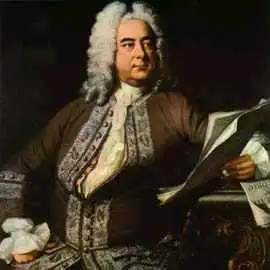
George Frideric Handel’s Concerti Grossi are a treasure trove of Baroque instrumental music, a brilliant display of his melodic genius and his complete mastery of orchestral color and form. These works were often composed for a very practical purpose: to be performed as sophisticated entertainment during the intermissions of his grand oratorios in London. The concerto grosso is built on the principle of dialogue, pitting a small group of soloists (the concertino) against the larger force of the full orchestra (the ripieno). Handel’s two most famous sets, the six concertos of Opus 3 and the twelve "Grand Concertos"
...A Dialogue in Sound
In the 1730s, London audiences flocked to the theatre to hear George Frideric Handel’s latest oratorios. These grand, dramatic works were the city’s most popular form of entertainment. To keep the audience engaged during the intermissions while scenery was changed, Handel, ever the pragmatist, provided brilliant instrumental interludes. It was for this purpose that many of his greatest concertos were composed. This is especially true of his magnificent set of Twelve Grand Concertos, Op. 6. In a feat of creative energy that rivals his 24-day composition of Messiah, Handel composed all twelve of these multi-movement masterpieces in a single month, between late September and late October of 1739. This incredible speed was driven by the urgent need to have new, brilliant, and appealing music ready for his upcoming oratorio season. This practical origin, however, takes nothing away from the music's profound artistry.
The Concerto Grosso Form The Italian Model
The concerto grosso was the most important form of orchestral music in the High Baroque period. Perfected in Italy by composers like Arcangelo Corelli, the form is built on the principle of contrast and dialogue. The orchestra is divided into two unequal forces: a small group of virtuosic soloists, called the concertino (literally "little concert"), and the larger body of the orchestra, called the ripieno (meaning "full"). The music unfolds as a dynamic conversation between these two groups, alternating between passages for the full orchestra and more delicate, intricate sections for the soloists. Handel, who had spent his formative years in Italy, was a complete master of this style.
Opus 3: A Colorful Miscellany The "Oboe Concertos"
Handel's first published set of concertos, his Opus 3, is a more varied and less unified collection than its famous successor. Published by his London printer John Walsh in 1734, it was likely a collection of various instrumental pieces Handel had composed over the years, rather than a newly composed, single set. The six concertos of Opus 3 feature a much more colorful and varied concertino group than the later Opus 6. Oboes are especially prominent, which has led to the set being nicknamed the "Oboe Concertos," but other instruments like the flute, recorder, and bassoon also get moments to shine. The music is endlessly inventive and charming, a brilliant collection of Handel’s most popular instrumental music from the period.
Opus 6: The Pinnacle of the Form The Twelve Grand Concertos
The Twelve Grand Concertos, Op. 6, are Handel’s monumental achievement in the genre and are considered, along with the Brandenburg Concertos of J.S. Bach, to be the supreme masterpieces of the Baroque concerto grosso. Unlike Opus 3, this set was composed as a single, unified work and is scored exclusively for a string orchestra. Following the model of Corelli, the concertino consists of two solo violins and a solo cello, which engage in a brilliant and expressive dialogue with the full string ripieno. The variety within these twelve works is astonishing. They contain majestic French overtures, brilliant Italianate allegros, fugues of stunning complexity, and some of the most beautiful and moving slow movements Handel ever composed. The Concerto Grosso in A minor, Op. 6, No. 4, for example, is famous for its passionate intensity and its sublime Largo e piano, while the Concerto Grosso in B-flat Major, Op. 6, No. 7, is unique for consisting of only a single, brilliant movement, a Jigg often nicknamed the "Hornpipe. "
A Synthesis of European Styles Handel's Genius
A hallmark of Handel’s music is his masterful blending of the various European national styles. In his Opus 6 concertos, the Italian influence is clear in his adoption of the Corellian model and his gift for beautiful, flowing melodies. The German tradition is evident in his complete mastery of complex counterpoint, creating fugues and other imitative passages with a skill that rivaled his great contemporary, J.S. Bach. The French style can be heard in the grand, dotted rhythms of the many French overtures that open the concertos, and in the inclusion of elegant courtly dances like the Minuet and the Musette. Finally, the English influence is present in the overall spirit of grandeur and public-facing ceremony that pervades the music.
Handel vs. Bach Two Masters of the Baroque
It is fascinating to compare Handel’s Opus 6 with J.S. Bach’s six Brandenburg Concertos. Both sets represent the absolute peak of the Baroque concerto. However, their character is quite different. Bach’s concertos are more musically complex, more densely contrapuntal, and more daring and experimental in their choice of solo instruments. They are profound musical arguments written for a discerning courtly audience. Handel’s concertos, by contrast, are more public, theatrical, and melodically generous. While they are masterpieces of technical craftsmanship, their primary goal is to charm, move, and entertain a broad public audience. They are the work of a great opera composer, full of drama, emotional directness, and brilliant instrumental color. Together, they represent the two towering peaks of Baroque instrumental music.
Follow us : 


Sheet Music International - Copyright 2025 all rights reserved
| English: Sheet Music (PDF) | Free Scores | Français: Partitions (PDF) | Musique gratuite | Ελληνικά: Παρτιτούρες (PDF) | Δωρεάν μουσική |
| Deutsch: Noten (PDF) | Kostenlose Partituren | Español: Partituras (PDF) | Música impresa | Português: Partituras (PDF) | Música gratuita |
| Italiano: Spartiti (PDF) | Partiture musicali | Русский: Ноты (PDF) | Бесплатные партитуры | Norsk: Noter (PDF) | Gratis noter |
| Українська: Ноти (PDF) | Безкоштовні партитури | Polski: Nuty (PDF) | Darmowe nuty | Nederlands: Bladmuziek (PDF) | Gratis partituren |